One of the social media tasks that takes up most of our time is content creation. From brainstorming the kind of content to create to the actual creation, there is a lot involved in the process. Without proper planning, you can spend a lot of time and effort throughout the process.
The good news is that you can put the content you are already creating to good use by repurposing it. When well done, it can help increase the impact, reach, and ROI of your content. In this article, we guide you on how to repurpose your social media content.

What is Content Repurposing?
Content repurposing involves transforming your current content into formats that work for different platforms and target audiences. It's a strategic approach that takes more than just cross-posting, where a similar asset is posted on different platforms, or reposting, where the same asset is posted on different platforms without making changes to it.
A good content repurposing strategy involves reusing your content in a way that feels native to the platform where it's being published, the cultural norms, and the technical challenges of each platform. It also involves adapting the content to show your core value proposition and brand messaging.
For instance, you can repurpose your blog posts into different content formats that add value to your audience, including thought leadership for employee advocacy, a short video summarizing the key points for your social media accounts, and a summary of the main points in your tweets.
Good content repurposing takes more than just copying and pasting from one platform to another. You need to consider the needs of different platforms. You should then be creative and imaginative with the content to adapt it to different platforms. You should also avoid sounding repetitive.
How Content Repurposing Differs from Content Duplication
When repurposing content, you are essentially giving it new life, creating something new from it. On the other hand, content duplication means you are reposting content exactly as it is while offering nothing new to your audience. That means content repurposing has more SEO value. Since it's also unique content, it offers something new to your audience.
Benefits of Content Repurposing
A good content repurposing strategy involves consistently producing quality content. The goal is to ensure you consistently create interesting content that engages your readers. If you want to stay on top of your content creation while maintaining quality and providing value without increasing your social media team, you need to leverage content repurposing. That said, here are some of the benefits of content repurposing:
Get the Most Value in Your Content
If you created a content piece that performed exemplary well, you need to ensure that you get as much value as possible from it. The good news is that content repurposing will enable you to get long-term value from each piece of content that you create. However, this doesn't mean your content creation journey should come to a stop. You need to combine repurposed content with original content.
Ability to Join Trending Conversations
If you are trying to streamline your social media workflow, you cannot afford to take an ad-hoc approach. This is because if you leverage your social listening insights, you are likely to be prepared with the right content type as trends begin to take shape.
Content repurposing requires creating content in bulk and being ready for future publication. It can help diversify your content assets and keep you always prepared to publish new, relevant content on trending topics in your industry.
Ability to Reach New Audiences
The Facebook audience demographic differs from those on LinkedIn or TikTok. Each of these platforms is usually unique, and the kind of content that succeeds on one platform isn't the same as what works on another. If you want to reach diverse audiences, you need to reuse your social media content.
While a post of up to 280 characters will work on Twitter, it will not work on LinkedIn. Similarly, if you have a long-form YouTube video, you can trim it to make a TikTok shot. Since different platforms cater to different audience preferences and attention spans, adapting your content to each platform can help you reach a wide range of audiences.
Maintain a Consistent Posting Schedule
One of the things that social media platforms reward is consistency. That means if you want to achieve a real ROI from social media marketing, you need to commit yourself to scheduling and publishing content. However, it's not always easy to consistently produce quality content that engages your audience and increases your ROI.
One way many brands address the challenge is by separating content into original, curated, and repurposed. This strategy can help them have enough content and avoid just posting for the sake of it.
Enhance Your Content Reach
Content repurposing can be a great way to ensure your content reaches a new audience. For instance, if you already have a podcast with listeners tuning in each week and feel the content has great potential, you can increase its reach by repurposing it into a YouTube video.
According to one study, content repurposing can increase your content's reach by 300% by boosting its visibility across different platforms and audience demographics.
Time-Saving
Compared to creating content from scratch, repurposing content can help you save 60% to 80% of your time. Having such a level of efficiency can enable you to focus on your broader goals while maintaining the highest standards of content. Rather than spending hours researching and creating social media posts, you can extract key points from a blog post and adapt them for your X threads.
Higher Conversion Rate
Every social media content format offers you a unique opportunity to connect with your target audience and encourage them to take the desired action. Whether it is to download a guide, sign up for a webinar, or buy a product, content repurposing increases the number of touchpoints and boosts conversion rates.
When to Repurpose Content
For content repurposing to be effective, it should be done at the right time. There are several moments when you may need to repurpose your content:
If There Are Changes in Goals
Perhaps you created a particular piece of content, and the goals have changed; this is a great reason to reuse it. For instance, you may have created a blog post to grow your newsletter subscribers, but now feel it can be adapted into a lead magnet or an online course. If you feel your content can support a new goal, it's a sign that it can be repurposed.
Data-Driven Decisions
If you have content pieces you created that generated high engagement, they may be a good fit for repurposing. After all, they have proven to resonate with your target audience. For instance, if your long-form video went viral on YouTube, it's also likely to perform well when repurposed into a short Instagram reel.
When making decisions, it's important to be guided by your analytics. When you realize that there is a blog post that is bringing the most traffic, or a podcast with many downloads, or a video with an impressive organic reach, this is a sign that the content piece can work well for your organic reach. However, you need to be careful, as some content can perform well because of a trend. Otherwise, repurposing may not work for a content piece that is no longer relevant unless it's already trending again.
Focus on Evergreen Topics
Evergreen topics are those that will still add value to readers several months or years after publication. This makes the topics suitable for repurposing on different platforms and time frames. Examples of this kind of content include:
- How-to guides
- Industry research
- Detailed resource lists
- Tutorials
Ensure the content you repurpose can be used in multiple formats, such as infographics, videos, and carousel posts, while maintaining its impact. Therefore, do not repurpose news articles or time-sensitive content unless you do so quickly, as such content can feel outdated by the time it reaches a platform. When repurposing this content, update outdated elements to ensure accuracy.
Choose the Lead-Generating Assets
When searching for content to repurpose, consider pieces that guide people through the sales funnel, such as webinars, case studies, and blog posts. These valuable resources are essential for touching audiences in different stages of the sales journey.
Examples of Content Repurposing
One of the main aims of content repurposing is usually to extend the lifespan of your already published content. This also means the strategy works better with evergreen content, as it can remain relevant for longer. Repurposing your old content can have different formats, such as:
- Reformatting a piece of content for one channel into a format that is already required by another channel. For instance, you can adapt the blog posts into a podcast episode or video content.
- If you have small but original content pieces, you can combine them into bigger and in-depth pieces.
- If you have a long-form blog post, you can break it into small and digestible pieces, like getting the section headers of a blog post and making carousel posts out of them.
Top Content Repurposing Ideas
The process of repurposing content doesn't have to be very complicated. It should involve adapting the content format you already have to the needs and preferences of the platforms and their audiences. Whether the content is in the form of a newsletter, podcast, or blog post, there are different ways to repurpose it. Here are some top ways.
Blog posts
Whether long or short, blog posts often contain valuable insights that make them suitable for reuse across different platforms. If you are wondering how to turn your blogs into different content formats, here are some ideas:
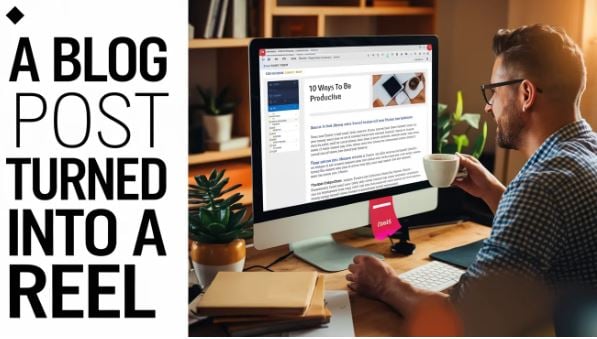
Turning Blog Posts Into Videos
Video content is considered one of the formats with high engagement and one of the highest ROIs. There are several ideas you can use to turn blog posts into videos. These include:
- Create how-to video guides that visually explain the post.
- Share quick takeaways from the article in the form of YouTube, Instagram reels, and TikTok.
- Create a brief script for the animated explainer video based on the blog.
- Creating a film in an informal interview with your teammates to expand on the topics of the blog.
After completing, you can post the video on social media platforms, websites, and in email newsletters to reach more people. You can read our guide on reposting short video content on different platforms.
Make Blog Posts From Social Media Content
If you have blog posts already with detailed steps or tips, you can break them down for social media. You can do that in different ways, such as:
- Creating a Reddit or X Thread that summarizes the major points.
- Turning the blog post into an Instagram carousel or LinkedIn posts to highlight the main ideas.
- Creating a series of steps highlighting the major points.
Include backlinks to the full blog posts so readers can dive deeper if they're interested in learning more.
Creating Ebooks From Blog Posts
If you have created blog posts that have received a lot of impressions and proven popular, you can turn them into an ebook. For the best results, make sure you:
- Edit the blog post so it looks and feels like a complete resource.
- Add charts, visuals, and expert quotes to gain extra value.
- Use a professional and clean design.
- Use a lead collection, especially if you plan to use it for marketing.
Making Guest Posts Out of Blog Posts
Another option is to use your best-performing blogs to publish as guest posts. You can do that in different ways, such as:
- Turning part of the blog post, such as a summary or checklist, into another site's infographics.
- Rewriting the blog post to target a new audience and, therefore, turn it into a guest post.
- If you still find it quite relevant, you can repost it.
These steps are key to reaching new readers while increasing the authority and backlinks in the niche.
Social Media Content
If you want your social media content to reach more people, you can repurpose it in different ways, such as:
Reproducing Long-Form Posts for LinkedIn and Thread
If your goal is to share thoughts, the best platforms are LinkedIn and X. A good idea would be to repurpose your LinkedIn posts into Threads and vice versa. However, you must remember that these platforms have different styles, so you will need to adjust the structure and phrasing.
If you are posting on X, you should use a strong hook at the beginning. On the other hand, you should make your LinkedIn posts more organized and detailed.
Create Carousel Posts Out of X Threads (and Vice-versa)
It is advisable to turn threads into Instagram carousel posts. To do that, all you need to do is turn the different points of the Threads into a slide of visuals. You can leverage tools such as Canva to make the process easier: all you need to do is select a template, add text, and apply your brand colors.
Create Long-Form Videos from TikTok and Reels
Perhaps you have been creating certain types of content on TikTok or Instagram and now want to combine them into a YouTube video. When you repurpose, you can use the video to reach your audience on YouTube without creating a new one from scratch.
Long-Form Content
Another format that makes a good candidate for repurposing is long-form content, such as ebooks, podcasts, and white papers. Since these content formats take a lot of time to create, you need to make the most out of them. You can do that in different ways, such as:
- Creating blog posts from white papers. In most cases, white papers provide key data, insights, or takeaways that you can turn into different blog posts. The aim in this case should be to highlight your findings or to focus on a subtopic each time. An example of a brand that does this well is Influencer Marketing Hub, which often creates benchmarking reports based on its big-picture data.
- Create social media posts. Long-form content formats can also be a good choice for turning into social media posts. For instance, you can pull a quote, expert tip, or stat from your white paper or ebooks and post it on platforms such as X, LinkedIn, or Instagram.
- Create video content. Videos are a great way to drive engagement. Therefore, if you have some important insights from your long-form content, you can explain them in your video. You can also use animated slides or shop clips to do that.
- Email campaigns. Long-form content can also be used for email marketing. All you need to do is share some valuable excerpts for your subscribers. Another option is to create an email series that shares important insights.
Video Content
If you are already creating long-form videos on YouTube or other platforms, you can repurpose them in many ways. You can, therefore, keep your content fresh without having to start from scratch. Whether you're creating a webinar, a YouTube video, or a live Q&A session, there are many ways to repurpose the content, such as:
Turning the Videos Into Blog Posts
Whether a video is in the form of a podcast, expert interview, or webinar, you can turn it into a blog post. All you need to do is break the video into digestible sections and highlight your key takeaways. For instance, you can turn a webinar into a blog by simply organizing the discussion topics into relevant subheadings and adding tips and quotes from the speaker.
Adding Short Media Clips
There is no doubt that short-form videos are among the most popular content formats on platforms such as Instagram Reels. According to one study, 73% of users prefer watching short product or service videos. You can create short, engaging videos from long-form content, such as key insights, highlights, or behind-the-scenes content.
Audio Content
You can also leverage audio content, such as podcasts, interviews, and recordings, by repurposing it into other formats, thereby expanding your reach and providing your audience with another engagement method. Some of the ways you can repurpose audio content include:
Creating Blog Posts from Social Media Posts
There is no doubt that podcasts offer viewers a wealth of insights and can be a good option for turning into blog posts. You can then break them down into key takeaways, organize them into clear sections, and remove anything off-topic. This can be a good way to generate fresh blog post ideas and increase the podcast's reach. You can also create an email marketing campaign from a podcast, extending the reach and providing more value for the post.
Making Social Media Clips
Another option is to turn the podcasts into short animated video clips. You can choose a few of your memorable highlights and quotes and add the captions and visuals. Not only are the clips easy to share, but they can help to drive engagement and bring listeners to the full episodes.
Best Practices For Successful Content Repurposing
To enable you to repurpose content easily and at scale, consider the following best practices:
- Provide your team with the necessary resources. After your marketing team proposes extending the lifespan of your content, ensure there are no barriers to repurposing. One of the most common barriers is the lack of robust infrastructure for content management or digital assets that work across different platforms. Therefore, you need to ensure that your team and stakeholders can quickly find, edit, and publish the content.
- Adapt content. Make sure you adapt the content to the needs of different platforms rather than just cross-posting.
- Create smaller pieces from the content. Don't just post one version of the content; break it down into several smaller pieces. For instance, you can turn your webinar into a series of blog posts, video clips, or graphics. This will increase reach and provide your audience with better ways to interact with the content.
- Leverage repurposing workflow. You can stay more organized and save time by creating a simple workflow that outlines the key steps, such as identifying the top-performing content, formatting for social media, and even extracting post highlights. When your process is clear, it becomes easier to repurpose your content without starting from scratch.
In Conclusion
Content repurposing involves transforming your content into new formats. It can be a great strategy for saving time, increasing your ROI, and amplifying your brand's reach across different platforms. It is an important tool for building authority so that users search for you directly. When properly done, it can enhance the lifespan of your content and improve your SEO ranking. Therefore, use the steps outlined in this guide to grow your content creation without starting from scratch.
