#1 Social Media Marketplace
Accelerate Your Social Media Growth with SocialWick. Quickly gain real followers, viewers, likes & more with our blend of marketing tactics. SocialWick is known for its fast delivery, premium quality, and low prices. With over a million satisfied customers since 2017, trust SocialWick to take your social media game to the next level.
1.4 M
Customers
13 M
Orders
362 M
Followers sold
1.8 B
Likes sold
A Comparison Between TikTok Ads vs Organic Strategy
Published on 24.07.2026 by Tracey Chizoba Fletcher
TikTok is one of the fastest-growing social media platforms, making it a great choice for driving brand awareness. However, it is also one of the fastest-moving platforms, with changing trends that require changing strategies. That means they need to keep refining their TikTok content strategies for brands to achieve success on the platform.
When doing that, one decision they have to make is choosing between an organic content strategy and paid ads. In this article, we compare the two strategies and help you decide which of the two options is better.
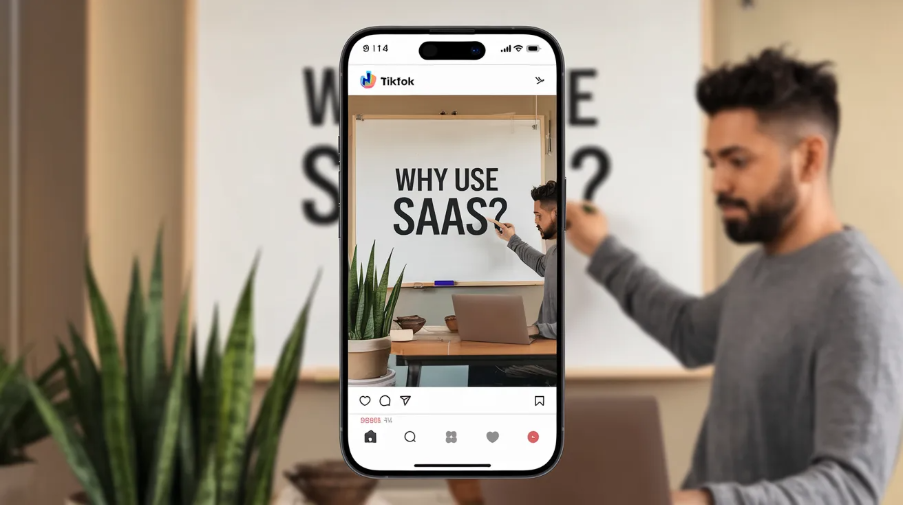
A Case For TikTok Ads
TikTok ads are immersive full-screen video ads that appear in the search results, For You feed, and TikTok’s partner apps. These ads differ from traditional social media ad formats in that they are made in a way that blends smoothly with organic content but are tagged Sponsored while featuring an interactive CTA.
TikTok ads are run on an auction-based method, meaning that advertisers can bid for clicks (CPC), impressions (CPM), and views (CPV). TikTok allows brands to connect their ads to the TikTok Shop, enabling direct purchasing on the app. However, they can also boost their organic content using the TikTok Promote feature.
Before getting into the TikTok ads strategy, you also need to find out what makes the platform different. This includes:
- Prioritizing authentic instead of polished content.
- A focus on short-form or viral trends.
- Users value relatability over production value.
Types of TikTok Ads
Brands on TikTok have many advertising options, and each brand must select the most efficient option to reach its audience and deliver its message.
Here are some of the various TikTok ads to choose from:
- In-feed video ads. These are ads appearing in the native feed on TikTok's For You Page.
- Search ads. With these ad formats, brands can bid on certain keywords, just as in Google Ads. This ensures that when TikTok users search a relevant term, your video will appear, enabling you to capture a high-intent audience.
- Spark ads. This type of ad was rolled out by TikTok in 2021 to enable brands to sponsor popular organic videos regarding their products.
- Top-view ads. When the TikTok user opens the app, these ads are the first thing they see. They open in full-screen mode with the sound on, making them perfect for capturing the user’s attention.
- Video ads. The full-screen TikTok videos are often between 5 and 60 seconds and appear on the For You Page.
- Image ads. These include the app or brand name and text.
- Carousel ads. The ads feature over 10 images in the TikTok feed.
- Pangle ads. TikTok also integrates with the Pangle platform to provide videos with banners and native ads. However, the feature isn't available in some countries.
- Branded effects. In some cases, ads can appear as branded stickers, AR content, and filters, enabling TikTok users to add them to their videos.
- Video shopping ads. These are entirely integrated into the TikTok Shop, enabling brands to leverage smart automation to show tiles of shoppable products and increase sales on TikTok.
- Sponsor influencer videos. This TikTok ad lets users promote their messages using sponsored videos from influential TikTok users.
- Playable ads. These are designed for gaming companies, enabling users to play a game prior to downloading.
Benefits of TikTok Ads
TikTok ads offer brands a lot of benefits, such as:
- Highly targeted reach. TikTok ads offer advanced targeting based on factors such as interests, behaviors, locations, and demographics, enabling you to put content in front of audiences more likely to convert.
- Creative flexibility. TikTok ads can provide your brand with performance metrics that help you determine whether your campaigns are effective. You can also tweak campaigns based on their effectiveness to make informed decisions.
- Creative flexibility. The TikTok ad ecosystem can support visual appeal, humor, and storytelling, enabling brands to create a memorable impact.
When to Use TikTok Ads
TikTok ads can be a great choice for brands looking for:
- Immediate reach and quick results.
- Running campaigns that are time-sensitive, such as product launches.
- Having a paid ad budget.
Which Brands Can Benefit From TikTok Ads?
If you are a B2C brand with a product that can be visually demonstrated, you can leverage TikTok ads. Some of the top brands that have used visuals appear in TikTok's top showcases, including NesQuik and Cetaphil. These brands have products that fit the show-don't-tell format of TikTok.
While TikTok can also be good for B2B brands, the platform is better suited for direct-to-consumer (DTC) engagement, where products can be showcased in 9 to 15 seconds.
Creating a TikTok Ad Strategy
Creating an outstanding TikTok ad strategy depends on the stage of the sales funnel you want to reach. This can be categorized as:
Awareness
This is the top of the sales funnel and aims at capturing your target audience’s attention. It is where you need to create scroll-stopping ads. Such ads should be energetic and bold, focusing on trending topics.
To increase the chances of success with this kind of content, you should:
- Use trending sounds, effects, and hashtags.
- Use a strong hook in your first three seconds.
- Leverage trending challenges that fit your brand.
Visiting the TikTok Creative Center can provide insights into the kinds of ads working for your niche.
Consideration Stage
After capturing your audience’s attention, you will need to nurture their interest. The aims of this stage are to build trust by sharing content that entertains, educates, and provides value. Some of the content ideas for this stage include:
- BTS and product demo videos.
- Unboxing and customer testimonial videos.
- Tips and how-to content integrated into products.
You can use interactive features such as Q&A, polls, or live sessions to engage directly with the video. This phase aims to build relationships without being overly promotional.
Conversion
This is where you now want to turn the viewers into customers after generating their interest. You will have a strong call to action that motivates viewers to act immediately.
Some of the effective CTAs include:
- Shop now for 15% off.
- Limited-time deals. Don't miss out.
- Click the link for some free shipping.
Ensure that you have a popping offer to reduce friction. You can also use shopping links on TikTok to direct users to a clear, well-optimized landing page.
Retargeting to Boost Conversion
Remember that even with the above stages, you will still not convert some viewers. The good news is that the Pixel tracking on TikTok and the custom audiences will enable you to re-target previous users who have:
- Already rewatched the videos.
- Clicked a link.
- Added items to the cart but abandoned their carts.
At this stage, you can create follow-up ads or videos to address those objections or make the deals sweeter with discounts. You can also significantly increase conversion rates through personalization.
Post-Purchase Engagement
The aim of this stage is to turn your buyers into brand advocates, and therefore, the funnel will not end after a customer has checked out. You want to take the necessary steps to ensure sustainable brand growth by focusing on increasing customer loyalty.
Some of the ads you can create for this stage of the buying journey should focus on:
- Showing BTS content.
- Creating a series on customer spotlight.
- Encouraging UGC using shoutouts and hashtags.
You can also build a strong community on TikTok to turn your happy buyers into brand advocates.
Organic Marketing on TikTok
The opposite of using paid ads on TikTok is organic marketing, which is the soul of TikTok: community-driven, unsponsored, and creative. It delivers great impact even without ad spend. It uses various strategies, such as participating in trending topics, consistent posting, and storytelling, to foster trust with audiences and connect with them. By doing that, brands can build landing page visibility and engagement as they become part of the conversation.
Why Choose Organic TikTok Marketing?
Organic marketing on TikTok offers various benefits, such as:
- Possibility of going viral. When you create outstanding content, it can go viral, helping you gain millions of views for free.
- Community building. When you create engaging content, you can attract more comments, duets, and shares, helping you build a loyal following and expand your brand's reach.
- Feedback loop. When you interact organically with your audience, you can gain real-time insights into their needs, preferences, and wants.
- Authentic brand voice. Using organic posts can be a good way to showcase your brand’s humor, personality, mission, and BTS moments, ensuring your content feels more human.
To get the most out of organic content, you should focus on:
- Posting consistently three to five times a week.
- Using a trending hashtag or audio.
- Engaging with followers in the comments section.
- Participating in challenges, duets, and stitches.
- Repurposing your best-performing content.
In Conclusion: Choosing Between Organic Content and Ads
Both organic content and ads play unique roles in a brand's marketing funnel. You can use paid promotions to drive brand awareness and cold traffic. On the other hand, organic content can help you nurture and convert audiences into your long-term fans. Therefore, if you want the best results, you should go for a hybrid approach.

Sign up for SocialWick
Login
InstagramYouTubeTikTokFacebookTwitchSpotifyTwitter (X)SoundCloudIGTVLinkedInThreadsWebsitePinterestVKApple MusicSEO
Checkout
OK

Information
Order processing usually starts within a few minutes, but some services may take a few hours or even a few days. We offer free refills for up to 90 days if needed. Our services are 100% secure and discreet, with a focus on gradual and safe delivery for your peace of mind.
Order processing usually starts within a few minutes, but some services may take a few hours or even a few days. We offer free refills for up to 90 days if needed. Our services are 100% secure and discreet, with a focus on gradual and safe delivery for your peace of mind.
Where should we send your order confirmation?
No account needed! We send your confirmation and tracking link here.
Secure checkout. We never share your email.
Have an account?•
Log in
Use your account to pay faster with your saved details.
Create account
Create an account to track all your orders in one place.
Service
+0,00
Voucher
-0.00
Total
+0.00
OK
Affiliate & Reseller Program
Customer Support
How may we help you?
General Support
Order Support
Frequently Asked Questions
1) What services do you offer?
We are a social media marketing company, and we offer a wide variety of services across several platforms that our clients can choose from. Once selected, we create a plan that fits your needs. We offer several types of services, such as followers, subscribers, likes, views, song plays, etc.
2) Is your service safe?
Yes, as we only sell real followers, likes, views, etc., and we hold every service to strict authenticity and quality standards. In order to protect your account, we deliver every order carefully and gradually. We closely monitor all our services. For more information, we strongly recommend reading our Terms of Service before you order.
3) Will I need to give you the passwords for my accounts?
No, you can keep your passwords to yourself because our services don’t need a password to influence your accounts. And if an email ever shows up claiming to be from us and asking for a password, it’s definitely not us, so please let us know right away.
4) Are the likes, followers, and subscribers real, or are they bots?
Unlike many other services, all our likes, followers, and views come from real accounts operated by real people. You won’t find bots, fake profiles, or hijacked accounts anywhere in what we deliver. Every order has to pass our strict authenticity standards, and we keep checking our quality to make sure it stays that way.
5) How fast can you deliver my order?
We will show you the estimated delivery time when choosing the service. However, this is only a rough estimate. In most cases, the services are delivered much faster. In some cases, it may take longer. We always aim for a natural and safe delivery!
6) What are your best-selling social media marketing services?
Although we have many services across most social media companies, our services for Instagram, TikTok, and YouTube are our best-selling options.
7) How do I know my account will not be flagged or banned?
We take safety very seriously. We never ask for your password, all followers, likes, and views come from real accounts, and orders are usually delivered gradually and naturally. What we can promise is careful delivery and strict quality standards. Plus a support team that’s there whenever you need us. We are not aware of a single case since 2017 where a customer got his profile banned.
8) What is the best method to communicate with you?
Do you have a question or run into a problem? Our customer support is available 24/7 for you. Just click Contact and you’ll land right on the support form. When you buy one of our services, we will email you to see if there were any problems. Your satisfaction is our main priority.
9) Are there discounts for large orders?
Yes! If you would like to request a large order that isn’t on our ordering layout, we will have no problems accommodating you. Just reach out through the support form and we’ll put together a buying plan that fits what you need.
10) What methods of payment do you accept?
We accept all forms of credit and debit cards, as well as Klarna, eps, PayPal, and Crypto.
11) If I am unsatisfied with your services, am I able to receive a refund?
Yes! Every purchase comes with a 30 day money-back guarantee. Not satisfied? Just contact our support within 30 days of your purchase and send us your order details and a short note on what went wrong, and we’ll take a look at your case. The full conditions are in our Refund Policy.
12) I haven’t received my order
Please make sure the following criteria are met before placing an order to make sure we can deliver it successfully.
- Your account is set to public
- You have typed in the correct username or link
- You have not changed your username before the order’s completion
- The post or account still exists and has not been deleted
- The post or account has not been restricted or removed in some countries
- Allow the estimated delivery time for completion of your order
For further assistance, please message our support team through the contact form.
13) How can I request a refill?
Just send us a refill request through the contact form. Please note that we can only provide you with a free refill within the first 90 days of your purchase.
Learn More
What is SocialWick?
We are the leading marketplace for social media promotion. You can buy followers, likes, views, subscribers, and a lot more for almost all social media networks. We offer affordable prices without making any compromises in terms of the service quality. We have a strict policy to only sell social media signals from real people. Part of our engagement, for example, comes from ad-based promotion where real users discover the content through ads. Bots, fake profiles, and hijacked accounts have no place in our services. Every delivery has to meet our authenticity standards, and we run regular quality checks, and anything that does not meet them is removed from our catalog. Our services are available for personal use, whether you want more Instagram likes, TikTok followers, YouTube views, or something else for your own profile.
With over a million satisfied customers, SocialWick is the go-to platform for all your social media needs. Our services are discreet and secure, with gradual and careful delivery to keep your social media accounts safe.
About SocialWick — The Market Leader since 2017
With more than 10 million orders, SocialWick is one of the world’s biggest social media stores. You can find everything on our website to improve your presence on major social media platforms like Instagram, TikTok, YouTube, Twitter (X), Facebook, etc. We offer different types of services for several social media platforms. Your wish is our command, and whatever your goal might be, SocialWick will help you achieve it. Whether you need more likes on your Instagram photos or want to make your LinkedIn profile more popular by getting additional followers, SocialWick is there to turn your goal into reality.
Thanks to our effective services and our customer-oriented work, SocialWick has become a top player. You will not find a better service anywhere else, especially not at such affordable prices. SocialWick is operating since 2017.
365 Days Per Year Customer Service
Your satisfaction is our motivation! We’re not here just for the money; we do our work to help people find their road to social media success. And that’s why our team will do all to make sure everything goes according to plan. If there’s something wrong with your social media campaign, or worry that there might be some problems with your account, or want to learn more about how our services work, feel free to reach out. Our service staff is there for you seven days a week, ready to answer any of your questions. You can get in touch with us using the contact form on our website.
Buying Followers and Likes is Essential
Unless you’re Kylie Jenner, you definitely need some help with social media. The more followers you have on Instagram, TikTok, Twitter (X), or YouTube, the more people will automatically notice you. Having all those eyes on your content isn’t just impressive, it’s genuinely fun. The bad news is that everyone wants to be famous these days, but only a few can succeed. The good news is that you can be the chosen one who will get social media fame and everything that comes with it. But, for that, you need a little help from your friends at SocialWick.
With our help, you will increase the number of followers on social media, which can have a domino effect and bring you even more new followers. Once people see that you got a big followership, they will decide to give you a follow. "If a profile has so many followers, it means that it’s interesting" – you can be sure this is going to be their reasoning. Furthermore, more followers mean more visibility for everything you post. Finally, a large number of followers also do great for your credibility. Our social media services will help you to create a better overall picture of your profile.
Let’s be honest; a profile with 30,000 followers looks much better than one with 74 followers. And that’s exactly what new visitors will pay attention to. A weak social media profile can be a real deal-breaker. At the same time, a fantastic social media profile can do wonders for you. And SocialWick can make your social media profile amazing!