#1 Social Media Marketplace
Accelerate Your Social Media Growth with SocialWick. Quickly gain real followers, viewers, likes & more with our blend of marketing tactics. SocialWick is known for its fast delivery, premium quality, and low prices. With over a million satisfied customers since 2017, trust SocialWick to take your social media game to the next level.
1.4 M
Customers
13 M
Orders
362 M
Followers sold
1.8 B
Likes sold
Are Virtual Influencers and AI Powered Avatars Threats to Real Creators
Published on 04.05.2025 by Tracey Chizoba Fletcher
One influencer marketing trend that has revolutionized the industry is the rise of virtual influencers. In the past, traditional influencers were the face of brands on social media campaigns. However, in recent years, we have seen the rise of virtual influencers who are now competing with traditional influencers in representing brands.
AI-driven personalities are gaining a large following like traditional influencers, raising questions about whether they are the future. Join us as we answer if virtual influencers and AI-powered avatars are the future of influencer marketing.
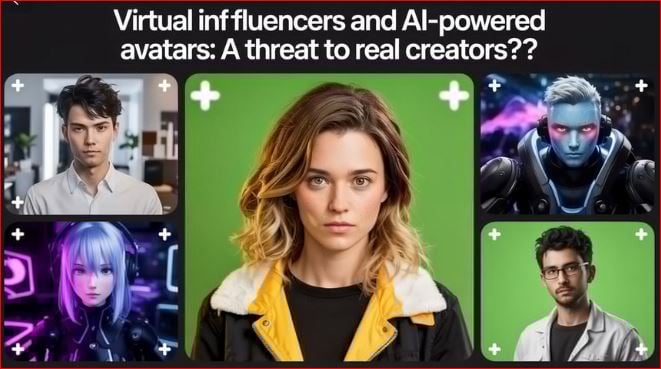
Who Are Virtual influencers?
Also known as AI influencers, virtual influencers are AI-generated characters that look and behave like humans in areas such as engaging with audiences and promoting brands on social media. They can create content, interact with followers, and even respond to comments. These characters are usually fabricated, unlike traditional influencers with a large following on social media. However, they can effectively impact customers’ buying decisions.
AI influencers are created by combining creativity and technology. Developers use deep learning models to create them, which provide the characters with human-like behaviors such as body language, facial expressions, and natural language style. Graphic designers also contribute to creating virtual influencers, ensuring that they look appealing and relatable to their audience.
After digital influencers are made, they go to social media, where they start creating content, interacting with followers, and promoting brands. This makes them feel more like human beings.
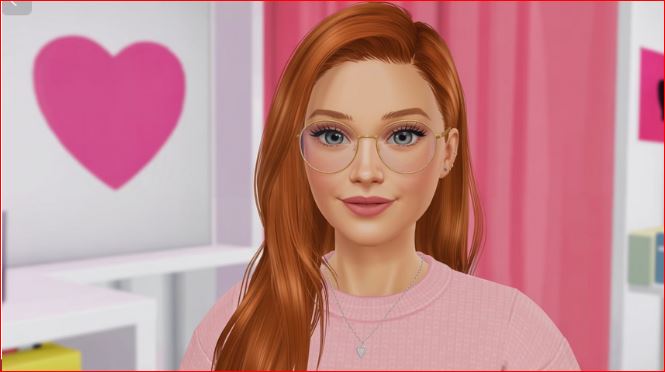
Will Virtual Influencers Replace Human Influencers?
To better understand this question, we need to understand the benefits and drawbacks of AI influencers.
Benefits of Virtual Influencers
If you are wondering why a brand would choose an AI influencer over a traditional one, here are some of the benefits of making such a decision:
- More consistency and control. When your brand works with an AI influencer, you can easily be in charge of your campaign, which isn't possible with a human influencer. You can ensure your messaging aligns with your brand objectives and values. This eliminates any risk of controversy and unexpected behaviors caused by human influence.
- Cost-effective. When compared to human influencers, AI influencers are also more cost-effective. The initial investment can be high, but there are no shooting expenses, influencer fees, and logistic costs that are common with human influencers. These AI influencers also never get tired, meaning they can easily generate content on a large scale, thereby reducing the need for large content creation teams.
- Experimentation and Innovation. AI influencers can create a wider range of content than human influencers, enabling brands to experiment with different kinds of content. For instance, you can add special effects to animate your videos and, therefore, engage with your audience more creatively. If you want your brand to push boundaries in its campaigns, virtual influencers will enable you to do that.
- No timezone limitations. AI influencers don't go to sleep and can engage with your global audience around the clock without any restrictions. You can even program them in different languages to reach other cultures. This means they can be great tools to enable you to reach a diverse global audience.
- Culture adaptability and global reach. You can also program AI influencers to speak in different languages and tailor their cultures to the needs of a specific audience. This is one reason they are great for global campaigns: they can engage with audiences across different regions where it may be challenging to work with multiple influencers.
Drawbacks of Virtual Influencers
Some of the reasons why virtual influencers may be unable to replace human influencers are:
- Not authentic. Consumers are becoming more conscious of AI creations, meaning they will soon be able to detect that they are interacting with an AI tool rather than a real human being. This can cause a disconnect between the influencer and their audience, possibly harming your brand’s reputation.
- Limited emotional connection. While AI influencers try to copy human influencers, they lack one thing: emotions. That means they may be unable to connect emotionally with their target audience and it may be hard for them to establish genuine and lasting connections with their audiences, a key component of any influencer marketing campaign.
- High initial costs. Even though an AI influencer is usually cost-effective in the long run, it requires a higher start-up cost than human influencers. Some of the key costs include the cost of the AI's design, development, and programming. This is on top of the fact that the AI influencer needs to be updated regularly to remain relevant.
- Transparency and ethical issues. If a brand uses an AI influencer without revealing it, it may raise questions about its ethics regarding transparency. Their audience can feel deceived if they aren't aware that they are dealing with an AI influencer. Some concerns have also been raised about the possibility of data misuse and the ethical implications of those AI-driven persuasion methods.
- Privacy issues. Since AI usually leverages large volumes of data to create content, virtual influences can raise questions about data and privacy issues. Relying on other people's data can result in privacy breaches and information misuse, harming a brand's reputation if this isn't handled well.
Impact of Virtual Influencers on Influencer Marketing
Virtual influencers have transformed how brands engage with their audience, as brands can customize AI influencers to the needs of a particular niche audience. This can impact affiliate marketing programs.
Since the program involves rewarding influencers for driving sales to a product, we will have these programs leveraging virtual influencers to reach a bigger audience. With the content personalization offered by AI influencers, they can be a good choice for promoting affiliate products targeting a particular niche.
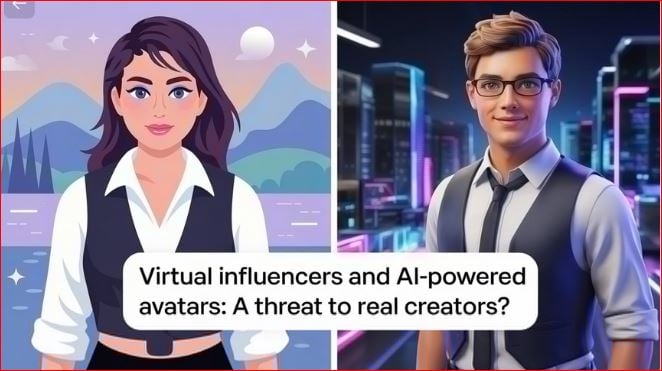
Additionally, AI influencers aren't limited by backgrounds and physical appearances, making it easy for brands to create diverse representations that resonate with their global audience. This level of diversity can be crucial today when consumers search for authentic content.
AI influencers will also make it possible to measure a campaign more precisely. Brands can analyze their campaigns' performance using the data of AI personalities. Since brands can track the results of their campaigns and optimize where necessary, this can help them increase their return on investment.
In Conclusion
Virtual influencers will transform traditional influencer marketing as AR and VR are the future of social media. This means that they can be a real threat to traditional creators. However, since they also have weaknesses, such as a lack of emotional connections, virtual influencers are likely to continue working hand-in-hand with traditional influencers.

Sign up for SocialWick
Login
InstagramYouTubeTikTokFacebookTwitchSpotifyTwitter (X)SoundCloudIGTVLinkedInThreadsWebsitePinterestVKApple MusicSEO
Checkout
OK

Information
Order processing usually starts within a few minutes, but some services may take a few hours or even a few days. We offer free refills for up to 90 days if needed. Our services are 100% secure and discreet, with a focus on gradual and safe delivery for your peace of mind.
Order processing usually starts within a few minutes, but some services may take a few hours or even a few days. We offer free refills for up to 90 days if needed. Our services are 100% secure and discreet, with a focus on gradual and safe delivery for your peace of mind.
Where should we send your order confirmation?
No account needed! We send your confirmation and tracking link here.
Secure checkout. We never share your email.
Have an account?•
Log in
Use your account to pay faster with your saved details.
Create account
Create an account to track all your orders in one place.
Service
+0,00
Voucher
-0.00
Total
+0.00
OK
Affiliate & Reseller Program
Customer Support
How may we help you?
General Support
Order Support
Frequently Asked Questions
1) What services do you offer?
We are a social media marketing company, and we offer a wide variety of services across several platforms that our clients can choose from. Once selected, we create a plan that fits your needs. We offer several types of services, such as followers, subscribers, likes, views, song plays, etc.
2) Is your service safe?
Yes, as we only sell real followers, likes, views, etc., and we hold every service to strict authenticity and quality standards. In order to protect your account, we deliver every order carefully and gradually. We closely monitor all our services. For more information, we strongly recommend reading our Terms of Service before you order.
3) Will I need to give you the passwords for my accounts?
No, you can keep your passwords to yourself because our services don’t need a password to influence your accounts. And if an email ever shows up claiming to be from us and asking for a password, it’s definitely not us, so please let us know right away.
4) Are the likes, followers, and subscribers real, or are they bots?
Unlike many other services, all our likes, followers, and views come from real accounts operated by real people. You won’t find bots, fake profiles, or hijacked accounts anywhere in what we deliver. Every order has to pass our strict authenticity standards, and we keep checking our quality to make sure it stays that way.
5) How fast can you deliver my order?
We will show you the estimated delivery time when choosing the service. However, this is only a rough estimate. In most cases, the services are delivered much faster. In some cases, it may take longer. We always aim for a natural and safe delivery!
6) What are your best-selling social media marketing services?
Although we have many services across most social media companies, our services for Instagram, TikTok, and YouTube are our best-selling options.
7) How do I know my account will not be flagged or banned?
We take safety very seriously. We never ask for your password, all followers, likes, and views come from real accounts, and orders are usually delivered gradually and naturally. What we can promise is careful delivery and strict quality standards. Plus a support team that’s there whenever you need us. We are not aware of a single case since 2017 where a customer got his profile banned.
8) What is the best method to communicate with you?
Do you have a question or run into a problem? Our customer support is available 24/7 for you. Just click Contact and you’ll land right on the support form. When you buy one of our services, we will email you to see if there were any problems. Your satisfaction is our main priority.
9) Are there discounts for large orders?
Yes! If you would like to request a large order that isn’t on our ordering layout, we will have no problems accommodating you. Just reach out through the support form and we’ll put together a buying plan that fits what you need.
10) What methods of payment do you accept?
We accept all forms of credit and debit cards, as well as Klarna, eps, PayPal, and Crypto.
11) If I am unsatisfied with your services, am I able to receive a refund?
Yes! Every purchase comes with a 30 day money-back guarantee. Not satisfied? Just contact our support within 30 days of your purchase and send us your order details and a short note on what went wrong, and we’ll take a look at your case. The full conditions are in our Refund Policy.
12) I haven’t received my order
Please make sure the following criteria are met before placing an order to make sure we can deliver it successfully.
- Your account is set to public
- You have typed in the correct username or link
- You have not changed your username before the order’s completion
- The post or account still exists and has not been deleted
- The post or account has not been restricted or removed in some countries
- Allow the estimated delivery time for completion of your order
For further assistance, please message our support team through the contact form.
13) How can I request a refill?
Just send us a refill request through the contact form. Please note that we can only provide you with a free refill within the first 90 days of your purchase.
Learn More
What is SocialWick?
We are the leading marketplace for social media promotion. You can buy followers, likes, views, subscribers, and a lot more for almost all social media networks. We offer affordable prices without making any compromises in terms of the service quality. We have a strict policy to only sell social media signals from real people. Part of our engagement, for example, comes from ad-based promotion where real users discover the content through ads. Bots, fake profiles, and hijacked accounts have no place in our services. Every delivery has to meet our authenticity standards, and we run regular quality checks, and anything that does not meet them is removed from our catalog. Our services are available for personal use, whether you want more Instagram likes, TikTok followers, YouTube views, or something else for your own profile.
With over a million satisfied customers, SocialWick is the go-to platform for all your social media needs. Our services are discreet and secure, with gradual and careful delivery to keep your social media accounts safe.
About SocialWick — The Market Leader since 2017
With more than 10 million orders, SocialWick is one of the world’s biggest social media stores. You can find everything on our website to improve your presence on major social media platforms like Instagram, TikTok, YouTube, Twitter (X), Facebook, etc. We offer different types of services for several social media platforms. Your wish is our command, and whatever your goal might be, SocialWick will help you achieve it. Whether you need more likes on your Instagram photos or want to make your LinkedIn profile more popular by getting additional followers, SocialWick is there to turn your goal into reality.
Thanks to our effective services and our customer-oriented work, SocialWick has become a top player. You will not find a better service anywhere else, especially not at such affordable prices. SocialWick is operating since 2017.
365 Days Per Year Customer Service
Your satisfaction is our motivation! We’re not here just for the money; we do our work to help people find their road to social media success. And that’s why our team will do all to make sure everything goes according to plan. If there’s something wrong with your social media campaign, or worry that there might be some problems with your account, or want to learn more about how our services work, feel free to reach out. Our service staff is there for you seven days a week, ready to answer any of your questions. You can get in touch with us using the contact form on our website.
Buying Followers and Likes is Essential
Unless you’re Kylie Jenner, you definitely need some help with social media. The more followers you have on Instagram, TikTok, Twitter (X), or YouTube, the more people will automatically notice you. Having all those eyes on your content isn’t just impressive, it’s genuinely fun. The bad news is that everyone wants to be famous these days, but only a few can succeed. The good news is that you can be the chosen one who will get social media fame and everything that comes with it. But, for that, you need a little help from your friends at SocialWick.
With our help, you will increase the number of followers on social media, which can have a domino effect and bring you even more new followers. Once people see that you got a big followership, they will decide to give you a follow. "If a profile has so many followers, it means that it’s interesting" – you can be sure this is going to be their reasoning. Furthermore, more followers mean more visibility for everything you post. Finally, a large number of followers also do great for your credibility. Our social media services will help you to create a better overall picture of your profile.
Let’s be honest; a profile with 30,000 followers looks much better than one with 74 followers. And that’s exactly what new visitors will pay attention to. A weak social media profile can be a real deal-breaker. At the same time, a fantastic social media profile can do wonders for you. And SocialWick can make your social media profile amazing!