#1 Social Media Marketplace
Accelerate Your Social Media Growth with SocialWick. Quickly gain real followers, viewers, likes & more with our blend of marketing tactics. SocialWick is known for its fast delivery, premium quality, and low prices. With over a million satisfied customers since 2017, trust SocialWick to take your social media game to the next level.
1.4 M
Customers
13 M
Orders
362 M
Followers sold
1.8 B
Likes sold
Creating a Multi Platform Strategy for Music Monetization
Published on 18.10.2025 by Tracey Chizoba Fletcher / Last Update: 18.10.2025
Over the past decade, the music industry has experienced a revolution, and today’s tried-and-true formula for success—the record contract or relying on album sales alone for income—no longer exclusively belongs to artists to construct a living on!
Musicians, today, operate in a digital-first environment where streaming, social media, and D-to-F platforms present artists with endless opportunities to monetize. With so many tools at hand, though, the problem is less about being everywhere as it is about creating a multi-platform approach that ties those disparate opportunities together in a manner organized to increase reach, as much as or even greater than income.
It's not about sharing your efforts randomly here and there, but sharing your efforts in a way that builds up a whole ecosystem where every platform is fuel for the other. Streaming exposes your music to new ears, YouTube videos create personality-driven engagement, and Patreon or Bandcamp provide superfans with the means to support you directly.
It’s about understanding what every platform is best at doing and how you can combine them to achieve a stable revenue stream. Here, we are dealing with the development of a robust, multi-platform monetization strategy that is more than a platform-only strategy and that provides a blueprint toward long-term musical career development.
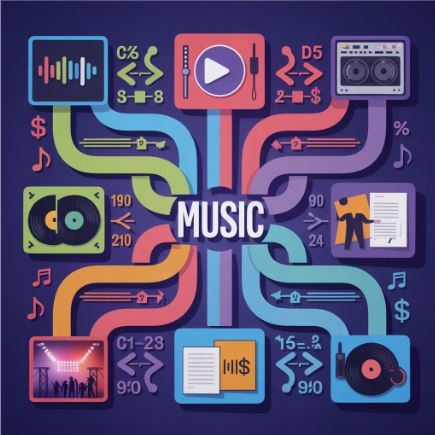
Understanding the Worth of Multi-Platform Presence
Dependence on a single platform for revenue is unreliable in today’s fast-paced digital world. The algorithms change, the monetization policies change, and the attention of the audience keeps shifting every now and then. Diversifying across various platforms minimizes risk as you have access to various sources of revenue.
Spotify or Apple Music streaming platforms are valuable for exposure, but pay little per stream. Combining them with YouTube, where ad revenue and fan support are additive, is a good compromise.
Likewise, social platforms like TikTok or Instagram can be used to promote discovery while directing fans onto platforms in which monetization is greater, such as Bandcamp or Patreon. It’s synergy. Each platform has to have a part in your overall strategy—discovery, engagement, or direct sales.
You have teasers and behind-the-scenes on TikTok so that there’s interest from the listeners, then you point interested listeners at Spotify so that they can listen to the whole track. Then, you also point them at your Patreon membership program, where they can get the demos or the merch. Seeing this interconnectedness turns something which could be a frenetic juggling act into a meaningful system.
A strong presence on many platforms ensures that your music isn’t just out there online—it thrives on multiple points of engagement simultaneously, where the fans are already listening, viewing, and engaging.
Utilizing Streaming Websites as Your Starting Ground
Streaming services are still at the core of online music consumption. Streaming services like Spotify, Apple Music, and Amazon Music are usually where new acts are listened to by fans first, and are, therefore, a logical starting point for any monetization strategy.
Simply uploading files and hoping for streams, however, is not enough; you need to be actively participating in these sites. Creating metadata, such as quality album cover art, quality descriptions, and quality genre tags, is going to get your tracks appearing on playlists and recommendations. Playlisting, more than anything, is an enormous discovery driver.
Appearing on an editorial or user-curated playlist has the potential to blow your reach out by orders of magnitude. Artists who cultivate relationships with the playlist curators or even create their own theme playlists will grow their fanbase quickly.
Aside from discovery, the streaming services are also a direct revenue stream. You have dedicated promotion to potential listeners by means of Spotify’s “Marquee” promotions, artist profiles by means of using Apple Music in promoting releases or live sessions, et cetera.
Utilizing the platforms as something more than a dissemination endpoint and embracing the inbuilt promo engine, you can turn passive streams into an active revenue generator. Streaming alone will not make you wealthy, but as a platform for your strategy, it establishes credibility, creates visibility, and gives you a foundation for monetization in other areas.
Creating a Visual Narrative Using YouTube
Where streaming has access to your music, YouTube is where your fans are able to interact with your narrative storytelling. Music is an emotional journey, and video enhances that journey by delivering personality, performance, and creativity that is outside of music’s reach.
Music videos are still one of the most powerful types of content, but monetization on YouTube extends far beyond great videos. Live performances, lyric videos, vlogs, tutorials, and behind-the-scenes content all involve fans while propagating ad revenue.
“Super Thanks,” membership, and livestream tips within the platform provide a mechanism for fans to financially support you directly while boosting the sense of engagement.
Consistency is crucial. Regular uploads, as few as performance videos or day-to-day updates, are signals to audiences and to algorithms that your channel is alive. Leaving comments on other videos, making playlists, and tagging other creators also boost discoverability.
The strength of YouTube is that it is search-enabled. Whereas social media messages are transient, YouTube videos are long-term content, appearing in search results months or years later.
A perfectly optimized video still stands to monetize and attract followers once it is released, and this is the foundation of visual storytelling as well as repeat streams of revenue.
Utilizing Social Media as a Discovery Engine
Social media is typically the catalyst that captures the attention of the fans. TikTok, Instagram, and Twitter (now X) are all about bite-sized, shareable content that has the potential to make a song viral.
To artists, that means that social media is about something other than simply promotion—social media is about storytelling and engagement.
TikTok, for instance, has become a strong music discovery engine. A clip of your song with the appropriate trend or artistic idea can go around the world in days. Instagram stories and reels are another area of engagement, where fans can glimpse behind the music to relate to you as a person.
It makes you relatable, and that relatability equates to loyalty. Discovery alone isn’t enough—you also have to send newly acquired fans to monetizable platforms.
Be specific about what you’re asking people to do, whether connecting them to your Spotify, sending them to your YouTube, or adding them to your newsletter. You have to turn fleeting attention into lasting fandom.
Social media gives us revenue streams directly, too. Creator platforms and branded relationships on TikTok and Instagram can pay you directly, themselves, but the power is that social media is fuel to the top of your fans’ funnel, driving audiences somewhere that they can support you in more concrete ways.
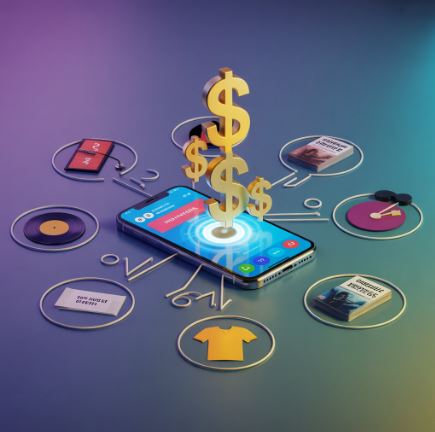
Fan Funding Directly Through Patreon and Membership Websites
One of the best methods of direct revenue for musicians is cutting out the middlemen and selling directly to superfans who most adore your music. Patreon, Ko-fi, or membership even through Substack enables artists to cut out the intermediaries and receive regular revenue from fans who wish to support them long-term.
It is successful because it speaks to the superfans—the fans who are beyond casual but who wish to be part of your creation. It’s all about giving exclusive rights here. It may be an early release of brand new recordings, exclusive real-time feeds, personally autographed lyric sheets, or insider knowledge, and it’s all about intimacy and exclusiveness. You wouldn’t have fans as customers anymore; they are business partners in expansion for your music career in a successful way.
Membership strategy also ensures you have a predictable income, something that’s crucial in a business that’s frequently rocked by uncertainty. Rather than streaming cents or here-and-there dollars from that single item of merch, you have a stable pool of regular monthly customers. It gives you financial leeway that endures in the long run, so you worry less about survival and more about innovation.
Revenue Growth Through Merchandise and Branding
Merchandise is more than selling T-shirts—it’s developing a brand around your music. Fans appreciate physical mementos of the bands they love, and each hoodie, vinyl, or poster is a billboard that’s also building loyalty.
Merchandise also needs to be representative of your artist's image to maximize it. For grungier sounds, plain-design backgrounds may be desired.
For a pop band with a cheerful outlook, bright colors and fun design will be favored. Unique or limited merchandise like signed records or tour-specific merchandise will lead a fan to feel that they must purchase it before it’s out.
Merchandise’s greatest strength is that it is both a revenue and marketing tool. A fan representing your jersey or posting about your new vinyl online is a promotion that is greater than any paid ad, but is doing so without you lifting a finger.
Blending merch with internet platforms—the likes of sharing exclusive bundles on your Patreon or exclusive codes for your subs on YouTube—is allowing you to combine your revenue streams into a single ecosystem.
Sync License Opportunities Exploration
Perhaps the highest paid but most commonly under-acknowledged source of revenue for bands is sync licensing, or placing music on television shows, films, commercials, or video games. Since so much entertainment is being streamed now, there has never been more need for distinctive, independent-sounding music.
Sync licensing is not merely exposure but is also accompanied by the possibility of hefty up-front fees and royalty revenue. That one placement in a Netflix series, for instance, can provide exposure for your music to millions all at once, but also provide cash revenue that vastly exceeds streaming payback.
Artists go into that marketplace via music libraries, licensing companies, or directly to the supervisors. You must have a library of solid adaptive tracks. Instrumentals, alternate takes, and mood tracks increase your likelihood of becoming licensed.
Sync licensing is a waiting game, but when you get it, it can be the foundation for your cross-platform strategy, contributing credibility and stability to your earnings.
Live Streaming and Online Concert Broadcasting
Physical performances have long comprised music livelihoods, but now with digital technology, the stage extends well beyond physical spaces. Internet venues such as Twitch, YouTube Live, and Stage It enable performers to perform in front of entire world audiences from the comfort of their home and provide audiences anywhere in the world a front-row seat.
Virtual concerts have several revenue streams. You have fans contributing in the form of tips, donations, ticket sales, or membership fees.
Merchandise sales are typically integrated into platforms, so you can sell merchandise while you are streaming. Since virtual concerts are repeatable, clip-capable, and reusable, you are left with content that still has activity long after the performance is done.
What makes virtual concerts so strong is that there is interactivity involved. Chat platforms enable real-time connectivity, so fans can request songs or exchange messages while you’re performing them.
It gives you that intimacy that is hard to achieve in much larger physical spaces. When done as a routine, livestreams become more than concerts—they become gatherings of your community with fans personally connected to your journey.
Generating Sustainable Income Via Crowdfunding
Sites such as Kickstarter, Indiegogo, or GoFundMe enable artists to finance albums, tours, or other works directly from their fans through their generosity. While Patreon’s subscription-based model is ideal for repeated, continuous contributions, crowdfunding is event-driven and, therefore, ideal for large events such as recording an album or making a music video.
Transparency and storytelling are often the key to a successful crowdfunding endeavor. You will receive money from fans if you make them aware of what you are doing and how the money will be used. Having the ability to provide wonderful rewards—signed goodies, bonus material, or live listening parties—provides people with a reason to donate.
Crowdfunding is not just a funding vehicle, but a community tool as well. Your crowdfunding community is personally invested in your projects and is more likely to continue supporting you in the long run.
It also provides you with independence from genre definition and industry gatekeepers. With good planning and ongoing updates, crowdfunding can be a launchpad for your projects as much as a home base for your cross-platform strategy.
Email Marketing as a Long-Term Connection Tool
Amidst the perpetual cycle of social media platform changes and algorithm refreshes, email marketing is still among the most dependable tools for enjoying first-hand interaction with your supporters.
Compared to social news feeds whose updates have to contend with relentless distraction, emails are delivered directly into inboxes, so you have a private space where you can be conversational and sell undistracted.
It’s a time investment, but with steady work, it’s one of your best assets. Invite fans to join via social bio links, YouTube videos, or merch checkout.
Make joining worth it by giving them incentives, such as a free track download, early access to the latest music, or priority newsletters. Your list is in place; cultivate it with actual updates and not perpetual sales pitching.
Post about the history of songs, provide sneak peeks of things in the pipeline, or talk about your creative flops and triumphs. Your fans are interested in your activity.
When you have to promote tours, new gear, or you are embarking on a crowdfunding campaign, you have an eager, attentive fan base there to support you directly.
Podcasting and Interviews as Growth Multipliers
Podcasts are a big thing now, and as a creative tool, they’re a potent means of developing reach and extending storytelling. Being a podcast guest, or better yet, hosting your own, gives you the ability to speak to people you can’t reach by mainstream means. They’re typically very attentive listeners, and because they’re a long-form medium, you have the freedom to craft your story in rich detail.
Interviews also carry weight and legitimacy. Discussing the reality of being an independent artist, your creative process, or your entrepreneurial mindset makes you real and relatable.
It’s not about selling your music—it’s about providing insights, humor, and value that people want to follow you after the interview. And there are thousands of podcasts with committed, specialist listeners. Guesting on a podcast of a similar kind or sensibility to your own can introduce you to exactly the sort of aficionado who’s going to be a long-term supporter.
Done regularly over time, a deliberate series of guesting on podcasts and your own podcasts as a producer builds another strand in your multi-platform approach, improving your penetration as well as future co-production opportunities.
Diversification through Education and Coaching Opportunities
Perhaps the best under-leveraged income stream for music makers is education. Fans—and sometimes even potential music makers—are hungry not only for music from their heroes, but for information as well.
You can create a stable and satisfying income stream while nurturing your relationship with your fan base by offering lessons, workshops, or masterclasses. Sites like Skillshare, or even Zoom courses, create a platform where a musician can aggregate and sell knowledge in bite-sized, easily consumable courses. Content might be production and songwriting tips, performing live, or how to be in the music business. You are not only making money by teaching, but you are now the expert, boosting your professional cred.
For those who are not interested in long-form course investments, there are shorter versions as well. You can have a Patreon for demo commentary, make a YouTube series about your gear, or hold Q&As on career development in music.
Learning enables your fan base to learn about the human behind the music and from your experience, as you diversify revenue streams to more than performance and streaming.
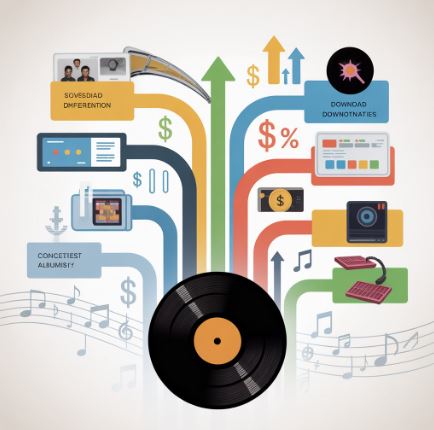
Optimizing Your Approach Using Data
With so many platforms involved, data is your key to making smart choices. For every platform—the Spotify for Artists dashboard, YouTube Analytics, TikTok Insights, Patreon dashboards—you have metrics that reveal what is and isn’t working with your people. To disregard this data is to throw darts while blindfolded.
Pay attention to where your fans are, what they’re watching or listening to most on music or videos, and which ones are making them support even more. Get on all short-form video content, such as if analytics indicate that most of your Spotify listeners are from Instagram, or develop exclusive acoustic versions, such as if Patreon analytics indicate fans go wild for them, so you prioritize them for greater rewards.
Data not only makes content more targeted, but it also informs touring, merchandise, and relationships. When you see a spike in listenership from a particular city or nation, it is a signal for targeting dates or promotional efforts in the city or nation.
The constant monitoring and adjustment of your multi-platform approach ensures activity is in alignment with listener behavior and not guesswork.
Conclusion
It’s not about covering yourself thinly across platforms; it’s about layering in the best of the best of each platform into a successful economic ecosystem. Streaming media puts you in the game, YouTube gives you the visual storytelling, and social platforms help you with discovery, but sustainability comes from layering in that direct-to-fan support, merch, live, crowdfunding, and educational content.
It’s strong because it’s diverse. If one of those income streams is down, others are keeping you afloat. A new listener that hears you for the first time on TikTok is a Patreon donor for life, may buy a vinyl at tour, or help you crowd-fund your next project.
Every point of contact is another chance to cultivate the relationship and solidify your brand. Ultimately, at its best, a multi-platform strategy is not about making money—it’s about developing a base of fans around your music, fans that you are as much as writers, as much as teachers, as a creator that they want to support.
By grasping in detail the particular role that each platform has to offer and employing all of them at once in a thoughtful manner, you lay the groundwork for a career that’s not merely fiscally successful but artistically satisfying!

Sign up for SocialWick
Login
InstagramYouTubeTikTokFacebookTwitchSpotifyTwitter (X)SoundCloudIGTVLinkedInThreadsWebsitePinterestVKApple MusicSEO
Checkout
OK

Information
Order processing usually starts within a few minutes, but some services may take a few hours or even a few days. We offer free refills for up to 90 days if needed. Our services are 100% secure and discreet, with a focus on gradual and safe delivery for your peace of mind.
Order processing usually starts within a few minutes, but some services may take a few hours or even a few days. We offer free refills for up to 90 days if needed. Our services are 100% secure and discreet, with a focus on gradual and safe delivery for your peace of mind.
Where should we send your order confirmation?
No account needed! We send your confirmation and tracking link here.
Secure checkout. We never share your email.
Have an account?•
Log in
Use your account to pay faster with your saved details.
Create account
Create an account to track all your orders in one place.
Service
+0,00
Voucher
-0.00
Total
+0.00
OK
Affiliate & Reseller Program
Customer Support
How may we help you?
General Support
Order Support
Frequently Asked Questions
1) What services do you offer?
We are a social media marketing company, and we offer a wide variety of services across several platforms that our clients can choose from. Once selected, we create a plan that fits your needs. We offer several types of services, such as followers, subscribers, likes, views, song plays, etc.
2) Is your service safe?
Yes, as we only sell real followers, likes, views, etc., and we hold every service to strict authenticity and quality standards. In order to protect your account, we deliver every order carefully and gradually. We closely monitor all our services. For more information, we strongly recommend reading our Terms of Service before you order.
3) Will I need to give you the passwords for my accounts?
No, you can keep your passwords to yourself because our services don’t need a password to influence your accounts. And if an email ever shows up claiming to be from us and asking for a password, it’s definitely not us, so please let us know right away.
4) Are the likes, followers, and subscribers real, or are they bots?
Unlike many other services, all our likes, followers, and views come from real accounts operated by real people. You won’t find bots, fake profiles, or hijacked accounts anywhere in what we deliver. Every order has to pass our strict authenticity standards, and we keep checking our quality to make sure it stays that way.
5) How fast can you deliver my order?
We will show you the estimated delivery time when choosing the service. However, this is only a rough estimate. In most cases, the services are delivered much faster. In some cases, it may take longer. We always aim for a natural and safe delivery!
6) What are your best-selling social media marketing services?
Although we have many services across most social media companies, our services for Instagram, TikTok, and YouTube are our best-selling options.
7) How do I know my account will not be flagged or banned?
We take safety very seriously. We never ask for your password, all followers, likes, and views come from real accounts, and orders are usually delivered gradually and naturally. What we can promise is careful delivery and strict quality standards. Plus a support team that’s there whenever you need us. We are not aware of a single case since 2017 where a customer got his profile banned.
8) What is the best method to communicate with you?
Do you have a question or run into a problem? Our customer support is available 24/7 for you. Just click Contact and you’ll land right on the support form. When you buy one of our services, we will email you to see if there were any problems. Your satisfaction is our main priority.
9) Are there discounts for large orders?
Yes! If you would like to request a large order that isn’t on our ordering layout, we will have no problems accommodating you. Just reach out through the support form and we’ll put together a buying plan that fits what you need.
10) What methods of payment do you accept?
We accept all forms of credit and debit cards, as well as Klarna, eps, PayPal, and Crypto.
11) If I am unsatisfied with your services, am I able to receive a refund?
Yes! Every purchase comes with a 30 day money-back guarantee. Not satisfied? Just contact our support within 30 days of your purchase and send us your order details and a short note on what went wrong, and we’ll take a look at your case. The full conditions are in our Refund Policy.
12) I haven’t received my order
Please make sure the following criteria are met before placing an order to make sure we can deliver it successfully.
- Your account is set to public
- You have typed in the correct username or link
- You have not changed your username before the order’s completion
- The post or account still exists and has not been deleted
- The post or account has not been restricted or removed in some countries
- Allow the estimated delivery time for completion of your order
For further assistance, please message our support team through the contact form.
13) How can I request a refill?
Just send us a refill request through the contact form. Please note that we can only provide you with a free refill within the first 90 days of your purchase.
Learn More
What is SocialWick?
We are the leading marketplace for social media promotion. You can buy followers, likes, views, subscribers, and a lot more for almost all social media networks. We offer affordable prices without making any compromises in terms of the service quality. We have a strict policy to only sell social media signals from real people. Part of our engagement, for example, comes from ad-based promotion where real users discover the content through ads. Bots, fake profiles, and hijacked accounts have no place in our services. Every delivery has to meet our authenticity standards, and we run regular quality checks, and anything that does not meet them is removed from our catalog. Our services are available for personal use, whether you want more Instagram likes, TikTok followers, YouTube views, or something else for your own profile.
With over a million satisfied customers, SocialWick is the go-to platform for all your social media needs. Our services are discreet and secure, with gradual and careful delivery to keep your social media accounts safe.
About SocialWick — The Market Leader since 2017
With more than 10 million orders, SocialWick is one of the world’s biggest social media stores. You can find everything on our website to improve your presence on major social media platforms like Instagram, TikTok, YouTube, Twitter (X), Facebook, etc. We offer different types of services for several social media platforms. Your wish is our command, and whatever your goal might be, SocialWick will help you achieve it. Whether you need more likes on your Instagram photos or want to make your LinkedIn profile more popular by getting additional followers, SocialWick is there to turn your goal into reality.
Thanks to our effective services and our customer-oriented work, SocialWick has become a top player. You will not find a better service anywhere else, especially not at such affordable prices. SocialWick is operating since 2017.
365 Days Per Year Customer Service
Your satisfaction is our motivation! We’re not here just for the money; we do our work to help people find their road to social media success. And that’s why our team will do all to make sure everything goes according to plan. If there’s something wrong with your social media campaign, or worry that there might be some problems with your account, or want to learn more about how our services work, feel free to reach out. Our service staff is there for you seven days a week, ready to answer any of your questions. You can get in touch with us using the contact form on our website.
Buying Followers and Likes is Essential
Unless you’re Kylie Jenner, you definitely need some help with social media. The more followers you have on Instagram, TikTok, Twitter (X), or YouTube, the more people will automatically notice you. Having all those eyes on your content isn’t just impressive, it’s genuinely fun. The bad news is that everyone wants to be famous these days, but only a few can succeed. The good news is that you can be the chosen one who will get social media fame and everything that comes with it. But, for that, you need a little help from your friends at SocialWick.
With our help, you will increase the number of followers on social media, which can have a domino effect and bring you even more new followers. Once people see that you got a big followership, they will decide to give you a follow. "If a profile has so many followers, it means that it’s interesting" – you can be sure this is going to be their reasoning. Furthermore, more followers mean more visibility for everything you post. Finally, a large number of followers also do great for your credibility. Our social media services will help you to create a better overall picture of your profile.
Let’s be honest; a profile with 30,000 followers looks much better than one with 74 followers. And that’s exactly what new visitors will pay attention to. A weak social media profile can be a real deal-breaker. At the same time, a fantastic social media profile can do wonders for you. And SocialWick can make your social media profile amazing!