#1 Social Media Marketplace
Accelerate Your Social Media Growth with SocialWick. Quickly gain real followers, viewers, likes & more with our blend of marketing tactics. SocialWick is known for its fast delivery, premium quality, and low prices. With over a million satisfied customers since 2017, trust SocialWick to take your social media game to the next level.
1.4 M
Customers
13 M
Orders
362 M
Followers sold
1.8 B
Likes sold
How Micro Influencers Create High Conversion Content
Published on 13.12.2025 by Tracey Chizoba Fletcher
You know that feeling when you’re scrolling through Instagram or TikTok and then stop because something hits different! It is not a big celebrity account. Not the huge creator with a million followers. It is someone smaller. Someone who feels almost… normal. Relatable. Like the friend you trust with restaurant picks or skincare recs.
That is the magic of micro-influencers.
They sit in that sweet spot. Big enough to influence. Small enough to feel human. It is why brands love them. It is why their content converts better than that of creators ten times their size. There is this built-in warmth that you cannot fake. A kind of “Hey, I actually use this” energy that audiences instantly believe. I think that is why people pay attention. It feels real. It feels grounded. It feels like advice, not advertising.
Micro-influencers do not rely on polished perfection. They win with connection and context. They win because they understand their niche so well that the content lands exactly where it should. When someone buys because of them, it is not a random click. It is trust moving into action.
So, let’s dig into how micro-influencers do it. How these smaller creators turn everyday posts into high-conversion machines. You might notice patterns. Tiny habits. Quiet strategies that stack up into big results. Ready? Let’s dig deeper!
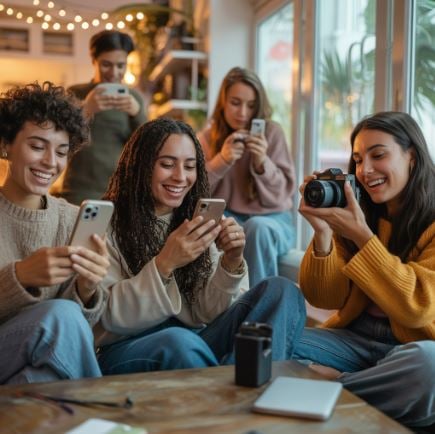
They Know Their Audience Better Than Anyone Else
Micro-influencers are obsessed with their audience. In a good way. They actually pay attention. They read comments and remember names. They notice which posts spark long conversations and which ones just sit there quietly.
When you are small, you can see the humans behind the numbers. You can feel the energy shift when you talk about certain topics. It is almost like reading the room in real-time. This is how micro-influencers learn what people want, what they worry about, what they dream about, and what they hate spending money on.
A creator with 5,000 followers often has tighter audience intel than someone with 500,000 because they are in the replies. They respond to DMs. They spend time scrolling through their followers’ content to understand their vibe. It is slow work, but it builds something powerful.
This is what makes their content convert so well. They are not guessing but speaking directly to people they understand on a personal level. When you know what your audience wants before they even say it out loud, selling stops feeling like selling. It feels like helping.
They Share Personal Experiences Instead of Generic Claims
One thing micro-influencers do better than almost anyone is storytelling. Real storytelling. Not the “once upon a sponsored post” vibe. Actual life moments. You know when someone says, “I tried this thing, and honestly I did not expect it to work, but…”—that tone? That is conversion gold.
Audiences trust lived experiences and messy journeys. They trust small wins and failed attempts and quiet little lessons. When a micro-influencer tries a product for a full week before posting, their content has this grounded quality you can feel.
It is not a list of benefits. It is a moment. It is not “Buy this.” It is “Here is what happened when I used this yesterday.”Huge difference.
People love specifics. They love it when creators admit things like, “I was skeptical,” or “I thought this was overpriced at first,” or “I did not even plan to share this.” These little bits make the content breathe.
I once followed a micro-creator who posted a skincare routine with a small confession at the end: “I forgot to use sunscreen on Thursday and regretted everything.” That tiny human slip made the whole thing feel authentic. That post sold more than any perfectly curated beauty content I had ever seen from bigger creators.
They Create Content That Feels Like Friendly Advice
This is the secret sauce. Micro-influencers do not feel like advertisers. They feel like the friend who leans over and whispers, “Oh! Try this. It worked for me.” That tone. That softness. That natural rhythm. It creates comfort. It lowers resistance.
High-conversion content is not aggressive. It is warm, casual, and simple. They keep it real. Small influencers chat just like folks do every day. You’d hear their style at a café when pals meet up.
Imagine this – what’s the gap between them?
Creator with 500k followers:
“This product delivers multi-step benefits for enhanced hydration.”
Micro-influencer:
“My skin looked thirsty. This fixed it.”
Guess which one sells?
That conversational tone builds trust. People feel safe making a purchase when the recommendation comes from someone who talks like them. That is why micro-influencers rarely need dramatic edits or high-budget videos. Their natural voice does the heavy lifting.
They Show the Product in Real Life Instead of a Perfect Setup
Here is something you notice pretty quickly: micro-influencers do not stage everything. They do not present a spotless desk with perfect lighting and a soft glow. Sometimes, the kitchen counter is messy. The lighting is uneven. There is a dog walking in the background. But the vibe? Honest.
Real stuff works better because folks believe things that seem raw. A creator using a product for real—like dashing out, parked in their ride, or pulling it from a tote—lands way stronger. Polished content is pretty, while real content is persuasive.
You know that feeling when you see someone test something in the most normal way possible. Like shaking a water bottle. Or opening a package with their actual nails. Or trying on clothes without smoothing the fabric ten times. Those tiny actions scream authenticity.
Micro-influencers do this naturally. They film in normal places. They test things casually. They show mistakes. They do not cut out the awkward bits. This makes the product feel more usable and more trustworthy, which leads to, you guessed it, more conversions.
They Lean Into Niche Topics That Build Instant Trust
One thing micro-influencers understand really well is the power of going small. They do not try to talk to everyone. They talk to their “people.” Their tiny corner of the internet. Their niche.
So if someone focuses on sustainable fashion, they stay there. If someone reviews small-batch skincare, they do not suddenly switch to tech gadgets. When your niche is tight, your audience listens differently. People stick around because they know what they will get.
Niche content removes the guesswork. It builds a kind of quiet comfort between creator and follower. When you speak about the same themes again and again, your audience begins to see you as their go-to. Their “expert-but-still-like-me” guide.
Plus, niche audiences convert faster. Why? Because they already care. They already want the thing you are talking about. A micro-influencer does not need to work hard to convince anyone. They just show up with focused content, and the right people react.
I once followed a creator who reviewed only budget-friendly perfumes. Just that. Nothing else. But wow, the comments? People bought instantly because they trusted her taste. That is what niche clarity does.
They Use Simple Formats That Make the Message Easy to Digest
You know how some creators love complicated storytelling or fancy edits? Micro-influencers skip all that. They keep it simple, like “here is what I tried” simple.
High-conversion content works best when it is easy to follow. Short clips. Quick demos. Clear angles. Straight-to-the-point captions. They strip away fluff so you get the message instantly.
Think of it like cooking. Big creators serve five-course meals. Micro-influencers hand you a warm sandwich that hits the spot right now.
A lot of their best posts follow patterns like:
“Before and after” moments.
“I tested this so you do not have to.”
“Here is how it actually fits.”
“Three days using this thing.”
Nothing complicated. Nothing overproduced.
This simplicity helps conversions because your brain does not have to work to understand the content. You just get it. Fast. Then you think, Hm… I want that too.
Simple formats = clear message = higher conversions.
They Build Mini-Routines That Viewers Want to Copy
Ever notice how micro-influencers repeat certain habits or setups in their content? A morning smoothie ritual. A nightly skincare routine. A weekly “what I’m reading” post. These tiny micro-routines become part of their identity.
Why does this matter? Because people love copying routines. They get the sense they’re becoming part of it—entering the maker’s space, even if just briefly. Once a product fits into a creator’s everyday flow, it seems genuine—never staged, like part of their real life. This creates belief. Belief leads straight to sales.
Imagine stopping by someone’s place, seeing them pick the same cup every day. You wouldn’t assume they’re pushing it on you. You just naturally want one too.
Micro-influencers are great at this. They turn products into rituals. Rituals turn into habits. Habits turn into purchases. That is the flow.
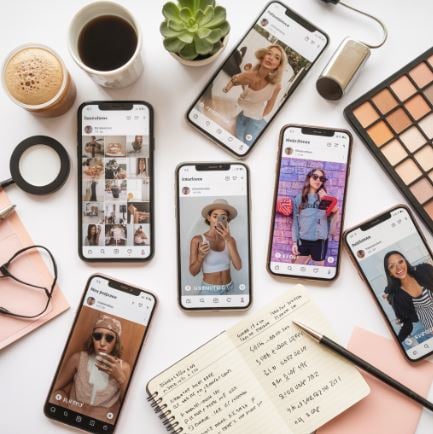
They Add Tiny Emotional Hooks That Make You Care
This is something you do not always see on the surface, but once you notice it, you can’t unsee it. Micro-influencers know how to add emotion in small, subtle ways. Not dramatic emotion. Just little flares of humanity.
Like:
“I was nervous to try this.”
“I bought this on a bad day.”
“I wanted something that would make my mornings easier.”
These are tiny openings. Emotional entry points. They make the viewer lean in because emotions create a connection.
People buy for emotional reasons and justify it with logic later. Micro-influencers instinctively understand this. They speak from experience. They share tiny feelings. They admit small fears. This creates a sense of “same here” in the viewer’s mind. That small emotional spark can be the thing that pushes someone from interest into action.
They Engage With Their Community Like Actual Humans (Not Broadcasters)
Here is one of the biggest conversion boosters: real, human engagement. Not dry replies. Not automated-sounding comments. Actual conversations.
Micro-influencers reply with personality. They ask follow-up questions. They laugh in the comments. They remember people from past posts. It feels warm, friendly, and like a small circle instead of a huge stage.
This type of engagement builds micro-trust pockets everywhere. Somebody asks a simple question like, “Does this run small?” and the creator responds instantly with “Yes. Go one size up. I messed up the first time, too.” That moment removes doubt. Once uncertainty fades, purchases happen without hassle—so simple it feels natural.
Folks back creators that mirror their own lives. Since micro-influencers aren't overwhelmed, they actually connect on a real level. Strangely enough, having fewer followers turns into their strongest perk.
They Share Honest Wins, and Honest Fails
Micro-influencers feel more genuine. Instead of sharing only polished moments, they show everyday life. They share when something works and when it flops. It makes them relatable. It makes their recommendations feel grounded.
When you hear someone say, “Honestly, this broke after a week, but I loved the color,” it hits differently than a perfect scripted ad. You trust them more. You think, if they are honest about the bad stuff, the good stuff must be real too.
This transparency nudges people toward purchases without feeling pressured. You do not feel like a target. You feel like you are getting advice from someone who actually tried it.
I remember watching a creator talk about a skincare cream that irritated her skin. She explained why she kept using it anyway for a week. People appreciated her honesty and shared their experiences in the comments. That interaction is trust in action.
They Use Subtle Calls-to-Action That Do Not Shout
Micro-influencers rarely scream “BUY NOW!” Instead, they sprinkle soft nudges throughout the content. Phrases like: “I got this one for myself,” or “Check the link if you are curious.” They feel natural.
This low-pressure style works because it respects the audience. You do not feel “sold to”. You feel invited. That tiny shift makes a huge difference. People are more likely to click or buy when it feels optional.
Even a simple story about why they chose a product becomes a gentle push. The message is clear but not pushy. I once noticed a creator mention a book casually in a morning routine video, and weeks later, it was sold out everywhere. It is subtle psychology. Light touch. High impact.
They Experiment Constantly Without Losing Their Voice
Micro-influencers rarely stick to one formula forever. They try new formats, products, or approaches, but they do it without losing their core voice. That experimentation keeps content fresh and interesting.
Some experiments fail. Some surprise everyone. But even failures are valuable because they show authenticity. People enjoy watching the creator navigate it honestly, and it reinforces trust and engagement.
I saw a creator switch from short Instagram Reels to live streams for a week. Not everything landed perfectly. Yet, followers appreciated the attempt, and engagement skyrocketed. It worked because the personality stayed consistent.
Frequent tweaks lead to stronger posts while boosting results slowly. Small influencers adjust stuff yet keep trust intact—something big names struggle with since they’re stuck in place.
They Treat Analytics as Friendly Guides, Not Dictators
Micro-influencers peek at their data, yet stay loose about it. Stats show what clicks or flops, so they tweak things. Still, they keep imagination alive instead of chasing digits.
You start seeing trends after a while. Some headlines pull people in. Some items grab attention right away. They pick up on it slowly, bit by bit. Not programmed. More like someone catching hints from real talk.
This method makes content feel natural while still working well, so you get results but don’t sound robotic. It’s this honesty that actually gets people to act. Buyers respond when the link feels truly personal. It's sort of like making dinner while sampling each step. You tweak things as you go—yet skip strict rules every time.
Conclusion
Micro-influencers pack a quiet punch. Focused on specific interests, they stick to basics, building small habits over time. Emotion plays a role here as real stories spark strong connections.
Instead of pushing hard, they invite interaction through authenticity. Testing new ideas keeps things fresh without losing honesty. Gentle prompts to act, mixed with smart adjustments based on feedback, help drive results smoothly.
If you're a brand, watch how tiny creators make huge waves with no fancy budget needed. What fuels them? Real bonds, genuine credibility, yet down-to-earth honesty. Next time you see a small influencer online, pay attention—there’s likely more truth in their post than in some big-budget campaign.

Sign up for SocialWick
Login
InstagramYouTubeTikTokFacebookTwitchSpotifyTwitter (X)SoundCloudIGTVLinkedInThreadsWebsitePinterestVKApple MusicSEO
Checkout
OK

Information
Order processing usually starts within a few minutes, but some services may take a few hours or even a few days. We offer free refills for up to 90 days if needed. Our services are 100% secure and discreet, with a focus on gradual and safe delivery for your peace of mind.
Order processing usually starts within a few minutes, but some services may take a few hours or even a few days. We offer free refills for up to 90 days if needed. Our services are 100% secure and discreet, with a focus on gradual and safe delivery for your peace of mind.
Where should we send your order confirmation?
No account needed! We send your confirmation and tracking link here.
Secure checkout. We never share your email.
Have an account?•
Log in
Use your account to pay faster with your saved details.
Create account
Create an account to track all your orders in one place.
Service
+0,00
Voucher
-0.00
Total
+0.00
OK
Affiliate & Reseller Program
Customer Support
How may we help you?
General Support
Order Support
Frequently Asked Questions
1) What services do you offer?
We are a social media marketing company, and we offer a wide variety of services across several platforms that our clients can choose from. Once selected, we create a plan that fits your needs. We offer several types of services, such as followers, subscribers, likes, views, song plays, etc.
2) Is your service safe?
Yes, as we only sell real followers, likes, views, etc., and we hold every service to strict authenticity and quality standards. In order to protect your account, we deliver every order carefully and gradually. We closely monitor all our services. For more information, we strongly recommend reading our Terms of Service before you order.
3) Will I need to give you the passwords for my accounts?
No, you can keep your passwords to yourself because our services don’t need a password to influence your accounts. And if an email ever shows up claiming to be from us and asking for a password, it’s definitely not us, so please let us know right away.
4) Are the likes, followers, and subscribers real, or are they bots?
Unlike many other services, all our likes, followers, and views come from real accounts operated by real people. You won’t find bots, fake profiles, or hijacked accounts anywhere in what we deliver. Every order has to pass our strict authenticity standards, and we keep checking our quality to make sure it stays that way.
5) How fast can you deliver my order?
We will show you the estimated delivery time when choosing the service. However, this is only a rough estimate. In most cases, the services are delivered much faster. In some cases, it may take longer. We always aim for a natural and safe delivery!
6) What are your best-selling social media marketing services?
Although we have many services across most social media companies, our services for Instagram, TikTok, and YouTube are our best-selling options.
7) How do I know my account will not be flagged or banned?
We take safety very seriously. We never ask for your password, all followers, likes, and views come from real accounts, and orders are usually delivered gradually and naturally. What we can promise is careful delivery and strict quality standards. Plus a support team that’s there whenever you need us. We are not aware of a single case since 2017 where a customer got his profile banned.
8) What is the best method to communicate with you?
Do you have a question or run into a problem? Our customer support is available 24/7 for you. Just click Contact and you’ll land right on the support form. When you buy one of our services, we will email you to see if there were any problems. Your satisfaction is our main priority.
9) Are there discounts for large orders?
Yes! If you would like to request a large order that isn’t on our ordering layout, we will have no problems accommodating you. Just reach out through the support form and we’ll put together a buying plan that fits what you need.
10) What methods of payment do you accept?
We accept all forms of credit and debit cards, as well as Klarna, eps, PayPal, and Crypto.
11) If I am unsatisfied with your services, am I able to receive a refund?
Yes! Every purchase comes with a 30 day money-back guarantee. Not satisfied? Just contact our support within 30 days of your purchase and send us your order details and a short note on what went wrong, and we’ll take a look at your case. The full conditions are in our Refund Policy.
12) I haven’t received my order
Please make sure the following criteria are met before placing an order to make sure we can deliver it successfully.
- Your account is set to public
- You have typed in the correct username or link
- You have not changed your username before the order’s completion
- The post or account still exists and has not been deleted
- The post or account has not been restricted or removed in some countries
- Allow the estimated delivery time for completion of your order
For further assistance, please message our support team through the contact form.
13) How can I request a refill?
Just send us a refill request through the contact form. Please note that we can only provide you with a free refill within the first 90 days of your purchase.
Learn More
What is SocialWick?
We are the leading marketplace for social media promotion. You can buy followers, likes, views, subscribers, and a lot more for almost all social media networks. We offer affordable prices without making any compromises in terms of the service quality. We have a strict policy to only sell social media signals from real people. Part of our engagement, for example, comes from ad-based promotion where real users discover the content through ads. Bots, fake profiles, and hijacked accounts have no place in our services. Every delivery has to meet our authenticity standards, and we run regular quality checks, and anything that does not meet them is removed from our catalog. Our services are available for personal use, whether you want more Instagram likes, TikTok followers, YouTube views, or something else for your own profile.
With over a million satisfied customers, SocialWick is the go-to platform for all your social media needs. Our services are discreet and secure, with gradual and careful delivery to keep your social media accounts safe.
About SocialWick — The Market Leader since 2017
With more than 10 million orders, SocialWick is one of the world’s biggest social media stores. You can find everything on our website to improve your presence on major social media platforms like Instagram, TikTok, YouTube, Twitter (X), Facebook, etc. We offer different types of services for several social media platforms. Your wish is our command, and whatever your goal might be, SocialWick will help you achieve it. Whether you need more likes on your Instagram photos or want to make your LinkedIn profile more popular by getting additional followers, SocialWick is there to turn your goal into reality.
Thanks to our effective services and our customer-oriented work, SocialWick has become a top player. You will not find a better service anywhere else, especially not at such affordable prices. SocialWick is operating since 2017.
365 Days Per Year Customer Service
Your satisfaction is our motivation! We’re not here just for the money; we do our work to help people find their road to social media success. And that’s why our team will do all to make sure everything goes according to plan. If there’s something wrong with your social media campaign, or worry that there might be some problems with your account, or want to learn more about how our services work, feel free to reach out. Our service staff is there for you seven days a week, ready to answer any of your questions. You can get in touch with us using the contact form on our website.
Buying Followers and Likes is Essential
Unless you’re Kylie Jenner, you definitely need some help with social media. The more followers you have on Instagram, TikTok, Twitter (X), or YouTube, the more people will automatically notice you. Having all those eyes on your content isn’t just impressive, it’s genuinely fun. The bad news is that everyone wants to be famous these days, but only a few can succeed. The good news is that you can be the chosen one who will get social media fame and everything that comes with it. But, for that, you need a little help from your friends at SocialWick.
With our help, you will increase the number of followers on social media, which can have a domino effect and bring you even more new followers. Once people see that you got a big followership, they will decide to give you a follow. "If a profile has so many followers, it means that it’s interesting" – you can be sure this is going to be their reasoning. Furthermore, more followers mean more visibility for everything you post. Finally, a large number of followers also do great for your credibility. Our social media services will help you to create a better overall picture of your profile.
Let’s be honest; a profile with 30,000 followers looks much better than one with 74 followers. And that’s exactly what new visitors will pay attention to. A weak social media profile can be a real deal-breaker. At the same time, a fantastic social media profile can do wonders for you. And SocialWick can make your social media profile amazing!