Ask the average content creator what the most important user engagement metrics are, and they will probably say likes and comments. To most creators, nothing shows that their posts are performing well like a high like count and an engaged comment section. The result is that many content creators optimize their content for these two metrics, while other engagement metrics, like saves and shares, become an afterthought. By doing this, they deprive themselves of a strategy that could significantly increase their social media reach and visibility.
Content that's optimized for saves and shares tends to draw a lot of algorithmic support, primarily because algorithms rank these two metrics significantly higher than likes and comments. While the latter still guide platform algorithm recommendations, the former serve as more than just user engagement metrics; they actively extend content distribution in a way algorithms simply can't. Let's discuss why shares and saves matter more than other metrics, how each affects content distribution, and how content creators can optimize their content for saves and shares.
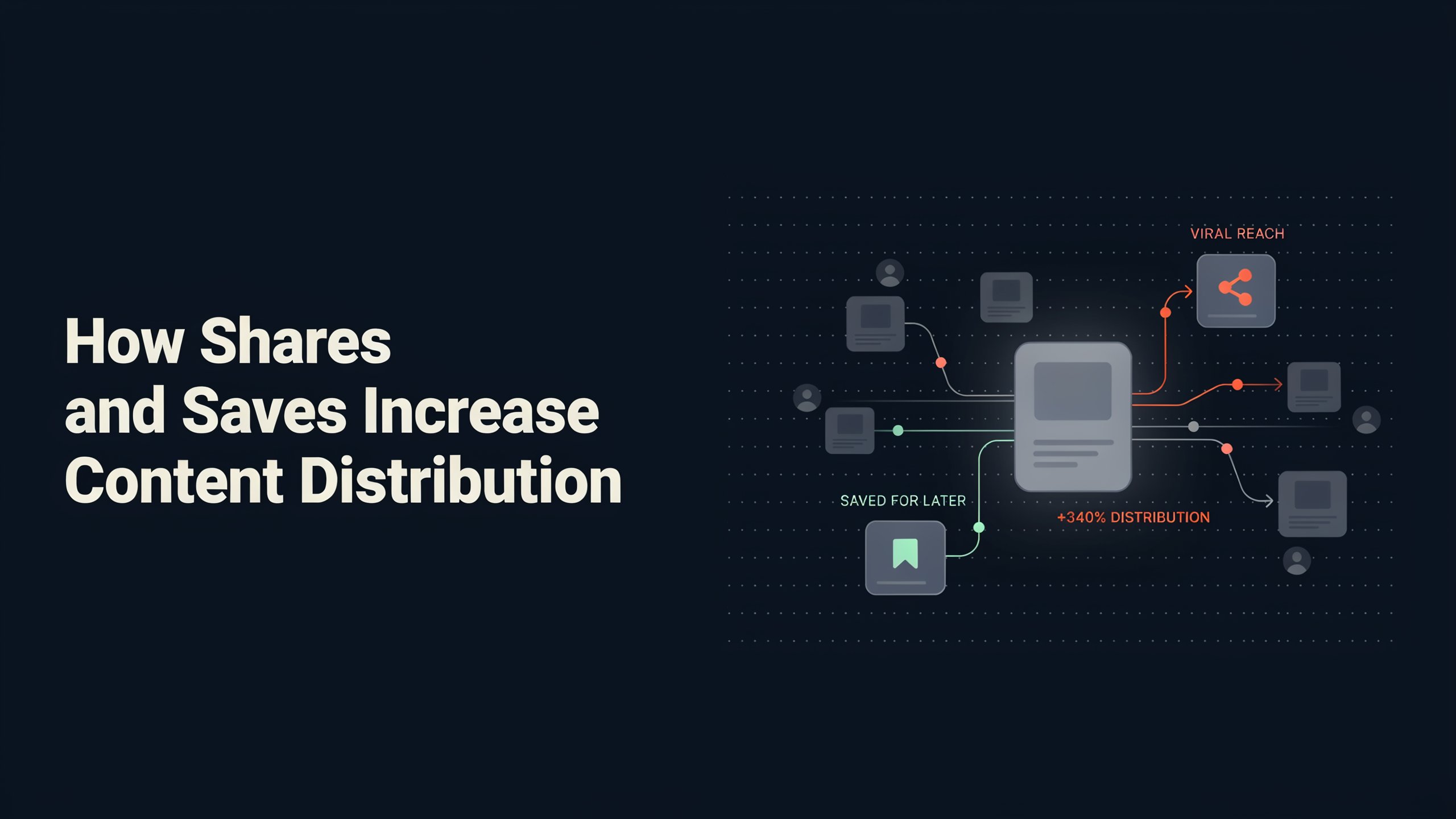
Why Shares and Saves Carry More Algorithmic Weight
As we've established, social media algorithms don't weigh user engagement metrics equally. Likes and comments lie at the bottom of the hierarchy, but this doesn't mean they provide no value to algorithms. They just signal a different type of value. Likes and comments represent in-app approval of a content creator's content. These two metrics are the primary tools users can use to express their approval or disapproval of a piece of content. Content with a high like-and-comment rate signals to the algorithm that it should sustain user attention on the platform.
Saves and shares, on the other hand, represent a much deeper level of value that extends beyond the platform and bleeds into real life. Saves show that viewers found your content so valuable they were willing to revisit it, while shares indicate such intrinsic value that users felt compelled to share it with others. Algorithms almost always push such content to wider audiences, as it has already proven it can reliably sustain users' attention for much longer.
Shares also draw algorithmic momentum as they feed right into the algorithm's goal of reaching as many people as possible with engaging content. Algorithms especially love it when content spreads outside of its established audience organically, as they generally can't induce this type of cross-audience reach on their own. In a nutshell, saves and shares are much more accurate indicators of genuine content value than likes and comments.
How Shares Distribute Content Beyond the Algorithm
Every social media algorithm is optimized to maximize user engagement by recommending content to viewers who are most likely to enjoy it. To do this, algorithms classify their user bases into general boxes that align with specific niches. Content that falls within a clear niche can then be shown to people who have already shown interest in similar content.
Here's how shares break this system:
Shares Reach Networks Outside the Algorithm's Control
Algorithms can only recommend content to audiences they have influence or visibility over, typically those on their platform. Sharing, on the other hand, allows users to distribute content across channels that platform algorithms could never use. Content shared directly to friends or family, in group chats, or across to other platforms moves across distribution networks outside the algorithm's control, complementing the system's own distribution strategies.
In many cases, shared content sparks interest in the original creator or the niche they inhabit, bringing in new viewers that algorithms couldn't have reached. Shares essentially act as a distribution channel that operates independently of in-app content discovery and drives strong user engagement metrics without the system's intervention. This makes shareable content extremely valuable to algorithms across all social media platforms.
What Makes Content Shareable
What exactly is shareable content? Why would a social media user like and comment on one piece of content, but ultimately move on from it, but save and share another piece with friends and family? What differentiates good content from shareable content? In most cases, it is relatability, practical value, and the ability to trigger strong emotions in viewers.
People don't share content that's just okay; rather, they share posts that deeply resonate with them, evoke powerful emotions, and offer real, practical value. Guides, life hacks, and useful tips that can help solve real problems are more likely to be shared. Relatable content that reminds viewers of themselves or someone they know, as well as content that makes viewers look cool, funny, or smart to their social circle, is also shareable.
Shareable content resonates with viewers on a deep level, sparking strong feelings of excitement, curiosity, or inspiration. It mirrors common experiences, values, and inside jokes, and offers genuinely helpful information that viewers can't help but pass on to their friends and family.
How Saves Signal Long-Term Value
Saves round up the dynamic duo of extremely high-value engagement metrics. While shares represent distribution outside the algorithm's influence, saves are a clear signal for long-term value. The average social media user doesn't save every piece of content they encounter; when they can scroll past dozens of pieces in a single day, something has to really stand out to be bookmarked for repeat viewing.
Saves Tell the Algorithm the Content is Worth Revisiting
Content that is saved and revisited in the future proves it is engaging enough to provide value beyond the second viewing. Every save is a strong signal to algorithms that your content provides long-lasting problem-solving or educational value to viewers. Each save is a positive data point that helps you build trust with the algorithm by indicating that your content is worth revisiting.
Content Types That Drive High Save Rates
The type of content you produce could either boost or cap your save rates. Certain formats aren't conducive to saves, while others practically invite viewers to press the save button and come back for repeat views. Educational content like checklists, tutorials, and how-to content tends to drive high save rates. Users typically bookmark such content for later use, either to take their time absorbing it or to share it with friends or family who they believe could benefit from it.
Creating Content Designed for Shares and Saves
Optimizing your content for saves and shares will supercharge your growth strategy and bring you several steps closer to achieving your social media objectives without ad spend. But many content creators prioritize likes and comments instead, seeking metrics that just don't carry as much weight with the algorithm.
Let's discuss some of the tactics you can use to make your content super saveable and shareable.
Build in a Clear Reason to Share
You need to give viewers a reason to share your content. Social media users scroll past dozens to hundreds of posts every day; why should they take a pause and give your content any more notice? Highly shareable content on social media typically offers practical utility, emotional resonance, and identity reinforcement. It has real value, sparks strong emotions in viewers, and reminds them of themselves or someone in their social circle, which gives users a clear reason to share.
Structure Content for Easy Reference Later
Informational content typically performs well when structured to be easier to consume and revisit. Finding the right content for share and save optimization isn't enough; your presentation could either make or break your optimization efforts. A dense educational post that doesn't present its information in a structured, easy-to-reference manner will not attract saves, even if it offers more than enough value for repeat views.
Building your content around clear lists, steps, or visual structures is the key to creating easily scannable content. Viewers should get the gist of the content at a glance and confidently navigate to different sections for reference.
Add a Direct Prompt When Appropriate
Sometimes, a direct prompt used at the right moment is all it takes to get viewers to save or share content. This is still contingent on high-quality, value-driven content. If your content hits the right marks, you can, when appropriate, use a simple call to action to ask viewers to save your post for later viewing or share it with someone who could find it beneficial.
Optimize Your Content For Saves and Shares
Shares and saves matter a lot more than content creators give them credit for. Pushing content distribution outside the algorithm's influence and signaling genuine, long-term value rather than passive approval means saves and shares do work that likes and comments simply cannot replicate. Content developed with savability and shareability in mind will build algorithmic trust much faster, as every save and share serves as a more powerful vote of confidence and quality affirmation than a quick like ever could.
