#1 Social Media Marketplace
Accelerate Your Social Media Growth with SocialWick. Quickly gain real followers, viewers, likes & more with our blend of marketing tactics. SocialWick is known for its fast delivery, premium quality, and low prices. With over a million satisfied customers since 2017, trust SocialWick to take your social media game to the next level.
1.4 M
Customers
13 M
Orders
362 M
Followers sold
1.8 B
Likes sold
How to Use Storytelling to Convert Customers
Published on 08.01.2026 by Tracey Chizoba Fletcher
One of the most complicated steps in digital marketing is converting your customers. You can spend a lot of time creating a video or sales copy, and even adding an outstanding call to action.
However, when you want your target customers to convert, that is where they draw the line. That means you need to be creative to increase your conversion rate. In this article, we will guide you on the use of storytelling to engage, inspire, and convert your customers.
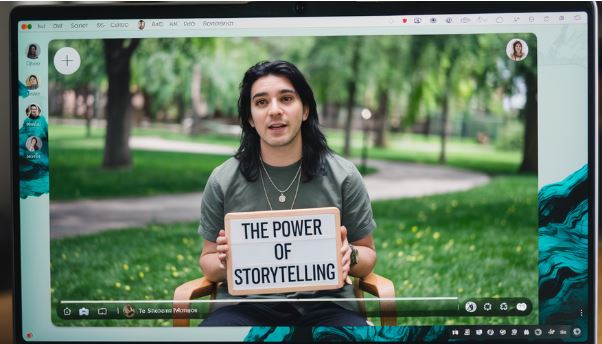
Why Storytelling Helps in Converting Customers
Brand storytelling is an excellent way to build an emotional connection with customers, enhance trust, and make your message memorable. On top of that, brand storytelling can offer various benefits such as:
- Ensuring an emotional connection. While facts tell, stories sell, as they activate the brain region responsible for empathy and emotion, releasing the trust hormone, oxytocin. This hormone helps customers form a strong connection with a brand, enhancing customer loyalty and perceived value.
- Improving brand recall. When information is presented in a story format, it is 22 times more memorable than figures and facts. Since the world is filled with promotional content, this can help brands to remain in the consumer’s mind and, therefore, reduce the noise level.
- Increasing credibility and trust. In recent years, authenticity has been winning over polished content on social media. Authentic stories can show the human side of the brand, helping customers understand the mission, values, and people behind the products. Therefore, you can increase the level of audience’s trust by sharing some real-world examples, employee experiences, and customer success stories. This can increase credibility and reassure customers that your company is honest and genuinely focused on the customer’s problems.
- Simplifying complex problems. Stories can be a good choice for making complex problems easier to understand, such as financial models and technical features. This means it becomes easier for your customers to understand your brand’s value proposition and why they should consider your product.
- Differentiation from competitors. We live in markets with many similar products and services. This means that a compelling, unique brand story can offer a significant advantage. It provides customers with a reason to choose your brand over those that share a purpose and values.
- Motivating call to action. Stories can increase anticipation, mainly when they include a resolution that shows how the product solves the target customer’s problems, motivating the next step. Make sure you highlight any potential outcomes from using a product and the possible negative impacts of not taking action, which can create a sense of urgency that inspires action.
How to Use Storytelling in Marketing
There are several steps you can follow when using storytelling in marketing to increase conversion. These are:
Determine Your Stage
You need to determine where you plan to appear in front of your new audiences. This could be in:
- Social media platforms.
- Podcasts.
- Conferences.
- Professional networks.
- Webinars.
- Email lists.
- Video or sales pages.
- YouTube channels.
Consider which of these platforms you will be putting most of your efforts into.
Focus on Customers’ Needs
A common mistake that brands make is to focus on what they want, such as sales and leads, rather than what customers need. If you focus on your own story to achieve your goal, you position yourself outside the customer’s narrative. They can feel that the brand’s story is simply trying to make a sale, rather than helping them attain their goals.
By focusing on helping customers meet their needs rather than pushing the product to them, you will start to be seen as a guide to help them achieve their goals. For instance, instead of telling customers to buy your gym equipment, you can show them the different workouts they can do at home.
Tell Your Story
When using storytelling to convert your customers, consider how to position them as the hero. The goal should be to solve their problems and provide a piece of the solution that will ultimately lead to outcomes such as email opt-ins, sales, etc.
To make your story more memorable and enjoyable, you need to add a problem. Instead of beginning with talking about your product, start by addressing the problem your audience faces and use that to hook the theme into your story. You need to address two issues:
- External problem. These are the tangible problems your customers are facing, such as becoming overweight from not working out.
- Internal problems. These refer to the emotional consequences of external issues, such as loss of self-esteem.
This approach works for one reason. When people go shopping, they are trying to solve an external problem. However, when they make a buying decision, it's because they want to solve an internal challenge. When you name the external problem and agitate it with the internal problem, you will position your customers to be more receptive to the value your message offers.

Clarify Your Customer’s Needs
If you sell workout equipment, your customers want to lose weight and feel better. After clarifying their need, you can now focus on the value you will be offering in the space. Their expectations of your content in a reel will be different from those of a webinar, but you need to be careful not to focus too much on the problems.
Position Your Brand as the Solution
After you have established the challenge, you will need to position your brand as the solution. This is the section that you should focus on more. You may be offering broader lessons or specific topics you already know, intending to help your audience overcome that challenge, so start by showing your audience.
Make sure you show empathy for your audience and the authority needed for your current customer situations. For instance, if someone is aiming to lose 50 pounds, you can show empathy by saying, “I know the struggle of being over 100 kgs.” When you show empathy, you can connect emotionally with your audience. You can then add a statement like “I learned a safe way of losing 50 pounds. Here are three main lessons I learnt.”
- Show what is at stake. That means you need to outline the potential success and failure. Tell them the positive success they will experience, and that they will experience failure if they don’t take the advice seriously.
- Add a clear call to action. You need to tell your audience what you want them to do. It could be to sign up for a newsletter, buy this, or schedule a call. Make sure you are direct in the call to action without coming across as pushy.
In Conclusion
Storytelling can be a good strategy for increasing your conversion. This is because it can help you connect with your audience. If you want to learn how to leverage storytelling for your brand to increase your conversion rate, our detailed guide will help you get started.

Sign up for SocialWick
Login
InstagramYouTubeTikTokFacebookTwitchSpotifyTwitter (X)SoundCloudIGTVLinkedInThreadsWebsitePinterestVKApple MusicSEO
Checkout
OK

Information
Order processing usually starts within a few minutes, but some services may take a few hours or even a few days. We offer free refills for up to 90 days if needed. Our services are 100% secure and discreet, with a focus on gradual and safe delivery for your peace of mind.
Order processing usually starts within a few minutes, but some services may take a few hours or even a few days. We offer free refills for up to 90 days if needed. Our services are 100% secure and discreet, with a focus on gradual and safe delivery for your peace of mind.
Where should we send your order confirmation?
No account needed! We send your confirmation and tracking link here.
Secure checkout. We never share your email.
Have an account?•
Log in
Use your account to pay faster with your saved details.
Create account
Create an account to track all your orders in one place.
Service
+0,00
Voucher
-0.00
Total
+0.00
OK
Affiliate & Reseller Program
Customer Support
How may we help you?
General Support
Order Support
Frequently Asked Questions
1) What services do you offer?
We are a social media marketing company, and we offer a wide variety of services across several platforms that our clients can choose from. Once selected, we create a plan that fits your needs. We offer several types of services, such as followers, subscribers, likes, views, song plays, etc.
2) Is your service safe?
Yes, as we only sell real followers, likes, views, etc., and we hold every service to strict authenticity and quality standards. In order to protect your account, we deliver every order carefully and gradually. We closely monitor all our services. For more information, we strongly recommend reading our Terms of Service before you order.
3) Will I need to give you the passwords for my accounts?
No, you can keep your passwords to yourself because our services don’t need a password to influence your accounts. And if an email ever shows up claiming to be from us and asking for a password, it’s definitely not us, so please let us know right away.
4) Are the likes, followers, and subscribers real, or are they bots?
Unlike many other services, all our likes, followers, and views come from real accounts operated by real people. You won’t find bots, fake profiles, or hijacked accounts anywhere in what we deliver. Every order has to pass our strict authenticity standards, and we keep checking our quality to make sure it stays that way.
5) How fast can you deliver my order?
We will show you the estimated delivery time when choosing the service. However, this is only a rough estimate. In most cases, the services are delivered much faster. In some cases, it may take longer. We always aim for a natural and safe delivery!
6) What are your best-selling social media marketing services?
Although we have many services across most social media companies, our services for Instagram, TikTok, and YouTube are our best-selling options.
7) How do I know my account will not be flagged or banned?
We take safety very seriously. We never ask for your password, all followers, likes, and views come from real accounts, and orders are usually delivered gradually and naturally. What we can promise is careful delivery and strict quality standards. Plus a support team that’s there whenever you need us. We are not aware of a single case since 2017 where a customer got his profile banned.
8) What is the best method to communicate with you?
Do you have a question or run into a problem? Our customer support is available 24/7 for you. Just click Contact and you’ll land right on the support form. When you buy one of our services, we will email you to see if there were any problems. Your satisfaction is our main priority.
9) Are there discounts for large orders?
Yes! If you would like to request a large order that isn’t on our ordering layout, we will have no problems accommodating you. Just reach out through the support form and we’ll put together a buying plan that fits what you need.
10) What methods of payment do you accept?
We accept all forms of credit and debit cards, as well as Klarna, eps, PayPal, and Crypto.
11) If I am unsatisfied with your services, am I able to receive a refund?
Yes! Every purchase comes with a 30 day money-back guarantee. Not satisfied? Just contact our support within 30 days of your purchase and send us your order details and a short note on what went wrong, and we’ll take a look at your case. The full conditions are in our Refund Policy.
12) I haven’t received my order
Please make sure the following criteria are met before placing an order to make sure we can deliver it successfully.
- Your account is set to public
- You have typed in the correct username or link
- You have not changed your username before the order’s completion
- The post or account still exists and has not been deleted
- The post or account has not been restricted or removed in some countries
- Allow the estimated delivery time for completion of your order
For further assistance, please message our support team through the contact form.
13) How can I request a refill?
Just send us a refill request through the contact form. Please note that we can only provide you with a free refill within the first 90 days of your purchase.
Learn More
What is SocialWick?
We are the leading marketplace for social media promotion. You can buy followers, likes, views, subscribers, and a lot more for almost all social media networks. We offer affordable prices without making any compromises in terms of the service quality. We have a strict policy to only sell social media signals from real people. Part of our engagement, for example, comes from ad-based promotion where real users discover the content through ads. Bots, fake profiles, and hijacked accounts have no place in our services. Every delivery has to meet our authenticity standards, and we run regular quality checks, and anything that does not meet them is removed from our catalog. Our services are available for personal use, whether you want more Instagram likes, TikTok followers, YouTube views, or something else for your own profile.
With over a million satisfied customers, SocialWick is the go-to platform for all your social media needs. Our services are discreet and secure, with gradual and careful delivery to keep your social media accounts safe.
About SocialWick — The Market Leader since 2017
With more than 10 million orders, SocialWick is one of the world’s biggest social media stores. You can find everything on our website to improve your presence on major social media platforms like Instagram, TikTok, YouTube, Twitter (X), Facebook, etc. We offer different types of services for several social media platforms. Your wish is our command, and whatever your goal might be, SocialWick will help you achieve it. Whether you need more likes on your Instagram photos or want to make your LinkedIn profile more popular by getting additional followers, SocialWick is there to turn your goal into reality.
Thanks to our effective services and our customer-oriented work, SocialWick has become a top player. You will not find a better service anywhere else, especially not at such affordable prices. SocialWick is operating since 2017.
365 Days Per Year Customer Service
Your satisfaction is our motivation! We’re not here just for the money; we do our work to help people find their road to social media success. And that’s why our team will do all to make sure everything goes according to plan. If there’s something wrong with your social media campaign, or worry that there might be some problems with your account, or want to learn more about how our services work, feel free to reach out. Our service staff is there for you seven days a week, ready to answer any of your questions. You can get in touch with us using the contact form on our website.
Buying Followers and Likes is Essential
Unless you’re Kylie Jenner, you definitely need some help with social media. The more followers you have on Instagram, TikTok, Twitter (X), or YouTube, the more people will automatically notice you. Having all those eyes on your content isn’t just impressive, it’s genuinely fun. The bad news is that everyone wants to be famous these days, but only a few can succeed. The good news is that you can be the chosen one who will get social media fame and everything that comes with it. But, for that, you need a little help from your friends at SocialWick.
With our help, you will increase the number of followers on social media, which can have a domino effect and bring you even more new followers. Once people see that you got a big followership, they will decide to give you a follow. "If a profile has so many followers, it means that it’s interesting" – you can be sure this is going to be their reasoning. Furthermore, more followers mean more visibility for everything you post. Finally, a large number of followers also do great for your credibility. Our social media services will help you to create a better overall picture of your profile.
Let’s be honest; a profile with 30,000 followers looks much better than one with 74 followers. And that’s exactly what new visitors will pay attention to. A weak social media profile can be a real deal-breaker. At the same time, a fantastic social media profile can do wonders for you. And SocialWick can make your social media profile amazing!