Despite its many benefits for individuals and brands, social media can require significant effort and time. From content ideation to creating, editing, posting, engaging with your audience, and community-building in groups, there is a lot to do on social media. Additionally, statistics indicate that the average social media user is using between six and seven platforms. So, you can imagine having to complete all these tasks on seven platforms.
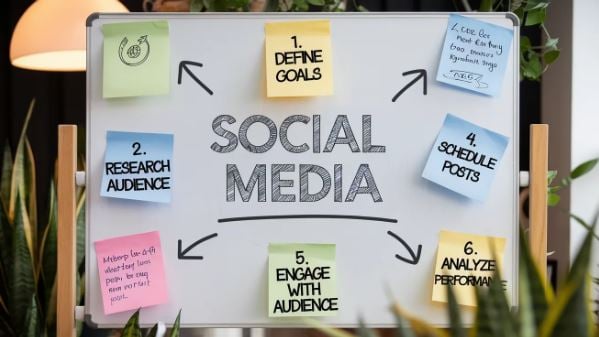
You are likely to struggle to keep up with the posting, and some of your social media platforms may be gathering dust. If this sounds like you, don't worry. But having a good social media workflow plan can help you stay on top of your social media role. A good social media workflow plan will help you stay focused and reach your goal. In this guide, we will help you understand how to create one.
What is a Social Media Workflow Plan?
A social media workflow is a series of steps and tasks that social media managers use to perform their social media work more effectively. It involves a variety of steps from content creation to scheduling, driving engagement, and analysis. Social media, therefore, helps brands better manage their online presence and audience engagement strategies and adapt more easily to the changing social media environment. It can be a handy tool for achieving your social media goals.
Benefits of Social Media Workflow Plan
A well-outlined social media workflow can offer a lot of benefits, such as:
- Better time management. When you have a structured workflow, you can allocate specific times for your social media so it doesn't feel like a burden. It enables you to focus on the more important roles.
- Consistent content and more efficiency. A successful social media strategy requires you to consistently create and post content. It also requires your content to be consistent in tone, branding, and style. When you assign goals and responsibilities, you can avoid last-minute rushes and ensure a consistent content flow.
- Better content quality control. A good workflow plan also incorporates the necessary steps for conducting checks in your content approval process. It can be a crucial tool for detecting errors and avoiding rushes at the last minute while maintaining a steady content flow.
- Increasing engagement. A good workflow should include the necessary time for engaging with your audience by responding to their messages, mentions, and comments. When you do that, you will be showing them that you really value their input, resulting in even more engagement and a higher level of loyalty.
- Better analytics. A good workflow plan should also include a step to analyze the performance of your social media posts. It should enable you to track different metrics such as reach, engagement, and conversion. It can, therefore, help you understand what is working and what isn't, so that you can adjust accordingly. Using such a data-driven approach can lead to continuous improvement.
- Better crisis management. At times, you will face a social media crisis due to something like a misfired post. A good social media workflow plan will help you detect a social media crisis before it arises and respond quickly. You can, therefore, minimize the damage that would otherwise harm your brand and demonstrate your brand's ability to handle a crisis.
- Scalability. A good social media workflow helps expand your operations and provides a more structured framework. This kind of structure ensures you have consistent quality in your content creation, engagement, and scheduling. It becomes easier for businesses to onboard members, add innovation, and expand their product offerings without affecting performance and integrity.
- Better team collaboration. In addition to helping individuals improve their social media workflows, it can also enable teams to collaborate better. They can determine their roles and responsibilities, which tasks have already been completed, and which they should focus on. It can provide them with better overviews and insights into campaigns. This integration level results in more streamlined communication and can empower your team to get more comprehensive data in real-time, ensure better alignment, and minimize errors.
- Legal compliance. The social media landscape is constantly evolving. The good news is that with a good social media workflow, you can remain compliant. You can add legal review steps to prevent potential crises.
Types of Social Media Workflow Plans
Social media workflows can be divided into different categories. Here are some of the most common ones:
Content Creation Workflows
A content creation workflow aims to ensure you consistently produce high-quality content for your social media pages. For instance, if you are a clothing brand, you need to plan your content for the new collection season. You can brainstorm a few ideas, create videos and images to showcase the latest fashion, and edit and review the content.
A content creation workflow is a sequence you follow from content ideation to publication. It illustrates who does what, the document they use, and the timeline for completing each task. A good workflow can be a great tool to help you advance from content creation to its publication.
Some of the steps involved in a content creation social media workflow include:
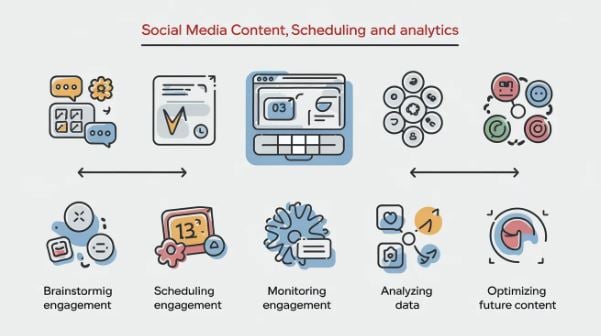
- Brainstorm content ideas. Make sure you brainstorm and strategize the ideas for the social media content.
- Creating content (videos, images, and texts). This involves developing the actual content assets, such as videos, images, and texts.
- Approving content and revision. It also involves reviewing and editing content to ensure it is high-quality and aligns with your brand guidelines.
- Scheduling and publishing content. You can use the content workflow to set the dates and times for your content distribution across different social media platforms.
- Tracking performance and analysis. This involves measuring how effective your content is in terms of reach and engagement.
Ad Campaign Workflow
A good social media advertising campaign requires a well-defined workflow that defines the campaign objective, creates targeted ads, allocates the budget, tracks ad performance, and evaluates ROI to determine the campaign's success. The steps of a good advertising workflow include:
- Defining your campaign strategies and objectives.
- Identifying your target audience and creating your ad content.
- Budget allocation and determining the optimal time for ad placement.
- Monitoring the ad, optimizing its performance, and making the necessary improvements.
- Reporting and analyzing the ROI to determine the success of the campaign.
Influencer Collaboration Workflow
This social media workflow outlines the steps for an influencer marketing campaign. It involves several steps, such as:
- Identifying influencers and reaching out to them. You will need to find the right influencers and contact them.
- Terms and agreement negotiations to discuss the partnership terms, expectations, and the necessary compensation.
- Content review and collaboration. Leverage influencer collaboration to create content that aligns with your brand guidelines.
- Creating influencer posts and promotions.
- Tracking the results of the campaign on brand awareness and engagement.
Crisis Management Workflow
This social media workflow aims to address any social media crisis or negative occurrence on social media platforms. It requires rapid identification of the crisis, the creation of an appropriate plan, and monitoring social sentiment. It also involves steps to de-escalate the crisis, such as issuing an apology and rebuilding the customer's trust. The workflow in this can include several steps, such as:
- Determining what the crisis is and its magnitude.
- Creating a plan on how to handle the crisis.
- Issuing an apology and a public statement
- Tracking the public's impact due to the crisis and addressing any concerns they may have.
- Offering a post-crash analysis. Check your efforts in crisis management and take the necessary steps to rebuild your reputation.
Community Management Workflow
This kind of workflow aims to drive engagement with your online community on different social media platforms. It can involve several steps, such as:
- Gathering social media data from different sources.
- Analyzing your data and getting your insights visually.
- Identify the KPIs (Key Performance Indicators) to determine the metrics that matter most for assessing your level of success.
- Providing reports and getting insights. You can share your insights and findings with the necessary stakeholders.
- Use the collected data to adjust and enhance your social media strategy.
Steps in Creating a Social Media Workflow Plan
Now, let us look at the steps of creating a content workflow plan. These are the steps you need to follow:
Set Goals
While jumping on a trending Reel is fine, you also need to ensure that you have a goal for creating any social media post. Unless you understand what you want to achieve with the social media workflow plan, it can be hard to create one. Therefore, begin by defining exactly what you want to achieve. You can have various goals, such as increasing brand awareness, increasing sales, or driving traffic to your site.
A good social media goal will help you maximize the reach of your content and achieve the desired results. It should take into consideration several things, such as:
- Brand goals. This refers to what your brand is trying to achieve on social media. It could be increasing your sales, brand awareness, or conversions.
- Tone of voice. This is the messaging and tone you will use for your brand on social media. It could be serious, playful, or anything in between.
- Content pillars. The themes or topics you will be focusing on in social media.
- Posting schedule. Consider the frequency at which you post on social media to enable it to achieve the desired goals.
- Audience. Consider also the audience you are targeting on the social media platforms.
When you define these elements, you can have a better roadmap to drive your social media success. It will help you eliminate the guesswork about what you will be posting and the brand language you will use, and improve your content creation workflows.
Understand Your Audience
Track your audience demographics by identifying their age, location, gender, careers, and other important details. Consider their preferences and interests, which will provide you with insights into their preferred content formats, whether articles, images, or videos. You will also get important insights into the platforms they regularly visit. Find a way to collect audience feedback through polls, surveys, or direct interaction so you can continue to better understand them.
Establish Your Content Pillars
When planning your content in your social media workflow, you will need to have:
- A content calendar. This should outline the content formats (videos, carousels, images, text, or infographics) and a more thorough posting schedule.
- Content mix. Avoid having just one type of content; instead, ensure you have a mix that meets your audience's preferences. Your content formats can include educational posts, entertaining, interactive, or promotional posts.
- Visual elements. Add visuals such as videos, graphics, or images that align with your brand and help the content resonate with your audience.
Post-Scheduling
A good social media workflow should also include a content scheduling plan to maintain a steady flow. It should involve finding the right tools to schedule your content across different platforms and, therefore, ensure a consistent, steady content flow. It should consider the optimal posting time based on your audience's activity and insights from social media analytics tools. It should also involve maintaining a consistent posting schedule that drives audience engagement and ensures a more predictable pattern.
Audience Engagement
Social media isn't a one-way but a two-way communication. Therefore, when creating your social media workflow, you need to respond to your audience, comments, mentions, and messages properly to derive engagement.
Have a community engagement strategy that initiates discussions, hosts Q&A sessions, or runs some interactive contests and polls. Collect feedback and use the insights from the interaction to tailor the content, address concerns, and build stronger relationships.
Performance Tracking
A social media workflow should include the steps to track your campaign's performance. You can use third-party tools or the built-in analytics to track various metrics such as impressions, engagement rates, and reach.
Regularly track the necessary performance metrics to identify key strengths, weaknesses, trends, and areas for improvement. Make sure you benchmark against relevant industry standards to gain better insights into your campaign's performance relative to the competitors', and use the data to enhance your strategy.
Make the Necessary Adjustments
You can now use the audience feedback and performance data to improve your decision-making. Use the data to improve your posting frequency, strategy, format, and timing as needed to achieve more optimized results. Conduct A/B testing across elements such as visuals, call-to-actions, and headlines to determine which resonates most with your target audience.
Keep Reviewing
Regularly review your content to assess its effectiveness for your social media strategy. Consider your areas of success, challenges, learnings, and areas for improvement. Use the insights you gain to refine your strategy in response to changing trends, new insights, and audience preferences, ensuring greater effectiveness and relevance.
Best Practices for a Streamlined Social Media Workflow
Now that you understand the steps involved in creating a social media workflow, you also need to be aware of the best practices when creating one.
Define Roles and Responsibilities
It's important you begin by properly assigning roles and responsibilities to all team members for a seamless workflow. When you design tools for content creation, community engagement, or posting, you can encourage efficiency and accountability.
Understand Social Media Rules and Regulations
Many jurisdictions have rules and regulations governing the use of social media. You need to understand these rules and regulations to ensure compliance and prevent legal issues. This can also help increase your audience's trust. Therefore, take time to stay up-to-date with the industry.
Create Social Media Content in Batches
Batching social media content requires dedicating a few hours every month to content planning and creation, where you plan the entire month's content. This will mean you will not need to abruptly come up with the next content idea or even log into each social media platform to create a post.
When you plan a month's worth of social media content, you can ensure it aligns with the brand messaging. Instead of rushing to think of the next piece of content, you can spend more time engaging with your community. Remember to add a variety of content, such as videos, graphics, and images, when batching content. This way, you can be assured of a visually captivating feed that will also help you keep your followers engaged.
Stay Flexible and Adaptable
Remember that the social media field is constantly evolving, so you need to be adaptable and flexible. Regularly monitor your performance and be ready to pivot your strategy if necessary. There are often shifts in social media trends, algorithms, and audience preferences. Therefore, you should be open to changes to ensure you regularly adapt your efforts.
Repurpose Long-Form Content
If you are a content creator or brand, chances are that you already have a variety of long-form content ranging from blog posts to videos and podcasts. Instead of reinventing the wheel, why not repurpose this content for social media? For instance, you can repurpose podcasts into TikTok and YouTube Shorts.
This can help you increase your efficiency by reducing the need to brainstorm new content formats. For instance, if you have a recent blog post where you shared tips, you can turn it into an outstanding carousel post. Similarly, if you have long-form YouTube videos, you can also subdivide them into bite-sized clips to share on TikTok and Reels.
Repurposing content can help you save time and reach a larger audience by providing a variety of content formats for different platforms. Remember to consider the needs of different audiences across platforms and adapt the content accordingly.
Leverage Social Media Management Tools
One of the best ways to streamline your social media workflows is to use social media management tools. Whether your goal is to manage multiple accounts or juggle across platforms like Facebook, Instagram, and X, these social media management tools can make the process easier and help you reach a larger audience.
Common Mistakes to Avoid When Designing a Social Media Workflow Plan
For your social media workflow plan to work well, you need to avoid common mistakes, as they will impact overall results. These include:
- Not setting clear goals. If you don't establish cleaner and smarter goals, you can look rudderless, making it harder to measure your outcomes and align with your content strategy more effectively.
- Lack of audience research. Additionally, if you overlook deeper, more comprehensive audience research, it can be harder to create content that resonates less with your audience, resulting in lower engagement.
- Inconsistent posting schedule. If you are inconsistent with your posting schedule or your interactions with your audience, your brand credibility will be compromised. You will struggle to grow your community on platforms where consistency and engagement are key.
How a Social Media Workflow Plan Enhances Efficiency For Social Managers
When you have a good social media workflow, you can eliminate the guesswork from content creation and publishing. It can make work easier for social media workflows, such as:
- Defining some clear roles and responsibilities. A social media workflow will ensure that all the members of your team understand their roles in bringing the social media content to life. It eradicates guesswork and ensures a smooth workflow.
- Define your feedback deadlines. Since social media workflow plans are created with deadlines in mind, they ensure that everyone is on the same page and held responsible.
- Content planning and scheduling. A workflow plan can streamline your content creation from ideation to scheduling and audience engagement.
Final Thoughts
If you need a smooth social media management strategy, you should consider creating a social media workflow plan. This will ensure consistency, efficiency, and posting that aligns with your goals. It can ensure better collaboration, saving time and improving the quality of life. By following the steps outlined in this detailed guide, you can have a workflow plan that will help you achieve your long-term social media growth strategy. We also recommend you read our guide on the best social media management tools to increase efficiency.
