TikTok is not an "experiment channel" anymore. It is the place where brands launch products, drive real sales, test creative at scale, and accidentally spark trends they never planned. The problem now is not whether TikTok matters. It is keeping up. Features change so fast that a strategy deck from three months ago can feel slightly out of date.
New ad types roll in. Creative tools appear inside the app. Shopping gets deeper. Automation gets smarter. Meanwhile, you are just trying to get this week's content out the door!
This quarter especially feels like a shift. TikTok is pushing harder into three things at once: AI tools that help you create more without burning out, smarter automation inside Ads Manager so you spend less time micromanaging targeting, and a more serious, grown-up version of TikTok Shop with new ways to drive actual revenue instead of just views.
You do not need to chase everything. That would be chaos. But if you ignore all of it, you will feel the gap between you and the brands that lean in now. The game is to pick the features that quietly change how you plan and execute. The ones that give you more leverage without turning your life into a never-ending beta test.
Let us walk through the big ones. Starting with the most hyped, slightly misunderstood piece: TikTok's own creative AI!
TikTok's AI Creative Tools – Volume Without Total Burnout
TikTok's creative AI tools are basically its way of saying, "We know you are tired, let us help a bit." These tools let you tweak, reuse, or flip stuff you've already made—no need to film something fresh each time. They save effort by working with what's on hand, turning old clips into something different through editing tricks. Rather than starting from zero, you build off existing material in new ways.
It's like giving a second life to videos without reshooting anything. You could spin off extra intros, remix clips, tweak runtimes, or craft region-specific takes in various tongues, using a handful of starting files. It feels less like hiring a robot director and more like getting a very fast video editor who never sleeps.
The real win here is not "AI makes content for you." The real win is speed. You can test more angles with less friction. One human-made video can become ten variations. Different openers. Different pacing. Different captions. You do not have to pull your team back into a full shoot every time performance dips.
Of course, there is a trap. If you just let the tools run wild with generic prompts, you will get generic TikTok content—stuff that technically fits the platform but could belong to any brand. Same transitions. Same stock-style clips. Same neutral tone. That is not what you want.
The smartest way to use this right now is as a multiplier, not a replacement. Start with your own footage, voice, and product. Your specific use cases. Then let the AI generate variations and formats, while you keep control over the message and the vibe.
You are still the creative brain. The tools just help you move faster than your energy would normally allow. If "we do not have enough TikTok creative" is your constant headache, this is the first thing you should probably test this quarter.
Smarter Ad Automation – Less Control, Better Signals
TikTok, like every big platform right now, is quietly nudging advertisers toward heavier automation, with fewer knobs to twist, fewer micro audiences, and more trust in the system.
You can feel it in the way campaign setup is shifting. Instead of maintaining a sprawling forest of tiny ad sets, the new flow encourages broader targets, auto placement, and algorithm-driven bidding. The idea is simple. You tell TikTok what you want. Conversions. Sales. App installs. Then you feed it enough creatives and let it find the people most likely to care.
If you grew up on old-school Facebook strategy, this feels uncomfortable. You are used to slicing audiences into tiny segments, hand-tuning bids, and making a dozen rule automations for every scenario. TikTok is basically saying, "Stop doing that. Give me data and room to learn."
When it works, it is beautiful. You spend less time babysitting campaigns and more time on the actual things that move performance. Offers. Angles. Creative. When it does not work, it is usually because the inputs are weak. Bad tracking. Sloppy setups. One or two creatives are doing all the heavy lifting.
So this quarter, if you want to test the newer automation features properly, you need to be honest about your setup. Do you have clean events firing back? Do you have enough creatives in rotation for the system to test? Are you willing to run broader audiences than your comfort zone?
Automation is not magic. But if you give it good signals and a decent creative bench, it might quietly outperform your "manual genius" without making a big show of it.
TikTok Shop's GMV-First Mindset – Turning Views Into Actual Sales
TikTok Shop is not just a cute add-on anymore. It is slowly turning into a full performance channel inside the app! The biggest mindset shift this quarter is simple. TikTok wants shopping campaigns to optimize for money, not just clicks. The internal logic now leans heavily toward gross merchandise value, not vanity metrics. That means the system looks at who buys, what price points convert, which creatives truly sell, and then routes spend in that direction.
For marketers, this changes how you approach TikTok completely if you are selling physical products. It is no longer enough to have a viral-looking video. The creative has to match your catalog.
Your product pages cannot be an afterthought. Titles, images, reviews, shipping details, and promises all suddenly matter because the algorithm is reading what happens after someone taps.
The fun part is that TikTok has more commerce data than ever. It can see how people browse, what they add to cart, what they abandon, and what they return to later. That makes its optimization engine more serious and more unforgiving if your shop experience is sloppy.
So if you already make sales on TikTok, this quarter is about tightening the loop. Align creatives with products. Clean up your catalog. Make sure the promise in the video matches the experience in the store.
Think less about, "Did people like this video?" and more about, "Did people who liked this video actually buy something?" The views are nice. Sales are rent!
The New TikTok Shop "Brain" – Insights, Flows, and Quiet Automation
On top of that revenue-first mindset, TikTok is rolling out more tooling around the shop itself. It is like they looked at what typical e-commerce stacks use elsewhere and said, "Let us give you a lighter, in-app version so you do not have to glue five platforms together."
You now have more structured insights about what is working in your shop and what is not. Instead of guessing, you can see patterns in products, live sessions, creative types, and creator collabs.
The platform basically taps you on the shoulder and says, "Hey, your audience responds to this price band," or "You are missing an opportunity with bundles," or "Your lives are driving interest, but your follow-up is weak."
On the retention side, simple customer flows are starting to feel more like a built-in customer relationship manager. People who abandon carts can get nudged.
Shoppers can be thanked and re-engaged. You can set these things up once and let them run in the background, catching some of the revenue that used to just vanish into "oh well, they almost bought."
For marketers, the big thing here is to use those suggestions instead of assuming you know better. If the data says certain products are your quiet workhorses, consider building creatives around them even if they are not your personal favorites.
If the platform keeps hinting that your content side is strong but your shop structure is weak, fix the structure before you pour more ad spend in. This new "brain" is not perfect. It is not a full replacement for a mature e-commerce stack. But if TikTok is where your most impulsive customers hang out, it is probably the first place this quarter where you should stop winging it and start letting the numbers tell you what to clean up.
Trend and Creative Insights Are Turning Into a Daily Compass
TikTok's built-in trend and creative insight tools used to feel like something you checked when you were bored. Now they are closer to a daily compass for anyone taking the platform seriously.
See it happen instead of wondering about rising sounds, repeated formats, or slowly trending topics in your area. You see what folks watch more, save often, and who's creating it – while trends change based on location, field, or passion.
It is not perfect, but it is way better than scrolling blindly. The real power is not in chasing every trend you see. It is in seeing how your niche behaves on TikTok specifically.
Maybe your industry reacts more to "how to" content than to skits. Maybe your audience loves green screen commentary videos more than polished studio stuff. Maybe a certain sound is blowing up among the exact demographic you target, while the rest of the world has barely clocked it yet!
I think the smartest way to use this right now is to build a light ritual around it. Ten or fifteen minutes a few times a week. Check what is moving. Save inspiring examples.
Ask, "How would this look if we did it our way, for our people?" Then use that as fuel for your content and ad creative instead of trying to invent everything from scratch every time. The platforms are finally giving you the listening tools. You just have to actually listen!
TikTok is Slowly Becoming a Search Engine, Whether You Like It or Not
You have probably heard people say, "I search on TikTok before Google now." At first, it sounded like a joke. Now it is just how a lot of younger users behave. They want demos, not articles. Real voices, not static pages.
TikTok knows this, so search keeps getting more intentional. You see richer search result pages, clearer filters, stronger emphasis on keywords in captions, text overlays, and even voice. You tap into a topic, and suddenly you are in a mini YouTube made of short videos, all competing to answer the same question in a fast, visual way!
For marketers, this means "TikTok SEO" is no longer a silly phrase. It is a real thing. You have to think about what your ideal viewer might type into that search bar and whether your content actually shows up for those phrases.
Not just trendy sounds or vague captions, but practical, keyword-aware posts that still feel native to the platform. This does not mean stuffing your captions with robotic phrases. It means being intentional and saying what people actually search for, by writing captions that describe the value clearly, using on-screen text that repeats the key problem or question, and doing it in a way that still sounds like a human, not an SEO plugin.
If you sell anything even slightly educational, problem-solving, or comparison-based, TikTok's search side is a huge feature to watch this quarter. Because people are not just watching for fun anymore, they are looking for answers.
Updates to Live and Live Shopping Are Making "In the Moment" Matter More
Lives on TikTok used to feel like a bonus feature. Nice to have if you had the energy, but not central. That is changing as the platform keeps blending live streaming with shopping, community building, and discovery.
You now see clearer surfacing of lives in feeds, more formats for live rooms, extra tools for pinning products, highlighting comments, and structuring a show rather than just "going live and rambling." It is slowly turning into a lightweight version of live TV for certain niches. Low production value. High intimacy.
For brands and creators willing to lean in, this is one of the few places left where you can get long, focused attention. People will hang out in a live for twenty, thirty, or forty minutes if they feel like they are part of something. A drop. A mini class. A behind-the-scenes moment. A Q&A that does not feel stiff.
This quarter, the new tools around lives make it easier to test that without a giant plan. You can pin offers. Drop timed elements. Reuse live moments as clips later. Connect lives with your shop so you are not just talking, you are actually closing sales at the moment.
A lot of brands sleep on this because it feels messy and unpredictable, but that is exactly why it works. In a world of polished, forgettable content, someone showing up in real-time, taking questions, and reacting on the fly feels incredibly fresh. The newer live features just make that a bit more practical to run regularly instead of as a one-off stunt!
Creator and Brand Matchmaking is Getting Less Awkward
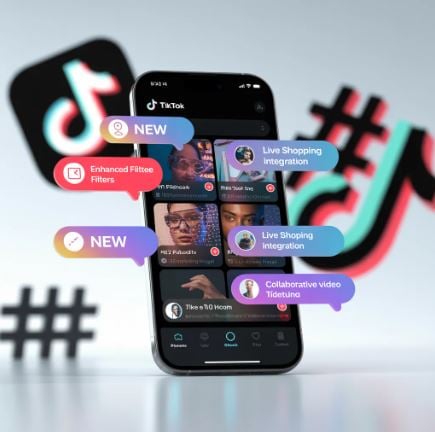
TikTok knows that creators are the engine of the platform and brands are the fuel. Therefore, the connector between the two keeps getting upgrades. The tools that help brands find creators, send briefs, manage collaborations, and track performance are being refined quietly in the background!
This matters because the old way of "influencer marketing" was often clumsy. Manual outreach. Messy DMs. Confusing expectations. No clear view of whether the partnership actually did anything beyond vibes. The newer approach inside TikTok's own tools gives both sides more structure without killing the creativity.
As a marketer, you can now search more intelligently for creators who fit your niche, region, and budget range. You can see some performance hints instead of hiring blind. You can handle approvals and assets in one place instead of juggling files and emails. It is not perfect, but it lowers the friction enough that more brands can test collabs without it becoming a full-time job!
For creators, the flip side is more opportunities that feel official instead of sketchy. Clearer briefs. Clearer deliverables. Fewer "we want this for exposure" messages. Ideally, anyway.
If TikTok matters to your plans, now's the moment to try out its teamwork features—ditching messy spreadsheets and scattered messages. This round feels right for testing how smoothly things work together inside the app rather than juggling outside chaos.
The earlier you see creator collabs as a real piece of your marketing plan, yet blend it naturally into your feed—your posts begin to feel authentic, even if you're not acting like an influencer.
Audience and Performance Insights Are Getting More Grown-Up
TikTok analytics used to feel a bit, well, light. Fun charts. Vibes. Enough to see which video popped off, but not enough to feel like a real performance dashboard. That is changing. Slowly, but clearly.
You can now get more details on who is watching, how they behave over time, and which content types actually move people closer to outcomes you care about. Traffic sources, watch time patterns, follower versus non-follower behavior, and pathways from content to clicks all feel more accessible than they did a year ago.
On the ads side, breakdowns by creative, audience, placement, and even some attribution windows are maturing. This does not suddenly turn TikTok into a perfect data utopia. But it does mean you can make smarter decisions without guessing.
You can see which creative style leads to more profile visits, which hooks keep people past the first three seconds, which audiences react to education versus entertainment, and which campaigns are bringing in people who actually engage later, not just show up once.
The real feature here is not any single new chart. It is the fact that the platform is finally treating marketers like grown-ups. If you are willing to dig, the data now supports more than just "this went viral." It lets you ask, "Did this move behavior in the direction we care about?"
And that question, more than anything, is the one worth building your TikTok strategy around this quarter!
Not Every Shiny Button Deserves Your Attention
TikTok rolls out features like it is on an energy drink! New ad types. New creator tools. New shopping tweaks. New analytics. If you try to jump on everything, you will end up spending more time inside dashboards than actually making anything people want to watch.
So this is where you slow down a bit. When a new feature appears, a nice question to ask is, "Does this help us do what we already care about faster or better?" If the answer feels like "kind of, maybe, but mostly it is just new," you can probably park it for later. If it clearly plugs into your main goals, then it gets a spot on your testing list.
I think of it like apps on your phone. You do not need every productivity app on earth. You need the few that actually match how your brain works. TikTok features are the same. Most of them are optional, and a handful can quietly change how you grow.
Build a Simple Testing Plan Instead of Random Experiments
The quickest way to hate TikTok is to try a new feature whenever you are bored and then forget to check what happened. A simple testing plan helps a lot here. Nothing formal. Just a short list of what you want to try this quarter, why you think it might help, and what "working" looks like. Maybe this month you can focus on creative AI and search-friendly captions. Next month, you test one live format and one shop tweak. The point is to choose on purpose, not in panic.
When you know what you are testing, it is easier to give it a fair shot. You are not turning something on for three days and then declaring it useless. You are giving it enough time, budget, and creatives to show you what it can do.
I once ran a "test" for a feature for about forty-eight hours, then wrote it off. Looking back, that said more about my patience than the feature! A light plan stops you from bouncing between shiny things and helps you compare results without guessing!
Let TikTok Be a Lab, Not Your Whole Strategy
This is the part that keeps you sane! TikTok is fast, messy, and fun. It is also unpredictable. Some weeks, your "serious" content flops while a throwaway clip drags in all the comments. New tools help, but they do not remove the chaos, so it helps to treat TikTok as a lab, not your entire identity as a marketer.
You test ideas here. You see how people react. You learn which hooks, visuals, and messages move strangers who were not expecting to hear from you. Then, you take those learnings back into the rest of your ecosystem, site, email, and other channels.
TikTok features come and go. The way your audience responds to certain stories sticks around. If you keep that in mind, you will stop panicking every time there is a new rollout!
Conclusion – Using New TikTok Features for Marketing
TikTok this quarter is not just "more of the same." It is shifting into a more serious machine. You have a creative AI that can help you produce more without burning out. Automation that wants to manage your bids and audiences if you let it.
A shop system that cares about real sales, not just views. Trend, search, live, and creator tools that make the platform feel less like a toy and more like a full stack. You do not have to master all of it at once. Honestly, you should not!
Pick a few features that clearly line up with what you are already trying to do. Sell more. Learn faster. Create without losing your mind. Test them with intent. Keep what works. Ignore what does not, at least for now.
And remember, your job is not to impress TikTok. Your job is to reach the people who matter to you in a way that feels real, helpful, and a little bit fun.
So maybe grab one idea from this, drop it into your next content or ad sprint, and see what happens. Then adjust from there. That is the whole game!
