Unlike in the past, when social media was for sharing random photos with family and friends and posting for fun, today it has become a top tool for creators to earn an income. With many social media platforms now offering monetization programs, this has led to a proliferation of creators working full-time on the top platforms.
However, different platforms don't pay creators the same rate, and some don't pay at all. This often leads to the question of which platform pays creators who build a profitable audience the most. Join us in this article as we seek to answer this question.
Factors Affecting Creators' Earnings in 2026
Before we look at the top platforms that pay the most in 2026, let us look at the top factors that influence creators' earnings.
Earning Model
Each social media platform has its own model for paying creators. YouTube pays creators by sharing its ad revenue and also has other earning methods, such as memberships. TikTok, on the other hand, pays creators using live gifts and creator funds. Many creators on Facebook earn through influencer partnerships and brand deals. Some social media platforms pay based on ad views, while others reward creators with a high engagement rate or with a fixed creator fund.
Content Type and Niche
Different niches and topics also have different earning potentials. Niche topics such as finance, technology, and beauty often command higher advertising rates and better sponsorship deals than broader, more casual topics. Compared to text or images, video content also pays better, especially if you create high-quality videos.
Audience Demographic and Size
In most cases, accounts with a large following or subscriber base have more opportunities to earn. However, this also depends on the type of audience you have. If you are a brand trying to reach a specific group, consider your audience's age, location, and spending habits.
Engagement Rate
If your audience is small but highly engaged, this will offer you more value than having a large but inactive audience. The number of likes, comments, and shares will indicate the level of involvement among your followers and the impact on the payment you receive from the platform.
When you have a high engagement rate, the ever-changing social media algorithms interpret that as a sign that your followers trust you and reward your content with higher reach, resulting in greater learning.
Location
Earnings can vary across platforms and countries. If you live in a country with a strong advertising market, such as the U.K and the U.S., the earnings can be higher. Even when creating similar content, you can earn less in another market.
Previous Brand Sponsorships and Collaborations
The amount you charge for partnerships and sponsorships will impact your earning potential. If you have run successful campaigns in the past and achieved high engagement and positive feedback, you may be able to secure a better deal. Partnership payments and sponsorships often have flat fees, commissions, and per-post rates.
If you are an established creator, you can easily negotiate better terms and rates for relationship-building with brands, which, in turn, can open more doors to better-paying opportunities.
Which Platform Pays the Highest in 2026?
Now that you understand your earning potential across different social media platforms, let us look at the top platforms paying the most in 2026.
YouTube
Long-form YouTube videos have the highest payment rate because of their ad revenue. Additionally, YouTube typically shares 55% of its ad revenue with creators. It has a large audience, a transparent revenue-sharing model, and multiple income streams.
In 2026, the CPM for long-form videos is $1.5-$6 per 1,000 views. On the other hand, Shorts revenue sharing ranges from $0.06 to $0.10 per 1,000 views. However, this also depends on the region, and for U.S. viewers, the CPM (cost per 1000 impressions) is usually around $10. In the high-paying niches such as technology, business, or finance, the CPM can reach over $20.
Through the YouTube Partner Program (YPP) and the YouTube monetization program, creators can earn in different ways, as long as they are eligible. These include:
- AdSense earnings. One of the most common ways YouTubers earn money is by displaying ads on their videos, where they receive a percentage of the ad revenue YouTube makes.
- Super chats and stickers. With Super Stickers and Chats, your audience can pay to have animations and messages appear in your video's live chats. The viewers decide how much they want to pay, ranging from $1 to $500, with the creators receiving 70% of the earnings before tax.
- Super Thanks. Super Thanks are similar to the Super Chats. The only difference is that Super Chats are for premieres and live videos, while Super Thanks are available for regular videos.
- Merchandise selling. Creators can sell their products by tagging them in their content.
- Channel memberships. With the YouTube channel membership, you can provide your audience with exclusive features and content that members can pay for each month. You can offer different membership tiers and set the offerings and prices for each level.
TikTok
For a long time, TikTok wasn't among the top platforms that paid creators well. However, in recent years, it has improved its creator monetization programs, especially for creators focusing on longer, high-quality videos. After replacing the Creator Fund with the Creator Reward Program, TikTok now pays creators for videos of at least 60 seconds, paying between $0.40 and $1 per 1,000 views. This is a great improvement from the pennies of a thousand views that TikTok used to pay before.
To earn through the program, TikTok usually evaluates your content based on four key factors: watch time, originality, search value, and engagement. That means you will earn more if your content performs better across these points.
Other ways in which creators earn on TikTok include:
- Live tips and gifts. You can earn direct tips or virtual gifts during the live streams, which can then be exchanged for real cash.
- Creator marketplace. You can leverage paid collaborations by partnering with brands through the official TikTok influencer program.
- TikTok Shop. This is a great platform for selling either your own products or affiliate items via livestreams, shoppable videos, or the built-in storefront.
- Subscription. You can provide some exclusive content for fans, such as direct interactions, special content, and badges.
There are several requirements you need to meet to join the creator program. These are:
- Have a minimum of 10K views in the previous 30 days.
- A TikTok account that is based in a country that is supported, such as the US, Canada, or the UK.
Instagram Creators Lab serves as a hub for the top tools, tips, and best practices. Whether it's through a Reel post, going live, or providing some exclusive content, you can earn in different ways from the audience through brand partnerships. The Creators Lab also encourages creators to connect with one another, price their work fairly, and use their earnings to grow their content.
You can earn on Instagram in different ways, such as:
- Creator marketplace. This feature helps to connect creators with brands. That means they can earn money by featuring their favorite brands in their content.
- Badges. These are a great choice for creators who regularly go live on Instagram. Viewers can support your content during live videos by buying hearts in the Live chat. These badges can range from $0.99 to $4.99.
- Gifts. These are usually available for Reels and serve as virtual tokens that fans can use to appreciate your content. Instagram offers different gift options, allowing creators to earn 0.01 per star.
- Subscription. This can be a good monetization method for creators with a loyal following. The main advantage of this monetization method is that you can set your own price.
In 2026, the Reels bonus usually ranges from $0.01 to $0.09 for 1000 plays. However, this earning method is only available by invitation.
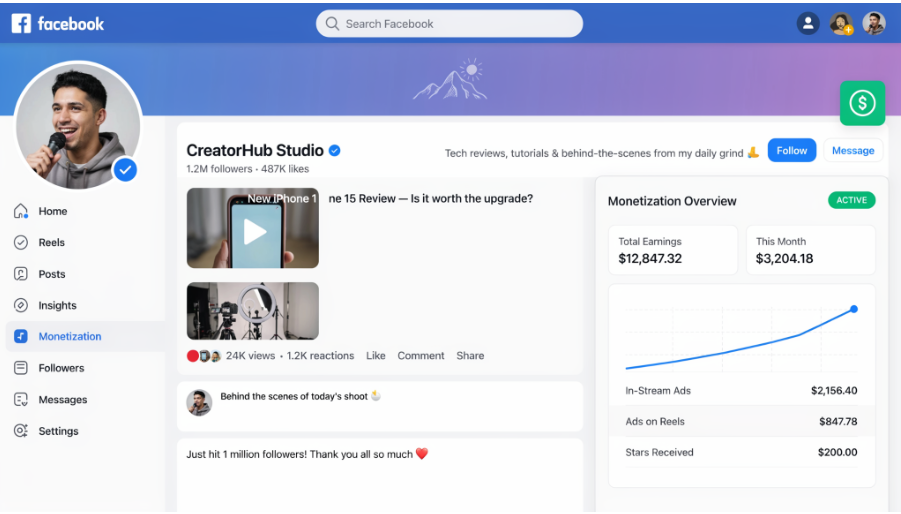
Facebook has added a monetization feature that allows creators to earn from different content formats such as Reels videos, text posts, stories, and photos. Rather than juggling between various programs, creators can combine different earning methods, such as Reels ads, in-stream ads, and the performance bonus.
Facebook offers various monetization methods, including Reel bonuses, Stars for live, and In-stream ads. In 2026, In-stream ad earnings on Facebook range from $0.10 to $0.22 per 1,000 views, depending on the page and niche. To be eligible for the Facebook earning program, you should:
- Have a minimum of 10,000 followers.
- Be following the Meta monetization guidelines.
- Be based in one of the supported countries.
Facebook allows you to earn in different ways, such as:
- Reels and videos. Facebook ads are usually placed before, during, or after videos. Earnings depend on engagement type and ad placement. If you want to earn money from Facebook videos and reels, you need to have at least 10,000 followers.
- Fan subscriptions. You can charge your fans a monthly fee in exchange for some exclusive perks such as subscribers-only groups, merch discounts, and behind-the-scenes content. Each paying subscriber will see an ad near their name when they comment.
- Live Stars. Viewers can send virtual stars during a live stream that creators can convert into income. You will earn $0.01 for each star, whether it's for regular posts, photos, videos, or reels.
- Brand Collabos. Creators can use the Brand Collabos Manager to connect brands with partners searching for sponsored content. Facebook can help match your brand with its target style and audience.
In Conclusion
If you want to make a career as a content creator, you will need to find a platform that pays creators well. If you are wondering which platform is the top-paying, our detailed guide will help you get started.
