#1 Social Media Marketplace
Accelerate Your Social Media Growth with SocialWick. Quickly gain real followers, viewers, likes & more with our blend of marketing tactics. SocialWick is known for its fast delivery, premium quality, and low prices. With over a million satisfied customers since 2017, trust SocialWick to take your social media game to the next level.
1.4 M
Customers
13 M
Orders
362 M
Followers sold
1.8 B
Likes sold
Rise of Digital Collectibles with NFTs on Social Media
Published on 01.11.2025 by Tracey Chizoba Fletcher / Last Update: 07.03.2026
The last two years saw digital collectibles grow from a fringe element of the crypto space to mainstream discussions of the art, the music market, the gaming space, and the future of social media.
Non-Fungible Tokens (NFTs) were previously believed to be nothing but costly pixelated avatars or proof-of-concept computer graphics. Increasingly, they are now being applied on the sites where human beings spend much of their online time: social networking sites!
From Twitter fully embracing NFT profile images and Instagram announcing NFT features for artists, social media became the bridge that united blockchain technology and mass culture. This innovation is important because it foreshadows a change in the way individuals think about ownership, creativity, and online identity. Social media had for a long time been the platform where individuals presented themselves as they shared images, videos, and status updates.
NFTs are now part of such self-presentations, enabling individuals to not only present digital art or music with pride but to record transferable ownership on the blockchain. For business and creators, this is not a flash trend. It is a tool to reframe community building, monetize creativity through alternative channels, and consider digital loyalty programs that transcend likes and shares.
For consumers, it raises the question about the future digital culture differently: Do we approach a future where the digital persona is built partly through the NFTs that you possess? Or is it another hype cycle that would vanish?
Answering these requires charting the rise of the digital collectible across the social media ecosystem and its development on the future of digital engagement.
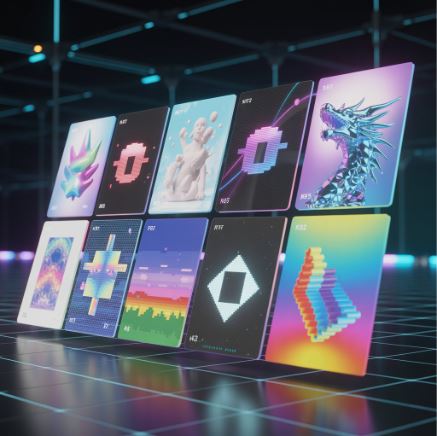
The Evolution of NFTs from Niche to Mainstream
When NFTs first appeared on the horizon, they were largely relegated to the crypto world—online collectible sales, blockchain games, and communities deeply invested in decentralized tech.
As an afterthought to the typical social media user, the idea of a blockchain-secured collectible was the stuff of far-flung fantasy. But when again and again A-listers, brands, and influencers started embracing NFTs, something bizarre happened: NFTs crossed from mainstream awareness into the cultural zeitgeist. No longer just a niche digital oddity, NFTs had officially reached the mainstream.
The turning point came when mainstream sales started to appear in the news. NFT art sales into the multi-millions grabbed imaginations even when the dynamics were still a mystery. In a single night, something that had previously been a technical flash was now suddenly a badge of status, an extension of self, and membership in groups.
This cultural shift created an opportunity for NFTs to move into the space where individuals already self-identify: social media. By democratizing access to NFTs, NFTs were not only mainstreamed but also redefined the path to them.
NFTs are no longer viewed as just speculative assets; NFTs are being remade today as signs of imagination in the digital space, a member’s club, and even an identity. Social media platforms that are going through the movement are gravitating toward NFTs because where there is culture, there is engagement, too.
NFTs as a New Form of Social Identity
Identity is most important on social media. Individuals create their profiles, feeds, and profile images in meticulous detail to create the persona they wish individuals to embrace. NFTs added a new level to the process when individuals could demonstrate ownership of digital property.
Twitter added hexagonal profile images for NFT owners, which turned ownership into a visual marker of digital status. This synergy is persuasive since it associates identity with expression, scarcity, and originality, too. Owning an NFT isn’t about showcasing an image so much; it’s about being part of an exclusive clique.
Owning a scarce NFT collectible piece, e.g., signals not merely a style but membership among an elite online clique. This generates pride among the users whose profiles they engage with.
To the younger audience used to appreciating digitally valuable items—game skins, in-game items, and emojis, by extension—NFTs as identifiers make sense. That brings the heretofore dominant trend within gaming communities and platforms into the larger sense of social media.
NFTs would apparently bring the so far performative aspect of identity on social sites to the verifiable level by marrying expression with confirmation that is supported by blockchain technology.
Social Media Sites As NFT On-Ramps
The key aspect of building the market for digital collectibles may be the mainstream social media platforms lining up to be the gateways to the NFT universe. Meta-owned Instagram and Facebook already support users displaying their NFTs on their respective profiles.
Twitter’s NFT-based profile verifications trial was followed by ventures such as Reddit taking it one notch higher by introducing NFT collections, which are tied to users’ avatars. This action is good for platforms on several fronts.
Firstly, it retains the users inside the ecosystem. Rather than sending them to the outside marketplaces to display their collectibles, users now display them where their social networks are.
Secondly, it opens up new monetization opportunities both for creators and platforms. When an influencer mints an NFT, displaying it on Instagram is an option to market it and resell it without the user exiting the app.
More modestly, the addition holds out the prospect of an integration of social media culture and blockchain culture. NFTs previously existed in decentralized platforms that were occasionally inaccessible.
By bringing them into everyday apps, social networks lower the barrier of entry. Now, a user who knows nothing about crypto wallets can still interact with or experience NFTs on Instagram, so the distance is lessened from hardcore users to occasional users.
NFTs As Monetization Instruments For Creators
The most promising social media use case for NFTs might be creator income streams. Creators have been getting compensated online for decades already in the forms of likes, advertisement revenue-sharing, and brand deals.
Those models underpay creators and make them too reliant on algorithmic whim. NFTs flip the math on this by enabling creators to get compensated outright from their own content and build durable value that they currently cannot.
For example, a musician could drop a limited drop audio NFT on social media platforms, where supporters receive a track along with special benefits such as access to a closed chat, live streaming backstage, or drop early. Graphic designers can convert the sequence of artworks into tokens that supporters proudly post on their pages. That turns content from momentary posts into fixed, ownable moments. Aside from cold-hard sales, NFTs bring the possibility of royalty structures.
A creator can incorporate royalties into their NFTs such that the creator receives a percentage of the money every time the asset is resold. That gives them continued revenue long after the initial sale and incentivizes fans to participate in secondary markets. Social media platforms, by supporting NFTs, aren’t merely offering creators a new product—they’re making the creator economy fairer and more sustainable.
NFTs and Social Media Community Engagement
Aside from being self-representations or sources of income, NFTs are currently one of the main social media fan community drivers. As collectibles, most of these are membership cards to membership in the elite clubs where fans and creators may converse in a one-on-one manner. Owning a digital collectible may grant the users membership in the elite clubs, special content, or priority notifications, making fandom a two-way communication instead of a broadcast.
The people surrounding NFT projects have lives of their own. When an NFT project is attached to an original artist or brand, for example, owners will continue to talk to one another, cross-promote content, and evangelize on each other’s behalf.
This mutual ownership transfers loyalty down the line and generates authentic growth, which traditional social media “follow” mechanics cannot do. Within the tribe, the NFT serves as a membership badge, an icon that connects the person to a larger tribe.
What gives this engagement such strength on social media is that it is visible. In contrast to gated memberships within paywalls, NFTs can be publicly showcased in public-facing profiles.
Not only does visibility verify individual members, but it also encourages others to join along with them. The outcome is a network effect where the community expands not due to paid advertising, but because membership is something that can be shared with others.
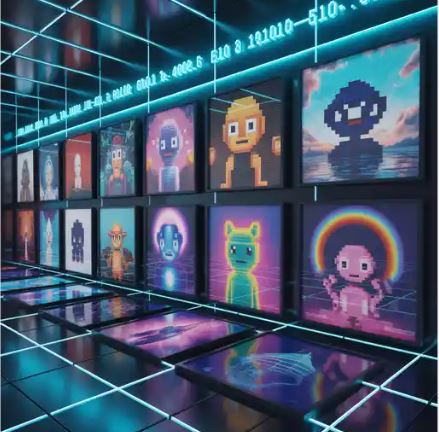
Brands Joining the NFT Market on Social Media Sites
Before long, a few of the world’s largest brands began to recognize the value of NFTs on social media. Sports leagues, technology companies, and luxury fashion houses have all launched NFT initiatives with the goals of stimulating buzz and cultivating consumer relationships.
Natural homes for those initiatives are social media platforms, since they allow the businesses to display their digital collectibles where their intended consumers already congregate. Fashion brands, for example, have launched limited-edition NFTs of virtual wearables that can be utilized as avatars or display objects on the internet.
Sporting entities are developing collectibles in the form of moments, highlights, or cards of their players, so that fans can “own” part of the game they cherish. These campaigns are not merely sales campaigns—they’re about being culturally relevant.
By joining the digital collectibles bandwagon, brands are communicating that they know where the digital culture is going. The usage even goes further than marketing. Brands that possess NFTs on social media may offer long-term loyalty programs, such that the owner of an NFT receives long-term discounts, sneak previews, or exclusives.
Rather than purchasing once, such customers become part of an interactive online group of a brand. That makes NFTs less about a collectible, yet rather an on-ramp from social media conduct to customer loyalty.
Challenges and Risks of NFTs in Social Media
Exciting as it is to bring NFTs onto social media platforms, some risks and obstacles simply cannot be ignored. The most persuasive of these is probably accessibility. Very few users will find digital wallets, blockchain networks, and private keys accessible.
Unless platforms make it easier, this widespread adoption could be reserved for tech-inclined individuals, and this will create obstacles to mass adoption. There is the additional challenge of sustainability. NFTs were called into question on the environmental front when created on energy-hungry blockchains.
Newer tech and green blockchains come into the market, yet the reputation of the NFTs continues to be environmentally wasteful. NFT-capable social media platforms should engage the solution instead of evading it to avoid criticism and keep the NFT-based collectibles on the agenda toward sustainability goals.
Lastly, there are scams and speculation risks. With the tradability of NFTs, NFTs welcome the artists and the fans, along with the speculators who would want to make a quick buck. There were scams, rug pulls, and pretend collections that came along, and folks were getting nervous about getting in.
There needs to be arrangements where the social platforms carry out their gatekeeper role so that the users are protected while the NFT systems are safe and transparent.
The Future of Digital Collectibles on Social Media Sites
All the same, the NFT future on social media is one of growth and development. What we see today is merely the initial wave of adoption, where the NFT is about status, identity, and revenue.
The second wave may consist of greater interoperability levels where the NFTs are interactive with immersive content, interactive media, and even social media-based AI-driven personalization.
Envision a world where watching a virtual concert on Facebook delivers an NFT ticket that is a one-of-a-kind ticket and a permanent digital badge. Or that makes LinkedIn validate skills and accomplishments with NFTs, anywhere-verified.
Those are futures that go well beyond the level of the collectible novelties; those futures involve a world where NFTs are a component of the blocks used to build the digital interaction and experiential records.
For the social media platforms, it is both a chance and a responsibility. They can use their reach to bring NFTs into mainstream consciousness, environmental consciousness, and effect, not only to create online culture but how humankind behaves online. The platforms that step up to the challenge will lead the new wave of digital collectibles.
Conclusion
The emergence of NFTs on social media is the tipping point on the trajectory where people present their persona, join communities, and engage with businesses. An experiment on the fringes of blockchain culture is now mainstream and reshaping the dynamics of living online.
With the introduction of digital collectibles on social media platforms, companies are closing the distance between creators and consumers and providing new possibilities for monetization, loyalty, and attachment.
It comes with challenges, though. From affordability and sustainability to the risks of speculation, NFTs present problems that the users and the social platforms must remedy. Those challenges constitute the growing pains that come with every technological breakthrough.
With prudent custodianship, NFTs contain the secret to dragging social media from the sphere of fleeting communications into the arena where digital possession, identity, and community take on concrete reality.
Ultimately, the history of NFTs on social media is as much cultural as it is technological. It’s how people want to represent themselves, connect with each other, and create communities of shared experience and value. As digital collectibles keep growing, they will increasingly be at the forefront of social interaction’s evolution into the future.

Sign up for SocialWick
Login
InstagramYouTubeTikTokFacebookTwitchSpotifyTwitter (X)SoundCloudIGTVLinkedInThreadsWebsitePinterestVKApple MusicSEO
Checkout
OK

Information
Order processing usually starts within a few minutes, but some services may take a few hours or even a few days. We offer free refills for up to 90 days if needed. Our services are 100% secure and discreet, with a focus on gradual and safe delivery for your peace of mind.
Order processing usually starts within a few minutes, but some services may take a few hours or even a few days. We offer free refills for up to 90 days if needed. Our services are 100% secure and discreet, with a focus on gradual and safe delivery for your peace of mind.
Where should we send your order confirmation?
No account needed! We send your confirmation and tracking link here.
Secure checkout. We never share your email.
Have an account?•
Log in
Use your account to pay faster with your saved details.
Create account
Create an account to track all your orders in one place.
Service
+0,00
Voucher
-0.00
Total
+0.00
OK
Affiliate & Reseller Program
Customer Support
How may we help you?
General Support
Order Support
Frequently Asked Questions
1) What services do you offer?
We are a social media marketing company, and we offer a wide variety of services across several platforms that our clients can choose from. Once selected, we create a plan that fits your needs. We offer several types of services, such as followers, subscribers, likes, views, song plays, etc.
2) Is your service safe?
Yes, as we only sell real followers, likes, views, etc., and we hold every service to strict authenticity and quality standards. In order to protect your account, we deliver every order carefully and gradually. We closely monitor all our services. For more information, we strongly recommend reading our Terms of Service before you order.
3) Will I need to give you the passwords for my accounts?
No, you can keep your passwords to yourself because our services don’t need a password to influence your accounts. And if an email ever shows up claiming to be from us and asking for a password, it’s definitely not us, so please let us know right away.
4) Are the likes, followers, and subscribers real, or are they bots?
Unlike many other services, all our likes, followers, and views come from real accounts operated by real people. You won’t find bots, fake profiles, or hijacked accounts anywhere in what we deliver. Every order has to pass our strict authenticity standards, and we keep checking our quality to make sure it stays that way.
5) How fast can you deliver my order?
We will show you the estimated delivery time when choosing the service. However, this is only a rough estimate. In most cases, the services are delivered much faster. In some cases, it may take longer. We always aim for a natural and safe delivery!
6) What are your best-selling social media marketing services?
Although we have many services across most social media companies, our services for Instagram, TikTok, and YouTube are our best-selling options.
7) How do I know my account will not be flagged or banned?
We take safety very seriously. We never ask for your password, all followers, likes, and views come from real accounts, and orders are usually delivered gradually and naturally. What we can promise is careful delivery and strict quality standards. Plus a support team that’s there whenever you need us. We are not aware of a single case since 2017 where a customer got his profile banned.
8) What is the best method to communicate with you?
Do you have a question or run into a problem? Our customer support is available 24/7 for you. Just click Contact and you’ll land right on the support form. When you buy one of our services, we will email you to see if there were any problems. Your satisfaction is our main priority.
9) Are there discounts for large orders?
Yes! If you would like to request a large order that isn’t on our ordering layout, we will have no problems accommodating you. Just reach out through the support form and we’ll put together a buying plan that fits what you need.
10) What methods of payment do you accept?
We accept all forms of credit and debit cards, as well as Klarna, eps, PayPal, and Crypto.
11) If I am unsatisfied with your services, am I able to receive a refund?
Yes! Every purchase comes with a 30 day money-back guarantee. Not satisfied? Just contact our support within 30 days of your purchase and send us your order details and a short note on what went wrong, and we’ll take a look at your case. The full conditions are in our Refund Policy.
12) I haven’t received my order
Please make sure the following criteria are met before placing an order to make sure we can deliver it successfully.
- Your account is set to public
- You have typed in the correct username or link
- You have not changed your username before the order’s completion
- The post or account still exists and has not been deleted
- The post or account has not been restricted or removed in some countries
- Allow the estimated delivery time for completion of your order
For further assistance, please message our support team through the contact form.
13) How can I request a refill?
Just send us a refill request through the contact form. Please note that we can only provide you with a free refill within the first 90 days of your purchase.
Learn More
What is SocialWick?
We are the leading marketplace for social media promotion. You can buy followers, likes, views, subscribers, and a lot more for almost all social media networks. We offer affordable prices without making any compromises in terms of the service quality. We have a strict policy to only sell social media signals from real people. Part of our engagement, for example, comes from ad-based promotion where real users discover the content through ads. Bots, fake profiles, and hijacked accounts have no place in our services. Every delivery has to meet our authenticity standards, and we run regular quality checks, and anything that does not meet them is removed from our catalog. Our services are available for personal use, whether you want more Instagram likes, TikTok followers, YouTube views, or something else for your own profile.
With over a million satisfied customers, SocialWick is the go-to platform for all your social media needs. Our services are discreet and secure, with gradual and careful delivery to keep your social media accounts safe.
About SocialWick — The Market Leader since 2017
With more than 10 million orders, SocialWick is one of the world’s biggest social media stores. You can find everything on our website to improve your presence on major social media platforms like Instagram, TikTok, YouTube, Twitter (X), Facebook, etc. We offer different types of services for several social media platforms. Your wish is our command, and whatever your goal might be, SocialWick will help you achieve it. Whether you need more likes on your Instagram photos or want to make your LinkedIn profile more popular by getting additional followers, SocialWick is there to turn your goal into reality.
Thanks to our effective services and our customer-oriented work, SocialWick has become a top player. You will not find a better service anywhere else, especially not at such affordable prices. SocialWick is operating since 2017.
365 Days Per Year Customer Service
Your satisfaction is our motivation! We’re not here just for the money; we do our work to help people find their road to social media success. And that’s why our team will do all to make sure everything goes according to plan. If there’s something wrong with your social media campaign, or worry that there might be some problems with your account, or want to learn more about how our services work, feel free to reach out. Our service staff is there for you seven days a week, ready to answer any of your questions. You can get in touch with us using the contact form on our website.
Buying Followers and Likes is Essential
Unless you’re Kylie Jenner, you definitely need some help with social media. The more followers you have on Instagram, TikTok, Twitter (X), or YouTube, the more people will automatically notice you. Having all those eyes on your content isn’t just impressive, it’s genuinely fun. The bad news is that everyone wants to be famous these days, but only a few can succeed. The good news is that you can be the chosen one who will get social media fame and everything that comes with it. But, for that, you need a little help from your friends at SocialWick.
With our help, you will increase the number of followers on social media, which can have a domino effect and bring you even more new followers. Once people see that you got a big followership, they will decide to give you a follow. "If a profile has so many followers, it means that it’s interesting" – you can be sure this is going to be their reasoning. Furthermore, more followers mean more visibility for everything you post. Finally, a large number of followers also do great for your credibility. Our social media services will help you to create a better overall picture of your profile.
Let’s be honest; a profile with 30,000 followers looks much better than one with 74 followers. And that’s exactly what new visitors will pay attention to. A weak social media profile can be a real deal-breaker. At the same time, a fantastic social media profile can do wonders for you. And SocialWick can make your social media profile amazing!