In recent years, long-form content has been overshadowed by short-form content. With the coming of TikTok, consumers started choosing this short-form video content over long-form one. Other platforms such as Facebook, Instagram, and TikTok saw the popularity of this content format and added it. However, in recent years, a new social media trend is emerging: the comeback of long-form content. In this article, we look at the cause of this shift and explore what you can do to take advantage of it.
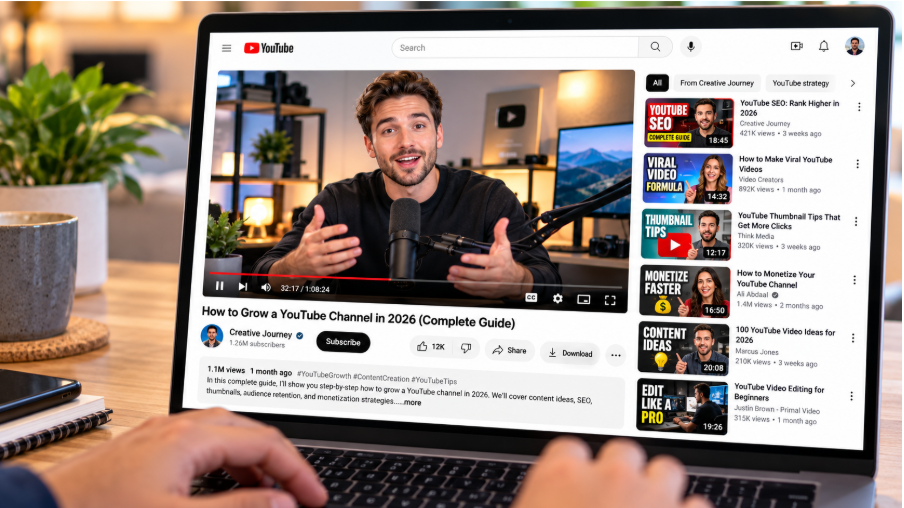
Why Short-Form Content Has Dominated in Recent Years
Since the introduction of TikTok in 2016, short-form content has proven to be the most popular content format. These short videos that are often under 60 seconds, are effective for capturing the viewer's attention and providing them with instant value.
The popularity of this content format can be attributed to several factors, such as:
Ability to Offer Instant Gratification
People tend to consume content in short bursts, and these short-form videos work well for this habit. In an era when social media users have the option to watch a wide range of content, they tend to crave content that provides them with instant value within a few seconds.
The punchy, engaging nature of this format helps it to instantly satisfy the viewer's need. According to one study, when watching short-form content, viewers tend to retain 95% of the message, compared to 10% retention in text. Therefore, you need to understand how to dominate short-form videos.
Ability to Educate in a Short Time
A major strength of short-form video content is that it educates fast. Whether it is in the form of a how-to, tips, or industry insights, short-form content enables viewers to quickly learn a lesson. The content is usually in a snackable format that enables service providers and solopreneurs to increase their trust level and position themselves as an authority.
Psychological Trigger
The short-form videos are often created using principles such as emotional impact and curiosity gaps. They use various features such as pattern disruption, suspense, and strong visuals to ensure that people keep viewing. These triggers are important for driving retention, which enables the platform to boost the visibility of the short video content. Therefore, this is a viral psychology that makes content shareable.
Understanding Long-Form Content
Long-form content often consists of videos longer than 10 minutes, making it a preferred choice for providing detailed insights, in-depth storytelling, and detailed discussions. The content format has various characteristics, such as:
- Comprehensive. Long-form content goes beyond the surface level. It is a good choice for deeper content exploration, better audience insights, and providing different perspectives to give the audience a clearer picture.
- Provide value. The long-form content format is created to provide value in the form of case studies, guides, webinars, and thought leadership content, providing users with valuable content.
- Longer length. The long-form content doesn't consist of a few hundred words or some quick tips. It consists of a video running for more than 10 minutes, enabling creators to dive deeply into a topic and provide their audiences with valuable content.
- Evergreen. Since long-form content is usually well-researched and evergreen, it will continue providing users with value long after it is published.
Evidence of Long-form Content Comeback
There is no doubt that long-form content is performing better than short-form content. The evidence of the popularity of long-form content can be seen in:
- The focus of the algorithm is on deeper attention over quick taps.
- The conversion rate of deeper content is usually 2 to 3 times higher compared to short content pieces.
- According to a Tubular Labs report, long-form content in the form of DIY guides, how-to videos, and product reviews gets 15.2% more views than the average views on YouTube.
- The competition rate of videos between 7 and 15 minutes long is increasing, and they are driving higher conversions.
- YouTube has now dominated podcasting with more than 1 billion podcasts each month, ranking it among the most used podcast platforms in the United States.
- TikTok and Instagram are increasingly delivering longer and more substantive content.
- The newsletters are driving real traction, particularly when they are integrated into the social media platforms.
- YouTube videos are increasingly appearing in the AI overview, resulting in 25% more citations, especially for tutorials and product comparisons in niches such as e-commerce and healthcare.
So, what is causing this shift in an era when experts have been telling creators to focus more on short-form content? Let's find out in the next section.
Why Social Media Audiences Are Returning to Long-Form Content
So, why are social media users preferring long-form content? This can be attributed to several reasons, such as:
Oversaturation of Short-Form Videos
With the rising popularity of short-form content, it has resulted in so many videos using the same rhythm, same codes, and same tricks. That means while short-form content is a great choice for capturing the audience's eye, it can struggle to build authority. With the social media noise increasing, the audience's attention now shifts to content that is slow, structured, and offers a higher level of coherence. This is where long-form content wins over short-form content.
The era of short-form, snackable content consisting of 15-second clips seems to be changing to a storytelling format that is binge-worthy, where audiences require well-spent time. Unlike in the past, when audiences preferred constant novelty, they are now seeking meaningful time.
This shift can be seen in major platforms with the resurgence of podcasts already happening. On the other hand, the pioneer of short videos, TikTok, now allows content that is up to 10 minutes long. This shift offers creators a better opportunity for strong storytelling and a better level of community-building.
Need for Deeper Content
In recent years, the popularity of generative AI has exploded. With machines creating faster content, humans crave more experience, analysis, and deeper thinking. Long-form content has marked its space as a sign of expertise and maturity. That means brands that need to build their long-term authority should create content that is beyond those superficial explanations.
With long-form content, brands can build trust by providing depth; emotions and authenticity are hard to achieve with short-form content. When you have a 7- or 10-minute well-created video, you can achieve what is hard to achieve with short-form content. For instance, you can use the content format to provide users with behind-the-scenes videos, develop your narrative, and provide an emotional payoff. This storytelling format can help build attention instead of interrupting it.
This content format can result in deeper engagement and longer watch time, signaling to the algorithm and audiences that you are creating valuable content. The comment section turns into a conversation rather than reactions.
Ability to Answer the Whole Question
Short-form videos are quite effective in generating curiosity through their high visual appeal and faster pacing. However, they fail to answer the whole question because of their strict time limit, which makes the creator unable to provide deep context. This often leaves viewers with shallow context and incomplete answers.
With most short-form videos under 60 seconds, it becomes harder to cover complex topics. Creators are often forced to skip the background details, often resulting in confusion or half-truths. Instead of providing viewers with deep dives into the topics, they focus on quick entertainment and shock value.
Ability to Offer More Value
One of the reasons why creators focus on creating long-form content is that it provides them with the time and space to focus on going deeper into a topic. That means brands can create content that is valuable, useful, and informative, something that isn't possible with short-form content.
When you create long-form content, you will not be restricted or forced to leave out some important details. Instead, it will allow you to be very comprehensive in the way you create.
Ability to Persuade More
Since long-form content allows brands and creators to dive deeper into a topic, it is usually more powerful than short-form content. Therefore, if you want to market your products or services, you will see that long-form content will enable you to do that in detail. Compared to short-form content, it is also easier to add a call to action in long-form content, requiring the user to take the desired action, such as visiting your website or even filling out a contact form.
Long-Term Value
In most cases, short-form content formats leverage trends, which means they have a short lifespan. On the other hand, long-form content formats continue to provide value over a long period of time. While creating evergreen content is great for different content lengths, this can be particularly valuable for detailed content formats such as onboarding communication, email marketing, and customer support.
How to Create Outstanding Long-Form Videos
Now that we have noted that long-form content is making a comeback, let us look at the steps you can use to create outstanding long-form content.
Start with a Long-Form Content Plan
When creating a long-form content plan, you need to begin with a strategy. Start by determining who you want to target with the content strategy. When you have long-form content tailored to the needs of an audience, this can be quite powerful compared to short-form content that focuses on a broader audience.
Determining the goal of the content. Is it to educate, entertain, or promote your product? After determining the target audience and goal, you will need to consider the structure of the content and determine the subtopics you will be covering in the content and in which order.
Having this kind of plan will enable you to remain focused on the target audience and ensure that you don't wander off from the topic. When doing the post-production planning, make sure you also include:
- A detailed outline or script. This will help segment your video into some clear sections and ensure that the story will flow naturally.
- A clear thesis telling your target audience why they should care.
- Scenes storyboarded to a higher level of consistency.
- Mental and visual breathing room consisting of breaks, images, and bullets.
- Key lessons for those who skim.
- A choice of locations, equipment, and talent.
- A call to action.
Focus on Production Quality
There are different elements of your long video that you need to pay attention to. These are:
Pick the Right Equipment
To keep viewers engaged, have high-quality audio and video equipment. Invest in a good microphone, lighting, and camera to improve production value. Even with a budget-friendly setup, you can get professional results when it is well done.
If you are creating an educational video, use clear visuals either to demonstrate the process, show the slides, or illustrate the key concept. With clear equipment, you can avoid situations where your team struggles with poor audio or images, making it harder for viewers to engage.
Filming Method
With the right filming method, you can make your long-form videos visually appealing and easier to follow. When you use multiple camera angles, dynamic shots, and close-up images, you can avoid the monotony and grab the viewer's attention. If you want to highlight the key points, you can use screen recordings, instructional content, and animation to highlight the major points.
With thoughtful composition, clear camera movement, and clear framing, you can have a professional look. If you are creating a YouTube series, you can vary the visuals in different episodes to ensure freshness and enable the viewer to come back for the other installment.
Audio and Visual Optimization
The quality of audio is as important as the video quality. Make sure you use clear voiceovers, the right background music, and those subtle sound effects to improve your storytelling. Ensure that your visuals are consistent, whether in logos, colors, and branding, to improve professionalism and recognition. Also, make sure the visuals and audio are polished for an enjoyable and seamless viewing experience to increase the chance of the viewer watching the entire video.
Video Editing
With good editing, you can change raw footage into coherent and polished videos. This will require you to remove those unnecessary segments, include transitions, add graphics, and emphasize the main ideas of the highlight or on-screen text.
By adding chapters or segmentation, you can make the longer videos easier to digest and enable viewers to navigate and retain the key details. If you are creating educational videos, crisp editing ensures concise explanations that are also supported visually, making it easier to understand otherwise complex topics.
Choose a Video Title
The choice of a long-form video topic will depend on the kind of content you are creating. A good video topic can motivate viewers to click. In addition to motivating viewers to click, the title will also impact the algorithm, as it contains important metadata. Make sure the video titles stir emotions such as fear, desire, or curiosity.
One of the most commonly used emotions for long-form videos is curiosity, as it motivates viewers to start watching. The right title will also prompt the viewer to react with questions such as how, why, and what for. Users get naturally interested in understanding what is in the video and the message the creator wants to send.
However, when creating a curiosity-stirring title, you should avoid overdoing it to the point where the title will be viewed as clickbait. If the title seems to be deceiving the viewer, they will click away, causing your viewer retention to plummet.

Start with a Hook
The first 30 seconds are what will determine whether your audience watches the video or not. A common mistake that creators make is that they begin their video with some flashy branding and a long introduction. Remember that you need to use this small window to convince your audience that the video is worth watching. Start with a hook that promises your audience a clear benefit or a solution to their challenge.
Some of the ideas you can use for your hook include:
- A challenging question.
- A bold statement.
- A surprising statistic.
- Showing the final result.
Again, avoid using a bait that doesn't deliver on the promise. Avoid fluff and ensure a tight flow. Include a little surprise, an unexpected turn of events, visual cues, and a shift in formats.
Sustaining the Viewer's Interest
When creating long-form videos, you need a strategy to ensure that the viewer's interest is sustained. You can use various strategies for doing that, such as breaking the video into chapters and sections, including examples, interactive prompts, and anecdotes that ensure the content is more dynamic.
One of the best ways of sustaining the viewers' interest in long-form videos is through storytelling. After starting with a hook as described earlier, build curiosity and tension throughout the narrative. You can also use branded video content to build familiarity and trust.
You can make the video more interactive by using tools, such as:
- Questions that drive the user's reflection.
- Quizzes, polls, and other tools.
- UGC and a feedback loop
These content formats will help to keep your audience interacting, driving engagement, and helping the content to be easily noticed by the algorithm. Adding engaging animations, overlays, and visuals will help to reinforce the key points and ensure that your viewers don't lose interest. If you are creating a YouTube series, you can create a sense of anticipation for the upcoming episodes or to reference previous content to drive loyalty. When you add some structured details in educational videos, the viewers can follow without feeling overwhelmed.
Testing and Feedback
Before publishing the video, you can use an internal team or a test audience to test the video. You can ask them to provide you with feedback on the video's clarity, engagement, or pacing to identify those confusing sections and weak spots.
Through regular testing, you can create content that resonates with your target audience, especially when creating educational videos to ensure comprehension and clarity. When you make adjustments depending on the video feedback, you can increase the effectiveness of the video and increase the chance of meeting your marketing goals.
Add a Call to Action
An important element of long-form video content that you should not ignore is the call to action. This part of the video is what will turn views into action. It can be the difference between a video that drives results and another that doesn't. When creating a CTA for your long-form video, make sure it singles out a specific point or goal that you want your audience to do. Avoid vague CTA such as "Learn more."
Avoid burying the CTAs in your final seconds, as many viewers will not watch to that point. Therefore, you need to engage them when you still have their attention. Make sure the CTA is on screen and spoken so that people watching the video on mute will still see it. Keep the CTA brief and obvious. When you add a clear, high-contrast, and clickable CTA, it is likely to perform better than those long-winded ones.
Ensure that your choice of CTA is matched to the platform and take time to test it. For instance, the way you add a link in bio or TikTok is different from how you add a YouTube end screen. You can, however, make some small changes to increase your conversion rate.
Final Thoughts
While short-form videos have dominated social media platforms in recent years, we are getting to a point where audiences are getting fatigued from watching these video formats, which has resulted in the comeback of long-form videos. These video formats enable creators to dive deeper into a topic. Therefore, if you want to engage deeply with your audience, use our guide to create long-form content.
