#1 Social Media Marketplace
Accelerate Your Social Media Growth with SocialWick. Quickly gain real followers, viewers, likes & more with our blend of marketing tactics. SocialWick is known for its fast delivery, premium quality, and low prices. With over a million satisfied customers since 2017, trust SocialWick to take your social media game to the next level.
1.4 M
Customers
13 M
Orders
362 M
Followers sold
1.8 B
Likes sold
Why Is My Facebook Ad Not Bringing Any Results
Published on 22.12.2025 by Tracey Chizoba Fletcher
You know that sinking feeling when you launch a Facebook ad and… nothing happens? No clicks. No comments. No leads. Just a quiet little money vacuum running in the background.
I think everyone hits that wall at some point. It feels confusing because Facebook looks simple. You pick an audience. You upload a photo. You write a short line. Then you wait for the magic. Except that the magic does not show up.
Folks use Facebook ads, yet results can be shaky. It’s like chatting with someone focused only on perfect words at just the right second. Slight misstep? Message fizzles out fast. So if your ad is not bringing results, there is usually a reason hiding in plain sight. Sometimes, it is the targeting, the creative, or that your offer is just not convincing enough. Or maybe the platform is trying its best, but does not know who to show your ad to yet.
This breakdown will help you spot what is going wrong and how to make things better without tearing your hair out. Think of this as a chat with a friend who has been through the mess already. We kick off with the biggest culprits so you can start fixing things one step at a time.
Once we untangle what is holding your ad back, you can jump in again with way more confidence. Alright. Let us dig in.
Your Targeting is Way too Broad
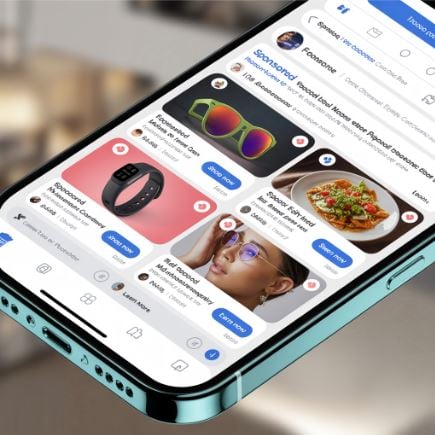
Let us start with the classic issue. Your audience might be so wide that Facebook has no idea who actually cares about your ad. When you target “all adults ages 18 to 65,” the system has to guess. It usually guesses wrong. Then your ad drifts into the newsfeeds of people who scroll past without even blinking.
I think people choose broad audiences because it feels safer. More people mean more chances, right? Not really. Facebook works better when it has clear signals. If you aim at everyone, you reach no one. Picture shouting into a stadium instead of talking to someone sitting right next to you—the message gets lost.
Try narrowing your audience, interests, behaviors, and custom lists. Also, people who already visited your website, and even something as simple as focusing on one age group, shifts the results. Your ad becomes more like a conversation, less like a billboard. Your budget goes further, too, because Facebook spends money on people who might actually respond.
I had an ad once that tanked for two days. I switched the audience to website visitors only. Boom. Immediate lift. It is wild how much that tiny shift can change everything.
Your Ad Creative is Not Grabbing Attention
If your ad looks like every other post, people scroll past before reading a word. Facebook is a crowded street, and your ad has to wave loud enough to get noticed, but not so loud that people roll their eyes. If your creative feels boring or overly polished, it blends in with the noise.
Your image might be too dark, your caption too stiff, and your video too slow. Or maybe you are talking about features instead of showing a real moment. Humans connect with faces, emotion, quick movement, and clear visuals. That first second determines everything.
Think about how you scroll. If something does not grab you instantly, you are gone. It is the same with your audience, so your ad creative needs a spark. Bright colors. Clear shots. Short videos. Friendly language. A tiny hook in the first line. It does not need to be perfect. It just needs to feel alive.
One time, I swapped a studio-style product photo for a quick phone snapshot. The results doubled. Sometimes, “real” beats “fancy.” Try experimenting, as the smallest creative change can breathe new life into your results.
Your Offer Does Not Feel Strong Enough
This one hurts, but it is real. If your offer does not excite people, even the best targeting will not save it. Maybe your discount feels too tiny, maybe the value of your service is not clear, or maybe you are asking people to take a step that feels too heavy. Like “Book a call” when they barely know who you are.
People care about what helps them. What saves time? Money. Stress. What improves their life even a little? Your ad must connect that dot quickly. If your offer reads like “buy this because it exists,” your audience taps away.
Try sharpening the benefit. Spell out what they gain. Use simple words. Make the value obvious without sounding salesy. Even a small shift like “Try it free for 7 days” or “Grab a quick demo” feels softer and easier to act on.
I once watched a business owner struggle for weeks with an ad that said, “Check out our new app.” No one clicked. Then they changed it to “Organize your day in 60 seconds.” Suddenly, people cared because the offer solved a problem.
Your offer does not need to be huge. It just needs to matter.
Your Landing Page Breaks the Momentum
You know that feeling when you click an ad and the page loads like it is underwater! Slow. Confusing. Too many buttons. Tiny text. Random pop-ups. You bail instantly. Everyone else does, too.
Your Facebook ad might actually be working fine. The problem kicks in after people click. If your landing page looks outdated or takes more than a couple of seconds to load, your results collapse. Facebook even tracks how quickly people bounce. If too many leave fast, the system punishes your ad by raising costs and lowering reach.
Your landing page should match the ad. Same message. Same look. Same promise. When people click, they should feel like they landed in the right place. Clean layout. One clear call-to-action. Simple words. Fast load time. Think of it like guiding someone through a doorway. You want it smooth, not chaotic.
I once tested two versions of a page. Same offer. Same ad. The only difference was load speed. The faster version got triple the conversions. No joke. Sometimes, the problem is not the ad, but the place where the ad sends people.
You Chose the Wrong Campaign Objective
This one sneaks up on people all the time. You pick an objective like “Traffic” or “Engagement” because it sounds right. Then, you wonder why no one buys. Facebook gives you what you ask for, not what you meant to ask for.
If you choose “Traffic,” Facebook finds people who click… but never buy anything. If you choose “Engagement,” the platform finds people who like posts… but never take action. So your ad looks busy. Lots of hearts. Lots of comments. Zero real results.
I remember running a Traffic campaign just to “test things.” It brought in tons of visitors, but none converted. Not even close. When I switched to “Conversions,” suddenly everything clicked. Same visuals. Same audience. Same offer. But now Facebook has shown my ad to people who behaved like buyers. That alone changed the entire performance.
So check your objective. Make sure it matches your real goal. Leads. Purchases. Messages. Whatever outcome you want, pick the matching objective. Facebook cannot read your mind, so you have to guide it.
Your Budget is Too Low for Facebook to Learn
I know it feels painful to hear this, but sometimes your budget is just too small. When your daily spend is low, Facebook does not collect enough data to optimize. The system needs a certain number of actions to understand who your ideal audience is. Without that data, your ad gets stuck in “learning limited,” which is basically Facebook saying, “I cannot do my job with this.”
Low budgets stretch the learning phase forever. Your cost per result shoots up. Your reach drops, and everything feels sluggish. Even good ads fail. It is like trying to cook a full meal with half the ingredients.
This does not mean you must spend a fortune. It just means your budget has to match your goal. Conversion campaigns especially need enough money to gather signals. Traffic needs less.
Awareness needs even less. But if you are expecting purchases of a few dollars a day, the system will struggle.
I once ran a $5-per-day conversion campaign just to test it. Facebook barely delivered it. The minute I bumped it to $15, the system woke up. Outcomes came through. At times, the system simply requires some space to reset.
Your Frequency is Too High, and People Are Tired
Ever notice how an ad plays nonstop till you just turn it off? Happens when folks see your ad way too often. People stop paying attention. Or worse, they get annoyed. That negative energy hurts your performance more than you think.
High frequency means the same people see your ad repeatedly without taking action. Facebook keeps trying, but when nothing happens, the system assumes the audience is not interested. Then, your results drop because you keep paying to show the ad to the same tired crowd.
Your audience needs fresh eyes. New people. A different creative variation. Even a slight copy refresh helps. Think of it like a conversation. If someone repeats the same sentence eight times, you tune out. Your audience does too.
So watch your frequency number. If it climbs, rotate your creative. Change your audience. Update your message. Tiny adjustments breathe life back into your campaign.
You Are Not Testing Enough Variations
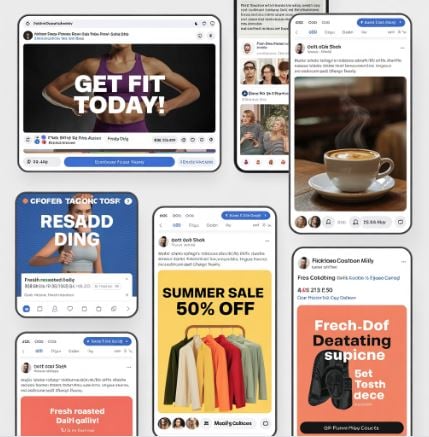
A single ad rarely becomes a winner. Facebook ads thrive on testing different visuals, different headlines, and different calls-to-action. Small changes can make huge differences. But if you run only one version and hope for the best, you leave results on the table.
Testing does not mean launching ten ads at once. It can be simple. One new image. One fresh hook. A softer call-to-action. Facebook naturally leans into the best performer and gives you more value for your money. Without variation, the system has nothing to compare, so it gambles. And those gambles are not always pretty.
I had an ad that was doing “okay.” Then, I tried a version with a hand-drawn arrow pointing to the product. That tiny, messy arrow doubled the click-through rate. It still surprises me how tiny edits can transform everything.
So give Facebook options. Not a million. Just a few. Enough for the system to choose what works best.
Your Ad Looks Misleading or Confusing
This happens a lot without people noticing. If your ad promises one thing but your landing page shows something slightly different, people click… then leave. Facebook hates fast bounces. It assumes your ad is unclear or misleading. Then, your cost per result climbs fast.
Sometimes, the issue is tone. Maybe your ad sounds hypey. Maybe your wording feels a little too good to be true. Or the image shows something that does not match your product. Even small mismatches confuse people, and that confusion kills conversions.
Clarity always wins. Your ad should explain what will happen after the click. No tricks. No mystery. No vague promises. Just simple honesty. Think of your ad as a handshake. People want it firm, not slippery.
When your message, image, and landing page all match, your results pick up. The experience feels smooth. Trust builds. Facebook sees people sticking around and rewards your ad with cheaper delivery.
The Problem Might Be Your Landing Page (…Yep, It Happens More Than You Think)
Here is the part nobody wants to hear. Sometimes, the ad is fine, but the landing page is the problem. Just like picking a cool outfit, but the shoes totally clash.
If your site takes forever to load, seems disorganized, or doesn’t deliver what the ad suggested, visitors will leave right away. You should aim for your landing page to match the vibe of your ad, so it flows without feeling forced.
Same colors. Same tone. Same message. When someone clicks, they should think, Oh yes, this is exactly what I expected. Try reading your ad and your landing page back to back. You will feel the disconnect if there is one. I did this once with my own project and winced at the mismatch.
A clean headline helps. Clear benefits help. Short forms help. Keep the energy moving. Make it easy for people to take the next step. Because honestly, if the page is not doing its job, the best ad in the world will fall flat.
Your Budget Might Be Too Low For Facebook’s System to Work Properly
Facebook Ads Manager has a vibe. It needs enough data to actually learn who to show your ad to. If your daily budget is super tiny, the system cannot optimize; it just guesses. Then, you guess. Then, everyone gets frustrated and logs off early.
If you want results, you usually need enough budget for at least 50 conversions per week. Think of this like giving Facebook a stack of clues instead of a single sticky note. The more clues, the smarter the targeting becomes. Too little spending and the machine learning side of Facebook kind of shrugs.
You do not need a massive budget. You just need enough to gather data. Even a moderate bump can help Facebook understand your ideal customer. Test this for a week. Watch the shift. It usually shows up faster than you expect.
You Might Be Targeting People Who Are Not In “Buying Mode” Yet
Sometimes, the audience is not the problem. The timing is. People scroll Facebook for a hundred reasons besides shopping. So if your ad pops up when they are not in the right headspace, it disappears into the noise like a friend waving at you from across a supermarket aisle.
Try warming people up first. Show them valuable content. A helpful video. A quick story. Something that makes them think, Okay, this brand gets me. Then, follow up with your offer. This two-step flow works way better than going straight for the sale.
I guess the real lesson is patience. People do buy from Facebook. They just need to move through the steps at their own pace. You guide. You nudge. You stay visible without being too much. It feels very human once you get the rhythm.
You Are Not Testing Enough Variations to Actually Find What Works
Testing is the unglamorous part of Facebook ads, but it matters so much. You need multiple angles, multiple images, and multiple hooks. When you only run one version, you place your entire bet on something that might just be “meh.”
Try small split tests. Change the headline. Swap the image. Adjust the first sentence. Tiny tweaks can change everything because people react to different emotional triggers. One ad might feel too serious, and another too soft. One might hit the perfect sweet spot.
Think of your ads like different outfits for the same event. You never know which one feels right until you try them on, so keep the tests simple but steady. The right variation usually pops up when you least expect it.
Conclusion – Your Ad is Not “Bad”… It Just Needs a Little Realignment
If your Facebook ad is falling flat, it is rarely about failure. It is usually about fine-tuning. A missing detail here. A wrong setting there. A message that is 80 percent there but needs that final nudge to click with the right people.
Facebook ads are weirdly emotional. They depend on timing, relevance, visuals, budget, and even the mood of the person scrolling, so give yourself some grace. Adjust the targeting. Revisit your landing page. Simplify your message. Warm up your audience first. Test little things often.
Then, watch the shift because once the pieces line up, Facebook ads can deliver results that feel almost magical. You got this. Keep going!

Sign up for SocialWick
Login
InstagramYouTubeTikTokFacebookTwitchSpotifyTwitter (X)SoundCloudIGTVLinkedInThreadsWebsitePinterestVKApple MusicSEO
Checkout
OK

Information
Order processing usually starts within a few minutes, but some services may take a few hours or even a few days. We offer free refills for up to 90 days if needed. Our services are 100% secure and discreet, with a focus on gradual and safe delivery for your peace of mind.
Order processing usually starts within a few minutes, but some services may take a few hours or even a few days. We offer free refills for up to 90 days if needed. Our services are 100% secure and discreet, with a focus on gradual and safe delivery for your peace of mind.
Where should we send your order confirmation?
No account needed! We send your confirmation and tracking link here.
Secure checkout. We never share your email.
Have an account?•
Log in
Use your account to pay faster with your saved details.
Create account
Create an account to track all your orders in one place.
Service
+0,00
Voucher
-0.00
Total
+0.00
OK
Affiliate & Reseller Program
Customer Support
How may we help you?
General Support
Order Support
Frequently Asked Questions
1) What services do you offer?
We are a social media marketing company, and we offer a wide variety of services across several platforms that our clients can choose from. Once selected, we create a plan that fits your needs. We offer several types of services, such as followers, subscribers, likes, views, song plays, etc.
2) Is your service safe?
Yes, as we only sell real followers, likes, views, etc., and we hold every service to strict authenticity and quality standards. In order to protect your account, we deliver every order carefully and gradually. We closely monitor all our services. For more information, we strongly recommend reading our Terms of Service before you order.
3) Will I need to give you the passwords for my accounts?
No, you can keep your passwords to yourself because our services don’t need a password to influence your accounts. And if an email ever shows up claiming to be from us and asking for a password, it’s definitely not us, so please let us know right away.
4) Are the likes, followers, and subscribers real, or are they bots?
Unlike many other services, all our likes, followers, and views come from real accounts operated by real people. You won’t find bots, fake profiles, or hijacked accounts anywhere in what we deliver. Every order has to pass our strict authenticity standards, and we keep checking our quality to make sure it stays that way.
5) How fast can you deliver my order?
We will show you the estimated delivery time when choosing the service. However, this is only a rough estimate. In most cases, the services are delivered much faster. In some cases, it may take longer. We always aim for a natural and safe delivery!
6) What are your best-selling social media marketing services?
Although we have many services across most social media companies, our services for Instagram, TikTok, and YouTube are our best-selling options.
7) How do I know my account will not be flagged or banned?
We take safety very seriously. We never ask for your password, all followers, likes, and views come from real accounts, and orders are usually delivered gradually and naturally. What we can promise is careful delivery and strict quality standards. Plus a support team that’s there whenever you need us. We are not aware of a single case since 2017 where a customer got his profile banned.
8) What is the best method to communicate with you?
Do you have a question or run into a problem? Our customer support is available 24/7 for you. Just click Contact and you’ll land right on the support form. When you buy one of our services, we will email you to see if there were any problems. Your satisfaction is our main priority.
9) Are there discounts for large orders?
Yes! If you would like to request a large order that isn’t on our ordering layout, we will have no problems accommodating you. Just reach out through the support form and we’ll put together a buying plan that fits what you need.
10) What methods of payment do you accept?
We accept all forms of credit and debit cards, as well as Klarna, eps, PayPal, and Crypto.
11) If I am unsatisfied with your services, am I able to receive a refund?
Yes! Every purchase comes with a 30 day money-back guarantee. Not satisfied? Just contact our support within 30 days of your purchase and send us your order details and a short note on what went wrong, and we’ll take a look at your case. The full conditions are in our Refund Policy.
12) I haven’t received my order
Please make sure the following criteria are met before placing an order to make sure we can deliver it successfully.
- Your account is set to public
- You have typed in the correct username or link
- You have not changed your username before the order’s completion
- The post or account still exists and has not been deleted
- The post or account has not been restricted or removed in some countries
- Allow the estimated delivery time for completion of your order
For further assistance, please message our support team through the contact form.
13) How can I request a refill?
Just send us a refill request through the contact form. Please note that we can only provide you with a free refill within the first 90 days of your purchase.
Learn More
What is SocialWick?
We are the leading marketplace for social media promotion. You can buy followers, likes, views, subscribers, and a lot more for almost all social media networks. We offer affordable prices without making any compromises in terms of the service quality. We have a strict policy to only sell social media signals from real people. Part of our engagement, for example, comes from ad-based promotion where real users discover the content through ads. Bots, fake profiles, and hijacked accounts have no place in our services. Every delivery has to meet our authenticity standards, and we run regular quality checks, and anything that does not meet them is removed from our catalog. Our services are available for personal use, whether you want more Instagram likes, TikTok followers, YouTube views, or something else for your own profile.
With over a million satisfied customers, SocialWick is the go-to platform for all your social media needs. Our services are discreet and secure, with gradual and careful delivery to keep your social media accounts safe.
About SocialWick — The Market Leader since 2017
With more than 10 million orders, SocialWick is one of the world’s biggest social media stores. You can find everything on our website to improve your presence on major social media platforms like Instagram, TikTok, YouTube, Twitter (X), Facebook, etc. We offer different types of services for several social media platforms. Your wish is our command, and whatever your goal might be, SocialWick will help you achieve it. Whether you need more likes on your Instagram photos or want to make your LinkedIn profile more popular by getting additional followers, SocialWick is there to turn your goal into reality.
Thanks to our effective services and our customer-oriented work, SocialWick has become a top player. You will not find a better service anywhere else, especially not at such affordable prices. SocialWick is operating since 2017.
365 Days Per Year Customer Service
Your satisfaction is our motivation! We’re not here just for the money; we do our work to help people find their road to social media success. And that’s why our team will do all to make sure everything goes according to plan. If there’s something wrong with your social media campaign, or worry that there might be some problems with your account, or want to learn more about how our services work, feel free to reach out. Our service staff is there for you seven days a week, ready to answer any of your questions. You can get in touch with us using the contact form on our website.
Buying Followers and Likes is Essential
Unless you’re Kylie Jenner, you definitely need some help with social media. The more followers you have on Instagram, TikTok, Twitter (X), or YouTube, the more people will automatically notice you. Having all those eyes on your content isn’t just impressive, it’s genuinely fun. The bad news is that everyone wants to be famous these days, but only a few can succeed. The good news is that you can be the chosen one who will get social media fame and everything that comes with it. But, for that, you need a little help from your friends at SocialWick.
With our help, you will increase the number of followers on social media, which can have a domino effect and bring you even more new followers. Once people see that you got a big followership, they will decide to give you a follow. "If a profile has so many followers, it means that it’s interesting" – you can be sure this is going to be their reasoning. Furthermore, more followers mean more visibility for everything you post. Finally, a large number of followers also do great for your credibility. Our social media services will help you to create a better overall picture of your profile.
Let’s be honest; a profile with 30,000 followers looks much better than one with 74 followers. And that’s exactly what new visitors will pay attention to. A weak social media profile can be a real deal-breaker. At the same time, a fantastic social media profile can do wonders for you. And SocialWick can make your social media profile amazing!