For the modern-day coaches of the digital-first age, Facebook remains the best platform for targeting potential customers. With billions of people on the platform and high-powered targeting capabilities, you are not only able to reach out to people but walk them step-by-step through the door of being a pay client.
Having the right people in the door is not enough—you must have a clear funnel that takes someone from a casual browser to a devoted client. This is where the creation of a Facebook funnel for the express business of lead generation for the coaching business comes in.
A Facebook funnel is different from other forms of marketing because you can build relations in the long run, educate prospects in the value of your coaching, and build credibility before you ever ask for a commitment.
A large part is that, for a coach, the commitment is so personal that faith in your credibility and approach is required. In this post, we're going to outline how to build a Facebook funnel that builds interest and credibility, and converts leads into repeat customers.
Understanding the Path to Buy Coaching
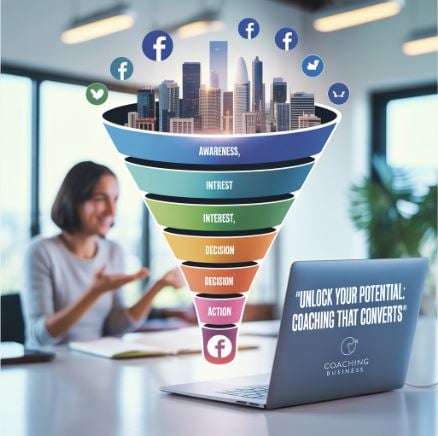
Before you build your Facebook funnel, you need to appreciate the process that your potential client goes through before they decide to buy coaching. Very few prospects wake up in the morning and decide to become a client of a coach, but they go through awareness, consideration, and the deciding phases.
Initially, they are not even conscious that they need coaching—they are simply in need of inspiration or advice on how they could solve a problem. A professional coach's job is to reach them right where they are. In the awareness phase, that means you must create content that directly addresses their pain points and makes them value the importance of self-development or professional coaching.
Once they're in the consideration phase, they're already in the mindset of wanting to learn about your alternative approach and whether or not your approach is the right solution for them. In the deciding phase, they're in the mindset of leaping, but only if they are highly trusting and believe in your ability to produce results for them.
By overlaying this map of your funnel on the stages, you're not losing or overlooking prospects through the error of expecting too much, too early. You're, instead, taking them through a natural, constructive sequence that is their own line of thought.
Creating High-Impact Facebook Ads for Awareness
First, toward the top of your funnel, here's an important role for Facebook ads in capturing awareness. This isn't the moment for hard-sell sales language, but for stoking curiosity and presenting your message in front of the people you must reach.
The most effective ads for coaches, in my experience, almost always highlight points of pain or longing that are already in the minds of the people you're targeting. Consider the pain points of your ideal clients—they may be balancing work life, suffering from impostor syndrome, or building their business but being held back.
Ads that go straight to those points of pain, in the language that their prospects speak, are exponentially more likely to make them hit the scroll stop. Premium graphics and video ads are also super effective because they make your business relatable and provide prospects with a piece of your personality and approach to coaching.
Targeting comes in handy, too. Target people all the way down to their demographic, interests, and even behavior. Making the ad targeting stricter means you're squeezing every dollar that you're spending because only the people most likely to value your coaching are hearing your message.
Landing-Page Structure for the Sake of Conversion
Once you've attracted someone's attention with an ad, step two is to direct them to a specially crafted landing page that will bring them deeper into your funnel. The page cannot be a generic website home page, but instead a dedicated page that is tied directly to the ad that they've clicked. Clarity is the objective here: you need to have the visitor certain of what they're being offered and why they should be interested.
With an effective landing page, you'll consistently see an offer of a gift being offered—e.g., a downloadable book, video training, or mini-course—in exchange for an email address. Not only does that give them actual value right away, but you're also permitted to continue the conversation through email nurturing.
Testimonials and case studies are also effective, in that they make the would-be client see that other people have been successful in utilizing your coaching. The setup will be simple—good headline, brief overview of the deal, and a basic call-to-action. The more copy that is used, the more the customer will be confused, so the less complicated the funnel that enables the visitor to register quickly and give their information, the better.
Utilizing Lead Magnets in Trust-Building and Customer Delight
Trust is the key here in the market of coaching. Until the individuals are actually investing in your service, they must be able to believe that you will yield the results that they are in need of. That is why the lead magnet is so effective inside your Facebook funnel. You're providing value first, establishing your expertise, and also investing in the potential client before they're even investing in you.
Very effective lead magnets among coaches are free step-by-step instructions on how to deal with simple problems, recorded video webinars about certain strategies, or even a mini-coach sheet that will introduce prospects to the manner of how you work. The more useful and the more effective the content is, the more prospects will recognize you as a serious specialist. A good lead magnet also starts building relationships.
Once they sign up, you will be able to nurture them through repeat communications, always adding value but always subtly referencing your pay service. With the passage of time, this ongoing, valuable presence makes it much easier to turn those leads into paying customers when they're in the mindset of making the next move.
Nurture in the Sequels of Emails
Once you've got a prospect in the funnel through the application of a lead magnet, the hard work begins: wooing the relationship through email. A good email sequence allows you to converse regularly with prospects, but surely leads them to the threshold of being a paying client.
For coaches, now is the time you get to put your a-game out, offering insightful wisdom, practical advice, and stories that speak to the personal problems and ambitions of your readers. Your initial email needs to provide the advertised lead magnet in the forward, so that your new prospect will see that they've received their reward for joining. You then develop a sequence that alternates between educational content and personal touches.
You describe the stories of your client successes, describe your coaching philosophy, and lay out typical objections that would prevent them not committing to the coaching. You move from being a name in their email box to being a respected mentor who is in tune with their direction.
Consistency is key. Sending messages consistently—weekly or every two days or so—makes the person relatable and gains credibility. There is always a soft call-to-action in every message, inviting the recipient to move forward—that is, scheduling the discovery call or joining a webinar or responding back to your message so that the door is left open for discussion.
Utilizing Facebook Retargeting Ads
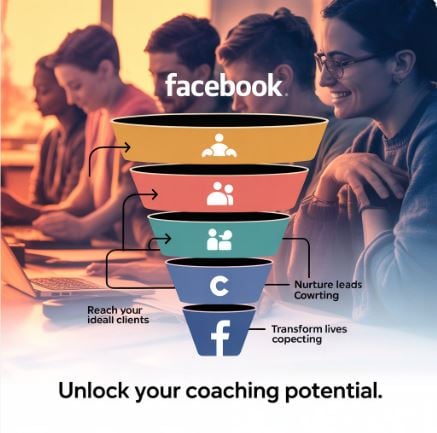
Not every prospect will convert in the immediate moment, and that is completely okay. In fact, most of the coaching clients need multiple touchpoints before committing. This is the essence of why Facebook retargeting ads are so important. In showing ads only to those people who have already engaged with your content, such as visiting your landing page, downloading a gift, or seeing your Facebook posts, you keep them in the back of their mind, but you also give them a slight reminder of that next step.
Retargeting enables you to customize your message based on the behavior of the lead. So, for instance, if you offered them the free e-book but they haven't gotten them to book in for a consultation, you may use an ad that offers them a free webinar.
In the case that they sampled a webinar but didn't purchase, an ad that offers a limited-time-only deal or free coaching call could give them the needed push. These are successful ads because they're not cold prospecting, but an extension of the relationship that you've already initiated.
And because you're prospecting for individuals that have already demonstrated enthusiasm, that ad dollar goes so much further and returns so much more than awareness campaigns in the first instance.
Using Free Webinars as Lead Magnet/Conversion Device
Webinars are today's preferred means of Facebook funnel-building coaches, and for that matter, they are an extremely effective means of presenting high-ticket content in an exciting, fun, and entertaining manner, all the while establishing good personal chemistry with your prospect.
A recorded or LIVE webinar enables prospects to witness your coaching in action, establishing a sense of credibility that passive content is not able to. In promoting the webinar, you use ads and your opt-in list for sign-ups. The copy should speak to an immediate, very practical pain of your target prospect–that is, an immediate issue that is very practical. During the webinar, make practical recommendations that will be executable in the immediate moment, but leave time for demonstration of the certain value of the service of coaching.
The end of the webinar is a good time to ask attendees to take the next step. Scheduling a discovery call, joining a coaching program, or taking part in a short-form group session are all options.
With the attendees having already gone through the effort of taking the time to give you their attention, they're now much more likely to be warm leads that need to be converted.
Showing Social Proof and Customer Testimonials
Most prospect coaches aren't so questioning of whether or not coaching is effective, but whether or not coaching with you is effective. So strong is social proof in your Facebook sales sequence that displaying client testimonials, case studies, and before-and-after results establishes credibility and offers hard evidence of the results of your coaching.
The social proof can be incorporated in nearly all parts of your funnel. On your landing page, post quotes of the previous customers with their faces (obtained with their permission) for credibility.
In your email sequence, utilize short testimonies of what the customers achieved through your guidance. The retargeting ads could even utilize video testimonies so prospects would hear the testimonies of those individuals who achieved results in their own voice.
The secret is being authentic. Custom case studies are wonderful, but genuine, real-life stories are not only frequently superior, but they're also believable. Prospects are eager to see individuals like them who made the leap and profited. Done appropriately, social proof transforms the mindset of the lead from "Will this work for me?" to "If they made the jump, then perhaps this will work for me too."
With the Discovery Calls Being the Final Step
The end of your Facebook funnel, the discovery call, is the ultimate, most personal, most successful conversion device. All of the nurturing that you're doing, all of the blog posts, all of the establishing of the trust is all condensed down to a one-on-one conversation.
These are not service sales calls for coaches, but they are connecting with a potential client to see the opportunity for change. Since the opportunity is setting up a discovery call, they've already demonstrated strong intent. To make the most of the opportunity, set up the call such that you're hearing their problems and objectives.
Then, lay out the case of how your coaching system is the solution they're looking for. You're not selling but helping them make the decision that's in support of and in alignment with them.
Follow-through is also key. If the prospect is not going to purchase on the spot, continue to nurture them through personalized e-mails or other content. Even those that won't convert in the short term will come back later after they have had time to consider further.
Monitoring the Funnel's Performance through Analytics
No Facebook funnel is ever created without being thoroughly tracked and analyzed. You, the coach, need to know what's working and what's not in your funnel. Facebook offers in-depth analytics through the Ads Manager so that you can see impressions, click-throughs, and conversion rates.
With your emailing system and scheduling software, you can see the whole picture of the lead, from the time the ad is first being viewed to the time the consultation is being scheduled. The key KPIs that you need to keep track of are cost per lead, conversion per sales step, and all-in return on ad spend. So, if you see that you're doing well in ad engagement but not so well in conversion within the landing page, you will need to make your message better or reinforce the call-to-action clarity.
Regular check-ins of your funnel's health ensure you are not wasting time or budget on strategies that are not effective. You are also able to make informed decisions that continue to maximize your lead generation process. Over time, even gradual increments will see gigantic jumps in the number of quality leads you generate.
Personalizing the Funnel Experience
A clear funnel is needed, but customization per se makes prospects valued, not passed through. In the coaching profession, relations being the business per se, customization of approach for prospects is that differentiator that does make a difference.
Personalization begins with small things, for example, referring to prospects in the messages or the actual downloaded content. You could even personalize further according to the interests or the problem of the individuals within the list, so that every lead will be given directly applicable content.
You could even personalize within the Facebook ads that you are making, sending various segments of people differently with messages that will be directly applicable to their own objectives.
Once prospects discover you're addressing their issue, they're that much more likely to make their way through your funnel. Not only does that mean greater conversion, but greater confidence, in turn, opening the door for the long-term coaching relationship.
Scaling Your Funnel for Larger Reach
Once you have an adequately functioning funnel that yields you high-quality leads, the second step is scaling the funnel so that you reach more individuals but maintain the personal approach.
Scaling for coaches would mean that you increase the ad budget, add new lead magnets, or run multiple webinars targeting different levels of client need. Scaling is not merely running more ads, but also scaling your systems so that you can absorb the growth.
It may mean automating your part of the email sequence, or scheduling software so that booking the call is simpler, or even using virtual staff to handle the client inquiries. In making the funnel scalable, you are opening the door to the opportunity to grow the coaching practice sustainably.
Scaling is gradual, not explosive. You try out new approaches with a percentage of your budget, study the results, then bet bigger on what you find is successful. You're always in control, and you're not overwhelming yourself or your systems.
Remaining Consistent for Long-Term Achievement
Another error that's committed by coaches when they're testing out a Facebook funnel is that they're not being consistent. They'll go out and establish a beautiful campaign, but then they won't continue. Lead generation is not event marketing—in fact, it's an ongoing process that's always in need of an update, latest content, and increased engagement.
Consistency refers to being in front of your people weekly, whether through new content, refreshed ads, or nurture emails. It also means checking back in your funnel frequently so you know if what you have in your funnel is still good for your coaching objective, target market, and marketplace trend.
The more you're consistent, the more your people are going to be expecting you because you're a consistent and reliable guide. Slowly but certainly, that consistent presence not only builds a funnel but a reputation. And in coaching, reputation is the key—the core that continues to build the lead flow and referral flow.
Conclusion – A Funnel that Works for You
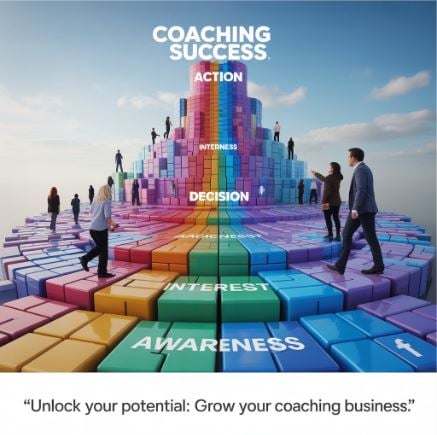
That's not building a Facebook lead generation funnel for the coaching business; that's building a relationship-driven process that moves someone from curiosity all the way through to commitment.
You build a high-value lead magnet, you sequence them through good email sequences, you utilize retargeting ads, you utilize social proof, you utilize discovery calls, and you build a good process for taking strangers and making them repeat, loyal coaching customers.
Most successful funnels are also nicely balanced in terms of strategy and authenticity. They're not out here aggressively promoting a service, but they're very endearing to the audiences they're targeting. These funnels, with ongoing tracking, customization, and scalability, now make your funnel a growth engine that will support you in the long run for your coaching business.
By 2025 and beyond, the coaches employing this plan will not only generate more leads, but they'll establish strong, sustainable connections with committed clients that are eager to invest in their transformation!
