#1 Social Media Marketplace
Accelerate Your Social Media Growth with SocialWick. Quickly gain real followers, viewers, likes & more with our blend of marketing tactics. SocialWick is known for its fast delivery, premium quality, and low prices. With over a million satisfied customers since 2017, trust SocialWick to take your social media game to the next level.
1.4 M
Customers
13 M
Orders
362 M
Followers sold
1.8 B
Likes sold
How to Use Pinterest Trends to Guide Your Content Strategy
Published on 07.10.2025 by Tracey Chizoba Fletcher
Pinterest isn’t just a platform to save pretty pics and store inspiration boards. In 2025, it is an extremely potent search engine unto itself, fueling consumer demand, igniting shopping habits, and affording creators and brands unimaginable levels of insight into precisely what audiences flat-out want.
Best of Pinterest? It’s trends—trends generally first emerge on Pinterest and then somewhere else, affording brands the power to get ahead of the curve. As entrepreneurs, creators, and businesses, this is an interesting resource for informed content direction using Pinterest Trends.
Discovering what’s trending allows you to understand exactly what your target market wants and produce work specifically to hit those wants. You may be selling goods, doing your blog work, or establishing brand awareness, and using Pinterest’s trends keeps your work up-to-date, fresh, and extremely discoverable.
In this piece, we’ll explore how to tap Pinterest Trends to elevate your content strategy to new heights in 2025, from interpreting seasonal spikes to optimizing visuals to match audience demand and indeed stay one step ahead of cultural conversation!
How Does Pinterest Trend Work?
To access Pinterest Trends, you have to know how it operates at its most fundamental level. Pinterest sifts through millions of saves and searches from its members all around the globe and determines what people are interested in at that particular moment.
This becomes your Pinterest Trends from which you can take a look at what products, fashions, and topics get selected. The best part of Pinterest Trends is that it not only reveals what’s trending today—it tends to track trends months before as they peak on social media or elsewhere.
A particular aesthetic, assemblage of colors, or design could go viral months prior on Pinterest in early spring, yet universal news or social media cannot keep up with it. This future vision helps creators and businesses plan calendar posts weeks or months ahead and take advantage of first-mover benefits.
By being aware of the best of Pinterest trends, you can develop something and release it at exactly the time your target market is best equipped to pay attention to it. This alignment of time and purpose is what transforms curious browsers into interested followers or paying clients.
Syncing Trends with Your Brand Niche
Among the worst things brands do with Pinterest Trends is to hop on everything simply because it’s trending and never ask themselves if it belongs to their niche. You could be enticed to hop on all trending ideas, but you succeed based on correlating trends that align with your brand’s personality. Consistency means a lot to the Pinterest audience, and there’s something they like to follow and be part of—those things that truly tie your core message.
In our previous example, if you are a wellness coach and the Pinterest Trends tool reveals there has been growth for an interest in “morning routines,” you could create pins on mindfulness rituals, healthy breakfasts, and time management systems that tie back to your services.
A home décor company could also address trending keywords like “Japandi interiors” or “biophilic design” by crafting eye-catching pins highlighting how products relate to those design trends. The answer isn’t to be all-trendy and go all-in on trends, but to naturally integrate them where your viewer won’t be uncomfortable. This allows you to take advantage of something being trendy, yet also have the originality people respond to, and be able to hold your work as your own.
Employing Seasonal Trends to Create Calendars of Content
Pinterest has high seasonal usage, and consumers will be there months before holidays, events, or lifestyle changes, and search. While others like Instagram or TikTok are impromptu and momentary trends, Pinterest trends are calendarable to an all-time high.
Consumers search on Pinterest to plan, and it could be spring gardening trends, summer vacations, fall fashions, or gift guides around holidays. You can also identify exactly when there is increasing interest in a particular subject matter and schedule your posts accordingly.
For example, keywords like “Christmas table décor” could start increasing as early as September, whereas others like “summer outfits” could start as early as March. This leads to time, then facilitates your developing and queueing posts weeks or months beforehand, and they’ll already be trending as the trend reaches its peak.
Even for businesses where core streams of income are derived from providing services, seasonal planning applies equally. A wedding photographer, for example, could take initial summits of “wedding color schemes” and publish blog posts, galleries, and Pinterest pins of work well before the wedding high season begins.
The sooner you predict your audience’s needs, the better your odds are of being considered the go-to authority on inspiration.
Designing Images to Match Today’s Aesthetic
On Pinterest, your images are part of your content strategy—and are your content strategy. Because Pinterest is all about the image, how you visually represent your ideas isn’t nearly as valuable as what your ideas are—they’re on the same level. That’s why learning how to unlock the eye-catching look behind Pinterest Trends has never been necessary.
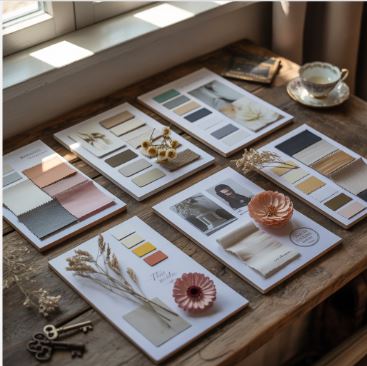
As long as the data indicates there’s a trend toward something like “earthy tones” or “maximalist décor,” simply using those keywords as your pin descriptions won’t quite suffice. Your pins also need to depict the trend so your users involuntarily identify the look upon first glance. This may mean using particular shades from your palette, particular types of images, or particular design elements to accompany trending keywords.
As an illustration, if there has also been the establishment of the trends of “clean girl makeup,” your pins could then mirror gentle natural lighting, miniature flat lays, and muted tone visually, like the look.
This convergence of trend data and visual design generates improved emotional affinity with the users, and they will be willing to interact and delve into your work.
Using Keyword Insights to Write SEO-Friendly Posts
Pinterest Trends isn’t all images, though—it’s also the keyword researcher’s treasure trove. Each trending subject has an entire keyword arsenal of search terms people are searching from the search bar, and you can utilize them to give your content strategy an adrenaline boost.
Integrate trending keywords into your pin titles, descriptions, blog posts, and your site, and you can give your search visibility an explosive kickstart. Supposing you term something going viral as “budget-conscious meal prep,” you can produce an article using those exact words as your heading, create pins from the subject matter visually, and tag descriptions using keywords like “easy weekly meals” or “health meal planning.”
This keyword layering qualifies your article to appear on both Pinterest and Google search results because pins from Pinterest are constantly being indexed. The trick is to combine keyword optimization and organically appealing copy. Bunching your descriptions with keywords sounds insincere and pushes away visitors.
Frame your trending keywords as discussion points—scatter them naturally throughout your captions and blog posts so your copy sounds natural but appears first at the top of search results.
Noticing Micro-Trends Before Everyone Else Does
Among many of its strengths, one of Pinterest’s enormous benefits is how ahead of time it can spot and hype up micro-trends before they go big. Those micro-trends can begin small—possibly with one specific interior design aesthetic, some obscure makeup trick, or rising wellness movement—but they routinely blow up as broader cultural developments months later.
As one of the emerging patterns amongst creators and brands, finding those micro-trends first allows you to be the go-to for your niche. It’d be wonderful to be amongst the first creators writing an upswing exercise program or an upswing home trend design; your article may be the sole occupant of the search result at peak time for the trend.
Pinterest Trends facilitates this by making upward search spikes first arrive on the platform before they trend on others. To benefit from the advantage, continuously look for emerging trends already trending in your niche.
You don’t have to wait for something to be trending; pinning around it beforehand makes you an authority and gives you the best chances of yielding long-term outcomes. The sooner you jump into the discussion, the further your pins will be spread as the trend becomes larger.
Combining Evergreen and Trend-Based Posts
While trends give your posts an immediate boost, your brand will profit from the steady base over time with evergreen posts. Evergreen posts consist of those posts that are seasonal all year round, like “productivity tips,” “home organization hacks,” or “healthy recipes.” Posts like these remain traffic magnets months after they’ve been published.
The key to a successful Pinterest strategy is striking the correct equilibrium between trend and evergreen work. You’ll be leaving your work looking fractional if you bet all your chips on trends, and only doing evergreen work could cost you gigantic spikes of seasonal or timely interest.
The good news, though, your strategy should involve both of them: work at developing an ongoing base of evergreen pieces that will never be a bad idea, and then supplement with trending pieces as you take advantage of seasonal or cultural spikes of popularity.
As an example, your fashion influencer may routinely publish “wardrobe fundamentals” posts (evergreen), and also take advantage of trending terms like “spring festival clothing” or “autumn fall fashion” in October. This blend keeps your posts up-to-date at each time of year or trending category.
Transforming Pinterest Insights into Strategies for Different Platforms
Possibly the most underappreciated benefit of Pinterest Trends is that it isn’t only going to teach your Pinterest content—it can teach your overall online strategy. On Pinterest, people plan months ahead of time before those ideas reach somewhere else. The data becomes an advanced alert system as to what will go viral on TikTok, Instagram, and YouTube.
In this respect, as you spot growing demand for “eco-friendly packaging” on Pinterest, you can think of filming Instagram Reels on sustainable unboxing or TikTok videos teaching others about how green branding affects humans. Likewise, rising Pinterest searches like “solo travel ideas” may inspire your creation of a YouTube series or your blog promotion via various channels.
By constructing multi-platform planning of your content from Pinterest Trends, you also keep your campaigns one step ahead and on-brand. This keeps your reach at all-time highs and your credibility as an informed brand of where the culture is heading intact.
How to Determine Trend-Inspired Article Success
As building trend-driven work is only half the battle, tracking how it’s done is where you also know if your game plan is truly yielding results or not. Pinterest has built-in analytics features that track essential metrics like impressions, saves, and clicks alongside aggregate engagement. You can then access this data and determine what trends are holding up for your people and what isn’t living up to the hype.
But don’t just look at Pinterest analytics. Track your performance of your trend-conscious content all the way through your entire ecosystem.
Are they clicking through to your website? Signing up for your mailing list or making sales? Paying attention to your downstream metrics, like conversions and sales, provides far better insight as to whether your Pinterest approach is providing desired results.
With time, your observations will enable you to refine your strategy. You’ll be able to determine what kind of trends your people like best, what seasonal highs provide most traffic, and what images produce most engagement.
This feedback loop will enable each successive original work of your own to be smarter, better-targeted, and more interesting than the last one.
Influencer Collaboration Utilizing Trend Data
Pinterest isn’t just where you go searching for ideas, but also where you go to work on collaborative campaigns to reach broader audiences. Perhaps one of the best ways to this end is through building influencer partnerships with others already creating work from trending niches.
By pairing your brand with an individual whose work best matches trending search terms on Pinterest, your credibility and visibility are increased organically. Just as adding the keyword term “minimalist home office,” teaming up with an already established home décor influencer who already covers design functionality helps your content go further. The influencer produces trend-driven boards, pins, or even blog posts featuring your brand, and your business has the advantage of an already interested foundation.
But this joint effort isn’t reserved just for sponsored posts. You can also create collaborative pins from trending keywords and images and search optimize them on Pinterest. Long term, your collaborations will provide you with continuous interactions and place your brand as part of the discussion around future trends.
Syncing Your Sales Funnel and Pinterest Trends
Applying Pinterest trends correctly isn’t just about exposing oneself, though, but also funneling your future clients through an explicit process—from awareness to conversion. Each trending search your content takes into consideration can be a door into your sales funnel if you frame the process strategically.
You happen to be a wellness coach, and there may be hype over “mindful morning routines.” A high funnel offer for you may be a nicely composed pin that offers an electronically downloadable checklist completely for free.
Once downloaded, they could be enrolled into your database via email, where you take them through value-based communications. Gradually, they could be presented with a paid package of coaching or courses.
Putting trending keywords before personal points of your sales funnel converts passing traffic to enduring connections. The Pinterest Trends allows you to reach people at the exact time they search for answers and then reach them at the optimum time.
Staying Ahead of Evolutionary Trends Via Rapid Adaptation
Trends are one sure trap to deal with: uncertainty. What’s cool this month may be junk next month, so one has to be flexible. The most effective Pinterest businesses are those willing to be an early adopter of trends yet be quick to pivot as passions shift.
To accommodate this agility, there also needs to be an easy and flexible creation of content, building, and management process. Templates, fast-turn design workflows, and explicit approval systems facilitate wider responses to sporadic search term spikes. The quicker your team can respond, the better your lead over slower-moving competitors will be at all times.
Even better, flexibility prevents your posts from going stale. Audiences on Pinterest are inspired by excitement, and there’s nothing better at grabbing immediate attention than the sort of posts that concern how excited they currently feel. Brands capable of hitting this sweet spot of quality and flexibility will continue to succeed through 2025 and beyond.
Conclusion – Converting Pinterest Trends into Long-Term Success
Pinterest Trends has moved from being a discovery platform—it’s an engine for crafting your content strategy, optimizing SEO, and being ahead of cultural currents. Utilizing keyword intelligence, finding your micro-trends before they occur, leveraging your seasonal concepts as part of your base evergreen pieces, and making your effort line up with your sales funnel, you can move Pinterest from one of your numerous channels to being an engine for crafting growth over the long game.
The trick isn’t to look to Pinterest Trends as an infrequent resource, but as an integral part of your everyday content-planning process. Regularly jumping from trend intel to developing your creative vision means you’re doing something better than holding back and waiting for audiences to call for something and then presenting it—you’re one step ahead.
Arriving first and besting your competition to market with value is what separates prosperous creators and businesses doing business online in 2025. As socials become busier, only those brands that know how to produce content will be winners. And with Pinterest Trends at your fingertips, you’ve got the data and guidance to advance all of your content one step closer to improved performance, greater visibility, and results you can measure!

Sign up for SocialWick
Login
InstagramYouTubeTikTokFacebookTwitchSpotifyTwitter (X)SoundCloudIGTVLinkedInThreadsWebsitePinterestVKApple MusicSEO
Checkout
OK

Information
Order processing usually starts within a few minutes, but some services may take a few hours or even a few days. We offer free refills for up to 90 days if needed. Our services are 100% secure and discreet, with a focus on gradual and safe delivery for your peace of mind.
Order processing usually starts within a few minutes, but some services may take a few hours or even a few days. We offer free refills for up to 90 days if needed. Our services are 100% secure and discreet, with a focus on gradual and safe delivery for your peace of mind.
Where should we send your order confirmation?
No account needed! We send your confirmation and tracking link here.
Secure checkout. We never share your email.
Have an account?•
Log in
Use your account to pay faster with your saved details.
Create account
Create an account to track all your orders in one place.
Service
+0,00
Voucher
-0.00
Total
+0.00
OK
Affiliate & Reseller Program
Customer Support
How may we help you?
General Support
Order Support
Frequently Asked Questions
1) What services do you offer?
We are a social media marketing company, and we offer a wide variety of services across several platforms that our clients can choose from. Once selected, we create a plan that fits your needs. We offer several types of services, such as followers, subscribers, likes, views, song plays, etc.
2) Is your service safe?
Yes, as we only sell real followers, likes, views, etc., and we hold every service to strict authenticity and quality standards. In order to protect your account, we deliver every order carefully and gradually. We closely monitor all our services. For more information, we strongly recommend reading our Terms of Service before you order.
3) Will I need to give you the passwords for my accounts?
No, you can keep your passwords to yourself because our services don’t need a password to influence your accounts. And if an email ever shows up claiming to be from us and asking for a password, it’s definitely not us, so please let us know right away.
4) Are the likes, followers, and subscribers real, or are they bots?
Unlike many other services, all our likes, followers, and views come from real accounts operated by real people. You won’t find bots, fake profiles, or hijacked accounts anywhere in what we deliver. Every order has to pass our strict authenticity standards, and we keep checking our quality to make sure it stays that way.
5) How fast can you deliver my order?
We will show you the estimated delivery time when choosing the service. However, this is only a rough estimate. In most cases, the services are delivered much faster. In some cases, it may take longer. We always aim for a natural and safe delivery!
6) What are your best-selling social media marketing services?
Although we have many services across most social media companies, our services for Instagram, TikTok, and YouTube are our best-selling options.
7) How do I know my account will not be flagged or banned?
We take safety very seriously. We never ask for your password, all followers, likes, and views come from real accounts, and orders are usually delivered gradually and naturally. What we can promise is careful delivery and strict quality standards. Plus a support team that’s there whenever you need us. We are not aware of a single case since 2017 where a customer got his profile banned.
8) What is the best method to communicate with you?
Do you have a question or run into a problem? Our customer support is available 24/7 for you. Just click Contact and you’ll land right on the support form. When you buy one of our services, we will email you to see if there were any problems. Your satisfaction is our main priority.
9) Are there discounts for large orders?
Yes! If you would like to request a large order that isn’t on our ordering layout, we will have no problems accommodating you. Just reach out through the support form and we’ll put together a buying plan that fits what you need.
10) What methods of payment do you accept?
We accept all forms of credit and debit cards, as well as Klarna, eps, PayPal, and Crypto.
11) If I am unsatisfied with your services, am I able to receive a refund?
Yes! Every purchase comes with a 30 day money-back guarantee. Not satisfied? Just contact our support within 30 days of your purchase and send us your order details and a short note on what went wrong, and we’ll take a look at your case. The full conditions are in our Refund Policy.
12) I haven’t received my order
Please make sure the following criteria are met before placing an order to make sure we can deliver it successfully.
- Your account is set to public
- You have typed in the correct username or link
- You have not changed your username before the order’s completion
- The post or account still exists and has not been deleted
- The post or account has not been restricted or removed in some countries
- Allow the estimated delivery time for completion of your order
For further assistance, please message our support team through the contact form.
13) How can I request a refill?
Just send us a refill request through the contact form. Please note that we can only provide you with a free refill within the first 90 days of your purchase.
Learn More
What is SocialWick?
We are the leading marketplace for social media promotion. You can buy followers, likes, views, subscribers, and a lot more for almost all social media networks. We offer affordable prices without making any compromises in terms of the service quality. We have a strict policy to only sell social media signals from real people. Part of our engagement, for example, comes from ad-based promotion where real users discover the content through ads. Bots, fake profiles, and hijacked accounts have no place in our services. Every delivery has to meet our authenticity standards, and we run regular quality checks, and anything that does not meet them is removed from our catalog. Our services are available for personal use, whether you want more Instagram likes, TikTok followers, YouTube views, or something else for your own profile.
With over a million satisfied customers, SocialWick is the go-to platform for all your social media needs. Our services are discreet and secure, with gradual and careful delivery to keep your social media accounts safe.
About SocialWick — The Market Leader since 2017
With more than 10 million orders, SocialWick is one of the world’s biggest social media stores. You can find everything on our website to improve your presence on major social media platforms like Instagram, TikTok, YouTube, Twitter (X), Facebook, etc. We offer different types of services for several social media platforms. Your wish is our command, and whatever your goal might be, SocialWick will help you achieve it. Whether you need more likes on your Instagram photos or want to make your LinkedIn profile more popular by getting additional followers, SocialWick is there to turn your goal into reality.
Thanks to our effective services and our customer-oriented work, SocialWick has become a top player. You will not find a better service anywhere else, especially not at such affordable prices. SocialWick is operating since 2017.
365 Days Per Year Customer Service
Your satisfaction is our motivation! We’re not here just for the money; we do our work to help people find their road to social media success. And that’s why our team will do all to make sure everything goes according to plan. If there’s something wrong with your social media campaign, or worry that there might be some problems with your account, or want to learn more about how our services work, feel free to reach out. Our service staff is there for you seven days a week, ready to answer any of your questions. You can get in touch with us using the contact form on our website.
Buying Followers and Likes is Essential
Unless you’re Kylie Jenner, you definitely need some help with social media. The more followers you have on Instagram, TikTok, Twitter (X), or YouTube, the more people will automatically notice you. Having all those eyes on your content isn’t just impressive, it’s genuinely fun. The bad news is that everyone wants to be famous these days, but only a few can succeed. The good news is that you can be the chosen one who will get social media fame and everything that comes with it. But, for that, you need a little help from your friends at SocialWick.
With our help, you will increase the number of followers on social media, which can have a domino effect and bring you even more new followers. Once people see that you got a big followership, they will decide to give you a follow. "If a profile has so many followers, it means that it’s interesting" – you can be sure this is going to be their reasoning. Furthermore, more followers mean more visibility for everything you post. Finally, a large number of followers also do great for your credibility. Our social media services will help you to create a better overall picture of your profile.
Let’s be honest; a profile with 30,000 followers looks much better than one with 74 followers. And that’s exactly what new visitors will pay attention to. A weak social media profile can be a real deal-breaker. At the same time, a fantastic social media profile can do wonders for you. And SocialWick can make your social media profile amazing!