#1 Social Media Marketplace
Accelerate Your Social Media Growth with SocialWick. Quickly gain real followers, viewers, likes & more with our blend of marketing tactics. SocialWick is known for its fast delivery, premium quality, and low prices. With over a million satisfied customers since 2017, trust SocialWick to take your social media game to the next level.
1.4 M
Customers
13 M
Orders
362 M
Followers sold
1.8 B
Likes sold
LinkedIn Profile Tweaks That Attract Recruiters and Clients
Published on 15.01.2026 by Tracey Chizoba Fletcher
LinkedIn profiles are weird. They feel important, but most people set them up once, then never touch them again! You update your job title, upload a decent photo, add a few bullet points, then hope the right people somehow find you. Recruiters. Clients. Opportunities. All of it feels passive.
But LinkedIn does not really work like that anymore. People skim profiles fast. Really fast. They are not reading every word. They are scanning for signals, clarity, and relevance. Proof that you are worth a message.
I think this is where frustration creeps in. You feel qualified. You know you do good work. But your inbox stays quiet. That silence can mess with your confidence.
The fix is rarely dramatic. You do not need to rewrite your whole profile from scratch. Small tweaks make a big difference—the kind that change how people perceive you in seconds.
This guide breaks down LinkedIn profile tweaks that actually attract recruiters and clients. Not gimmicks. Not buzzwords. Just practical adjustments that make your profile clearer, warmer, and easier to trust.
Let’s start with the part everyone sees first!
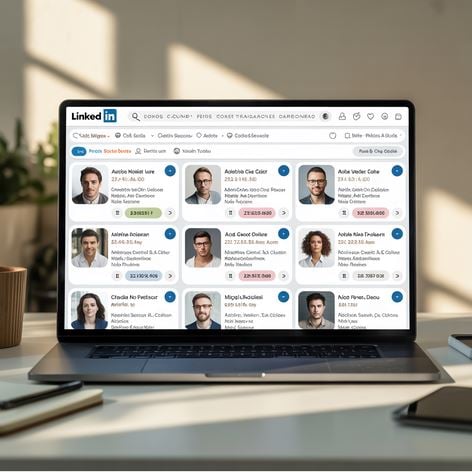
Rewrite Your Headline to Say What You Do for Others
Your headline is prime real estate. Most people waste it. By default, LinkedIn turns your job title into your headline. That might be accurate, but it is rarely compelling. “Marketing Manager” or “Consultant” does not tell anyone why they should care.
Recruiters and clients are asking one quiet question: “What problem do you solve?” Try answering that instead!
A strong headline explains who you help and how, in plain language. Not jargon. Not corporate phrases. Just clarity. For example, “Helping startups turn website traffic into paying customers” says more than any fancy title ever could. It sets expectations immediately.
I think people avoid this because it feels bold. Like you are making a claim. But clarity is not bragging. It is courtesy. Your headline should make someone think, Oh, this is relevant to me. If it does that, you are already ahead of most profiles.
Use Your Profile Photo to Signal Approachability
Your photo matters more than you want it to. It does not need to be perfect or human. It should be clear, current, and friendly enough that someone would not hesitate to message you.
Skip heavy filters. Skip stiff poses. Skip cropped wedding photos if you can help it. A simple head-and-shoulders shot works best. Neutral background. Good light. Relaxed expression. You want to look like someone people can talk to.
I once swapped a serious photo for one where I was slightly smiling. Same outfit. Same angle. More messages. That surprised me.
People decide fast. In a split second, they judge if you feel approachable. Your photo does a lot of that work before your words ever get read. Think “professional, but human.” That balance attracts both recruiters and clients.
Turn Your Summary Into a Short, Skimmable Story
The “About” section is where many profiles fall apart. People either write nothing or write way too much. Long paragraphs. Corporate language. Lists of skills that feel copied and pasted.
Instead, think of this section as a short story—one someone can skim and still understand. Start with what you do now, then explain why it matters. Hint at who you work with or want to work with. Keep it conversational and write as you talk.
Short paragraphs help—one or two sentences max. White space matters, too. This section works best when it feels honest instead of impressive. You are not trying to win an award. You are trying to make someone comfortable reaching out.
End with a gentle invitation. Something like, “If this sounds useful, feel free to message me.” Simple, human, and effective!
Focus Your Experience on Outcomes, Not Tasks
Your experience section should not read like a job description. Most profiles list tasks. “Responsible for.” “Managed.” “Assisted.” That tells people what you did, but not why it mattered.
Recruiters and clients care about outcomes. Results. Impact. Instead of listing everything you touched, highlight what changed because you were there. Did something grow? Improve? Simplify? Perform better? For example, “Helped reduce onboarding time by simplifying internal processes” paints a clearer picture than a list of duties ever could.
I think people undersell themselves here because they think results sound braggy. They are not. They are informative.
Clear outcomes help people imagine working with you. That imagination is what turns profile views into messages.
Curate Your Skills Section Instead of Listing Everything
The skills section is not a storage closet. Treat it like a shop window. Most people add every skill they have ever touched. Tools. Buzzwords. Random competencies from five years ago. It looks impressive at first glance, then confusing on second look.
Recruiters and clients scan this section fast. They are looking for alignment, not volume. Try narrowing it down to what you want to be contacted for. The skills that match your headline and summary. The ones you still use and enjoy!
Endorsements matter here, too. A few skills with real endorsements look more credible than a long list nobody interacted with. I think trimming skills feels risky, like you are limiting yourself. In reality, you are making your value clearer. Clarity attracts the right people faster.
Use the Featured Section to Show Proof, Not Promotion
The Featured section is quietly powerful. Most profiles either ignore it or misuse it. This space works best when it shows proof of your work instead of talking about it. Articles you wrote. Projects you worked on. Case studies. Portfolio pieces. Even a thoughtful post that explains how you think.
Avoid turning this into an ad. Loud calls to action feel out of place here. Instead, think of it as a sample tray. You are letting people taste your work before committing to a conversation.
I once added a simple document explaining how I approached a common problem. Nothing flashy. It led to better inbound messages almost immediately!
When people can see how you think or work, trust builds faster. The Featured section helps with that quietly.
Stay Active in a Way That Feels Natural to You
An inactive profile feels frozen in time. You do not need to post every day. You do not need to become a thought leader overnight. But light activity helps your profile feel alive.
This can be as simple as commenting thoughtfully on posts in your industry. Sharing an article with a short reaction. Posting once a week when something genuinely interests you.
Activity shows you are paying attention. That matters. Recruiters and clients often check recent activity before messaging. Silence does not disqualify you, but presence helps.
I think the key is choosing a level of activity you can sustain. Forced posting shows. Genuine engagement feels natural!
Make Your Experience Easy to Scan on Mobile
Most people view LinkedIn on their phones, which changes how your profile is read. Long paragraphs collapse into walls of text on mobile. Important details get lost fast. Shorter sentences help. Clear spacing helps. Strong first lines help most.
Try opening your profile on your phone. Scroll like a stranger would. Notice where your eyes slow down or glaze over.
I was surprised the first time I did this. What felt readable on desktop felt heavy on mobile. Small edits fixed that quickly. If your profile scans well on mobile, it works almost everywhere.
Add Small Personal Signals That Build Trust
Professional does not mean personality-free. Small personal details make profiles warmer. A line about what you enjoy working on. A cause you care about. A way you approach collaboration.
These details help people imagine working with you. That imagination is powerful. You do not need to overshare. One or two subtle signals are enough.
This is what turns a “qualified profile” into a “message-worthy profile.” People reach out when they feel a human connection, not just competence. Trust grows in the details people were not required to include!
Customize Your LinkedIn URL for a Cleaner First Impression
This one feels small, but it is not. A custom LinkedIn URL looks intentional. Clean. Shareable. It signals that you care about details without saying a word.
The default version with random numbers feels unfinished. Like you never circled back to polish things up. Recruiters notice that stuff, even if they do not say it out loud.
Customizing it takes about thirty seconds. Your name or a simple variation usually works. Then you can use it everywhere. Email signatures. Portfolios. Proposals.
I remember finally fixing mine after ignoring it for years. It felt oddly satisfying. Like straightening a crooked picture frame. Tiny tweaks like this add up. They quietly increase trust.
Align Your Open-To-Work or Services Signals With Your Goal
LinkedIn gives you signals for a reason, so use them intentionally. If you want recruiters to find you, the Open to Work setting helps. If you want clients, the Services section does more work. Turning both on without clarity can send mixed messages.
Be honest about what you want right now. Not forever. Just now. Recruiters and clients scan for alignment. They want to know if reaching out makes sense, as clear signals reduce friction.
I think people avoid these features because they feel exposed, like you are admitting you want something, but LinkedIn is literally built for that exchange. Clear signals invite the right conversations. Vague ones slow everything down!
Ask for Recommendations That Tell a Story
Recommendations still matter. They just work best when they are specific. A generic “great to work with” line is nice. It does not say much. A short story about how you helped solve a problem says a lot.
When asking for recommendations, guide gently. Suggest what to focus on. A project. A result. A way you work. Most people appreciate the direction, as it makes writing easier.
I once received a recommendation that mentioned how I handled a stressful deadline. That one line did more for trust than any skill list. Stories stick. Let others tell your story when possible!
Audit Your Profile Like a Stranger Would
This is the final step, and maybe the most important. Open your profile in an incognito window or ask a friend to scan it quickly. Not deeply. Quickly. What is clear in five seconds? What feels confusing? What feels warm? What feels stiff?
Pay attention to how it feels, not just what it says. I do this every few months. Every time, I notice something small that could be clearer. A sentence. A headline tweak. A missing detail.
Your profile is not a one-time setup. It is a living page. Treat it that way!
Conclusion – Optimizing Your LinkedIn Profile
Attracting recruiters and clients on LinkedIn is not about playing a character. It is about removing friction.
Clear headlines. Human photos. Skimmable stories. Proof that you do real work with real people. Small signals that say, “You can trust this.”
You do not need to overhaul everything. Most of the time, a few thoughtful tweaks change how your profile feels instantly. Honestly, the best LinkedIn profiles do not try too hard. They feel honest, intentional, and easy to understand.
So take one section this week. Just one. Make it clearer. Make it warmer. Then stop. That is how profiles quietly start working for you instead of sitting there doing nothing!

Sign up for SocialWick
Login
InstagramYouTubeTikTokFacebookTwitchSpotifyTwitter (X)SoundCloudIGTVLinkedInThreadsWebsitePinterestVKApple MusicSEO
Checkout
OK

Information
Order processing usually starts within a few minutes, but some services may take a few hours or even a few days. We offer free refills for up to 90 days if needed. Our services are 100% secure and discreet, with a focus on gradual and safe delivery for your peace of mind.
Order processing usually starts within a few minutes, but some services may take a few hours or even a few days. We offer free refills for up to 90 days if needed. Our services are 100% secure and discreet, with a focus on gradual and safe delivery for your peace of mind.
Where should we send your order confirmation?
No account needed! We send your confirmation and tracking link here.
Secure checkout. We never share your email.
Have an account?•
Log in
Use your account to pay faster with your saved details.
Create account
Create an account to track all your orders in one place.
Service
+0,00
Voucher
-0.00
Total
+0.00
OK
Affiliate & Reseller Program
Customer Support
How may we help you?
General Support
Order Support
Frequently Asked Questions
1) What services do you offer?
We are a social media marketing company, and we offer a wide variety of services across several platforms that our clients can choose from. Once selected, we create a plan that fits your needs. We offer several types of services, such as followers, subscribers, likes, views, song plays, etc.
2) Is your service safe?
Yes, as we only sell real followers, likes, views, etc., and we hold every service to strict authenticity and quality standards. In order to protect your account, we deliver every order carefully and gradually. We closely monitor all our services. For more information, we strongly recommend reading our Terms of Service before you order.
3) Will I need to give you the passwords for my accounts?
No, you can keep your passwords to yourself because our services don’t need a password to influence your accounts. And if an email ever shows up claiming to be from us and asking for a password, it’s definitely not us, so please let us know right away.
4) Are the likes, followers, and subscribers real, or are they bots?
Unlike many other services, all our likes, followers, and views come from real accounts operated by real people. You won’t find bots, fake profiles, or hijacked accounts anywhere in what we deliver. Every order has to pass our strict authenticity standards, and we keep checking our quality to make sure it stays that way.
5) How fast can you deliver my order?
We will show you the estimated delivery time when choosing the service. However, this is only a rough estimate. In most cases, the services are delivered much faster. In some cases, it may take longer. We always aim for a natural and safe delivery!
6) What are your best-selling social media marketing services?
Although we have many services across most social media companies, our services for Instagram, TikTok, and YouTube are our best-selling options.
7) How do I know my account will not be flagged or banned?
We take safety very seriously. We never ask for your password, all followers, likes, and views come from real accounts, and orders are usually delivered gradually and naturally. What we can promise is careful delivery and strict quality standards. Plus a support team that’s there whenever you need us. We are not aware of a single case since 2017 where a customer got his profile banned.
8) What is the best method to communicate with you?
Do you have a question or run into a problem? Our customer support is available 24/7 for you. Just click Contact and you’ll land right on the support form. When you buy one of our services, we will email you to see if there were any problems. Your satisfaction is our main priority.
9) Are there discounts for large orders?
Yes! If you would like to request a large order that isn’t on our ordering layout, we will have no problems accommodating you. Just reach out through the support form and we’ll put together a buying plan that fits what you need.
10) What methods of payment do you accept?
We accept all forms of credit and debit cards, as well as Klarna, eps, PayPal, and Crypto.
11) If I am unsatisfied with your services, am I able to receive a refund?
Yes! Every purchase comes with a 30 day money-back guarantee. Not satisfied? Just contact our support within 30 days of your purchase and send us your order details and a short note on what went wrong, and we’ll take a look at your case. The full conditions are in our Refund Policy.
12) I haven’t received my order
Please make sure the following criteria are met before placing an order to make sure we can deliver it successfully.
- Your account is set to public
- You have typed in the correct username or link
- You have not changed your username before the order’s completion
- The post or account still exists and has not been deleted
- The post or account has not been restricted or removed in some countries
- Allow the estimated delivery time for completion of your order
For further assistance, please message our support team through the contact form.
13) How can I request a refill?
Just send us a refill request through the contact form. Please note that we can only provide you with a free refill within the first 90 days of your purchase.
Learn More
What is SocialWick?
We are the leading marketplace for social media promotion. You can buy followers, likes, views, subscribers, and a lot more for almost all social media networks. We offer affordable prices without making any compromises in terms of the service quality. We have a strict policy to only sell social media signals from real people. Part of our engagement, for example, comes from ad-based promotion where real users discover the content through ads. Bots, fake profiles, and hijacked accounts have no place in our services. Every delivery has to meet our authenticity standards, and we run regular quality checks, and anything that does not meet them is removed from our catalog. Our services are available for personal use, whether you want more Instagram likes, TikTok followers, YouTube views, or something else for your own profile.
With over a million satisfied customers, SocialWick is the go-to platform for all your social media needs. Our services are discreet and secure, with gradual and careful delivery to keep your social media accounts safe.
About SocialWick — The Market Leader since 2017
With more than 10 million orders, SocialWick is one of the world’s biggest social media stores. You can find everything on our website to improve your presence on major social media platforms like Instagram, TikTok, YouTube, Twitter (X), Facebook, etc. We offer different types of services for several social media platforms. Your wish is our command, and whatever your goal might be, SocialWick will help you achieve it. Whether you need more likes on your Instagram photos or want to make your LinkedIn profile more popular by getting additional followers, SocialWick is there to turn your goal into reality.
Thanks to our effective services and our customer-oriented work, SocialWick has become a top player. You will not find a better service anywhere else, especially not at such affordable prices. SocialWick is operating since 2017.
365 Days Per Year Customer Service
Your satisfaction is our motivation! We’re not here just for the money; we do our work to help people find their road to social media success. And that’s why our team will do all to make sure everything goes according to plan. If there’s something wrong with your social media campaign, or worry that there might be some problems with your account, or want to learn more about how our services work, feel free to reach out. Our service staff is there for you seven days a week, ready to answer any of your questions. You can get in touch with us using the contact form on our website.
Buying Followers and Likes is Essential
Unless you’re Kylie Jenner, you definitely need some help with social media. The more followers you have on Instagram, TikTok, Twitter (X), or YouTube, the more people will automatically notice you. Having all those eyes on your content isn’t just impressive, it’s genuinely fun. The bad news is that everyone wants to be famous these days, but only a few can succeed. The good news is that you can be the chosen one who will get social media fame and everything that comes with it. But, for that, you need a little help from your friends at SocialWick.
With our help, you will increase the number of followers on social media, which can have a domino effect and bring you even more new followers. Once people see that you got a big followership, they will decide to give you a follow. "If a profile has so many followers, it means that it’s interesting" – you can be sure this is going to be their reasoning. Furthermore, more followers mean more visibility for everything you post. Finally, a large number of followers also do great for your credibility. Our social media services will help you to create a better overall picture of your profile.
Let’s be honest; a profile with 30,000 followers looks much better than one with 74 followers. And that’s exactly what new visitors will pay attention to. A weak social media profile can be a real deal-breaker. At the same time, a fantastic social media profile can do wonders for you. And SocialWick can make your social media profile amazing!