#1 Social Media Marketplace
Accelerate Your Social Media Growth with SocialWick. Quickly gain real followers, viewers, likes & more with our blend of marketing tactics. SocialWick is known for its fast delivery, premium quality, and low prices. With over a million satisfied customers since 2017, trust SocialWick to take your social media game to the next level.
1.4 M
Customers
13 M
Orders
362 M
Followers sold
1.8 B
Likes sold
Mastering LinkedIn Newsletters for Steady Professional Visibility
Published on 23.12.2025 by Tracey Chizoba Fletcher
Here is the thing about LinkedIn right now. Newsletters are kind of the quiet cheat code everyone whispers about but rarely breaks down properly. You publish once, and suddenly you show up in inboxes, feeds, notifications… basically everywhere your professional circle hangs out. It feels almost unfair sometimes, in a good way.
If you want ongoing visibility without posting daily, newsletters are your friend. They work while you sleep. They also build a weird level of trust because people start reading you the way they would read a favorite Sunday column.
Your voice becomes familiar. Your thoughts feel consistent. You turn into the person who “always has something interesting to say,” even on weeks when you barely said anything.
I remember the first time I subscribed to someone’s LinkedIn Newsletter. I did not even know them personally, but I caught myself reading their stuff every month like we had coffee chats. That is the energy newsletters create. Slow. Steady. Sticky.
You can do the same thing. You just need a clear angle, the right rhythm, and a few simple habits that keep people coming back. Let us kick this off!
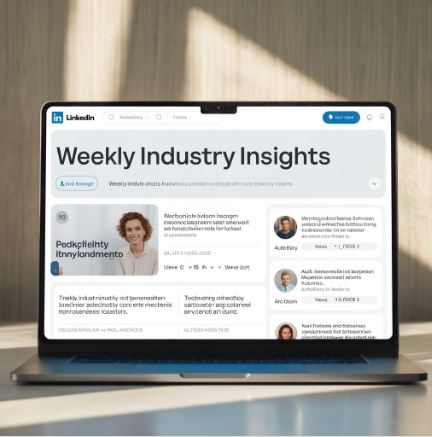
Pick a Newsletter Theme That Feels Like “Your Thing”
Your theme is your anchor. Without it, your newsletter drifts into random territory, and readers lose interest fast. You want a topic that people recognize as yours. Almost like a signature flavor. Something you could talk about endlessly without forcing it.
Think about what you already share on LinkedIn. What gets the most reactions? What do people DM you about? What do colleagues expect from you? That is usually your theme hiding in plain sight.
Do not overthink it. Choose a problem you solve often, an industry shift you follow closely, or a personal experience pattern you see repeating. When the topic feels natural, writing feels easier. Readers can tell when you are writing from a place of genuine interest instead of duty.
Once you pick a theme, stick with it. Let your newsletter feel like a series and not random episodes. That consistency teaches readers what to expect, and it signals to LinkedIn that your content has a clear identity, which helps you get pushed in feeds more often!
Craft Titles That Spark Curiosity Without Feeling Clickbait-y
LinkedIn users are busy. They skim, glance, and judge quickly, so your title has a huge job. It needs to grab attention fast without sounding like cheap bait. You want curiosity with credibility.
Short titles work well, and strong verbs help. A tiny tension or question makes people pause. Something like “Why Remote Teams Keep Failing at Feedback” or “The Quiet Skill That Makes Managers Instantly Better.” These titles make you wonder what is inside without promising something unrealistic.
Honestly, I think good titles feel like doorways, and not traps. As soon as a person sees your headline, it ought to pull them in, like spotting an open door with soft light inside. There’s just a flicker of curiosity, something whispering, “Hmm, go on, take a peek.”
Small creators on LinkedIn grow the fastest when they treat titles like a craft, and not a last-minute detail. A well-written title can boost open rates more than anything else in your newsletter.
Write With a Voice That Feels Professional but Still Human
Here is where so many LinkedIn newsletters go wrong. They sound like they were written by a committee holding coffee mugs with corporate logos on them. Too polished. Too stiff. Too… sanitized. Readers do not connect with that.
Your goal is professional clarity with a human heartbeat. You want the tone you would use if you were explaining something in a meeting with someone you actually like. Warm. Direct. Real. Not robotic.
Short sentences help, as well as conversational flow. Small personal anecdotes help even more. Humans trust humans. Not brochures. If you write the way you talk, people will stick around. They will hear your voice in their head. They will feel like they know you, even if they have never met you in person. That familiarity is what builds steady visibility. It is subtle but powerful.
Deliver One Strong Takeaway in Every Issue
Your readers want value, not a list of opinions that wander around. They want to walk away with something solid. A clear idea. A practical insight. A moment that makes them think, Huh… I needed that.
Small newsletters grow faster when each issue has a single takeaway—one idea you build the entire piece around. When you scatter too many points, readers forget everything. When you focus on one, they remember you.
Think of each issue like a tiny lesson. Something someone could repeat to a coworker the next day. When your readers start quoting you in meetings, you know you are doing it right.
One takeaway also means your newsletters feel purposeful, like every edition has a reason to exist. That sense of direction keeps people opening your emails week after week.
How to Grow Your Newsletter Audience Without Feeling Salesy
This is the part everyone stresses about. You want readers, obviously. Yet you don’t want to come off pushing your newsletter nonstop, like a clunky bot stuck on repeat.
Yeah, building followers on LinkedIn might seem pointless early on, kind of shouting into empty air. Still, things shift once you mention your newsletter more naturally, like handing someone a helpful tip they’d actually use.
One thing you can try is adding a soft mention of your newsletter under your regular posts. Something like a quick “I unpack this deeper in my newsletter.” Nothing dramatic. Readers who enjoy your voice will naturally click, and it keeps things organic.
You can also talk about the newsletter in your comments, especially when someone asks a question you have already covered. It feels more like helping than promoting.
Then, there is the power of cross-promotion. When you collaborate with peers, you get in front of people who already trust them.
I once had someone share my newsletter link after a simple DM chat about a topic we were both nerding out over. It brought in dozens of new readers without me doing anything that felt pushy. That is how you want your growth to feel—gentle, steady, and human.
Using Analytics to Shape Your Newsletter Like A Pro (Without Overthinking It)
LinkedIn gives you some pretty decent analytics for newsletters, even if the dashboard looks a bit sterile. The real magic happens when you learn to read between the lines. You do not need to obsess over every tiny number. Just pay attention to patterns, trends, and little clues about what people lean toward.
If you notice that certain topics always get more clicks, you have your roadmap right there. Give people more of what they already enjoy. If your open rates dip suddenly, it may be your headline style. Maybe it needs more curiosity, or maybe you wrote something too niche. That is OK. It is all the data you can use.
Another cool insight is seeing which segments of your audience are reading the longest. Professionals in job transition. Startup founders. HR folks. Once you spot those patterns, you can shape future editions to feel tailored. Readers feel it, by the way.
They can tell when something feels like it speaks directly to their day. That is when your engagement climbs without you forcing anything.
Creating a Publishing Rhythm That Helps You Stay Consistent
Let me be honest. Consistency is the real mountain here. Not writing skills. Not topic ideas. Just showing up on a rhythm your brain can live with.
Once-a-week newsletters are usually the sweet spot on LinkedIn. Often enough to stay visible. Not so frequent that you burn out and start resenting your inbox.
Try picking a simple pattern. Maybe every Tuesday morning. Or every other Friday. The routine becomes a cue. Your brain learns that “oh, this is the week’s writing moment.” It takes the pressure down a notch. Then, you start noticing that your audience remembers too. When the newsletter drops on the same day, it becomes part of their weekly scroll.
If you ever fall off the schedule, do not spiral. Everyone disappears for a week or two. Just explain it lightly when you return. People are way more human than we think. They get tired, busy, and distracted, so it is normal if you do, too. A small note like “life got loud, but I am back” is enough!
Turning Newsletter Readers Into Real Conversations
This is where things get surprisingly fun. A newsletter is not just a broadcast tool. It is a spark. The moment someone hits reply, you get a tiny window into their world. That back-and-forth builds real loyalty. You stop being “some professional on LinkedIn” and start becoming someone they trust.
Try tossing in tiny, no-stress questions at the end of each post like “What’s it like where you work?” or “Did that ever happen for you?” Folks tend to chime in when things sound relaxed and curious. Answer them back like you’re just shooting the breeze after a meeting.
Little chats like this grow closer over time, bonding bit by bit because shared moments add up slowly yet steadily through consistent back-and-forth. Sometimes collaborations. Sometimes clients. Sometimes just really great community vibes.
This is why newsletters work so well on LinkedIn—they move your voice from the feed into someone’s inbox. That is a much more intimate space.
Conclusion
Mastering LinkedIn newsletters is about knowing how to show up in a way that feels authentic to you. You write with your voice. You publish on a rhythm that does not crush your energy. You grow your reader base by sharing helpful stuff, not by forcing anything. Then the magic happens when those readers talk back, reply, share, and stay with you through each edition.
If you keep your tone human, your ideas clear, and your delivery steady, your newsletter becomes this loyal signal in your audience’s week. Something they look forward to, almost like a familiar voice dropping in at the right moment. That kind of visibility sticks. It compounds.
So if you are thinking about starting—or leveling up—a LinkedIn newsletter, consider this a little nudge to dive in. Your next reader is literally one good edition away!

Sign up for SocialWick
Login
InstagramYouTubeTikTokFacebookTwitchSpotifyTwitter (X)SoundCloudIGTVLinkedInThreadsWebsitePinterestVKApple MusicSEO
Checkout
OK

Information
Order processing usually starts within a few minutes, but some services may take a few hours or even a few days. We offer free refills for up to 90 days if needed. Our services are 100% secure and discreet, with a focus on gradual and safe delivery for your peace of mind.
Order processing usually starts within a few minutes, but some services may take a few hours or even a few days. We offer free refills for up to 90 days if needed. Our services are 100% secure and discreet, with a focus on gradual and safe delivery for your peace of mind.
Where should we send your order confirmation?
No account needed! We send your confirmation and tracking link here.
Secure checkout. We never share your email.
Have an account?•
Log in
Use your account to pay faster with your saved details.
Create account
Create an account to track all your orders in one place.
Service
+0,00
Voucher
-0.00
Total
+0.00
OK
Affiliate & Reseller Program
Customer Support
How may we help you?
General Support
Order Support
Frequently Asked Questions
1) What services do you offer?
We are a social media marketing company, and we offer a wide variety of services across several platforms that our clients can choose from. Once selected, we create a plan that fits your needs. We offer several types of services, such as followers, subscribers, likes, views, song plays, etc.
2) Is your service safe?
Yes, as we only sell real followers, likes, views, etc., and we hold every service to strict authenticity and quality standards. In order to protect your account, we deliver every order carefully and gradually. We closely monitor all our services. For more information, we strongly recommend reading our Terms of Service before you order.
3) Will I need to give you the passwords for my accounts?
No, you can keep your passwords to yourself because our services don’t need a password to influence your accounts. And if an email ever shows up claiming to be from us and asking for a password, it’s definitely not us, so please let us know right away.
4) Are the likes, followers, and subscribers real, or are they bots?
Unlike many other services, all our likes, followers, and views come from real accounts operated by real people. You won’t find bots, fake profiles, or hijacked accounts anywhere in what we deliver. Every order has to pass our strict authenticity standards, and we keep checking our quality to make sure it stays that way.
5) How fast can you deliver my order?
We will show you the estimated delivery time when choosing the service. However, this is only a rough estimate. In most cases, the services are delivered much faster. In some cases, it may take longer. We always aim for a natural and safe delivery!
6) What are your best-selling social media marketing services?
Although we have many services across most social media companies, our services for Instagram, TikTok, and YouTube are our best-selling options.
7) How do I know my account will not be flagged or banned?
We take safety very seriously. We never ask for your password, all followers, likes, and views come from real accounts, and orders are usually delivered gradually and naturally. What we can promise is careful delivery and strict quality standards. Plus a support team that’s there whenever you need us. We are not aware of a single case since 2017 where a customer got his profile banned.
8) What is the best method to communicate with you?
Do you have a question or run into a problem? Our customer support is available 24/7 for you. Just click Contact and you’ll land right on the support form. When you buy one of our services, we will email you to see if there were any problems. Your satisfaction is our main priority.
9) Are there discounts for large orders?
Yes! If you would like to request a large order that isn’t on our ordering layout, we will have no problems accommodating you. Just reach out through the support form and we’ll put together a buying plan that fits what you need.
10) What methods of payment do you accept?
We accept all forms of credit and debit cards, as well as Klarna, eps, PayPal, and Crypto.
11) If I am unsatisfied with your services, am I able to receive a refund?
Yes! Every purchase comes with a 30 day money-back guarantee. Not satisfied? Just contact our support within 30 days of your purchase and send us your order details and a short note on what went wrong, and we’ll take a look at your case. The full conditions are in our Refund Policy.
12) I haven’t received my order
Please make sure the following criteria are met before placing an order to make sure we can deliver it successfully.
- Your account is set to public
- You have typed in the correct username or link
- You have not changed your username before the order’s completion
- The post or account still exists and has not been deleted
- The post or account has not been restricted or removed in some countries
- Allow the estimated delivery time for completion of your order
For further assistance, please message our support team through the contact form.
13) How can I request a refill?
Just send us a refill request through the contact form. Please note that we can only provide you with a free refill within the first 90 days of your purchase.
Learn More
What is SocialWick?
We are the leading marketplace for social media promotion. You can buy followers, likes, views, subscribers, and a lot more for almost all social media networks. We offer affordable prices without making any compromises in terms of the service quality. We have a strict policy to only sell social media signals from real people. Part of our engagement, for example, comes from ad-based promotion where real users discover the content through ads. Bots, fake profiles, and hijacked accounts have no place in our services. Every delivery has to meet our authenticity standards, and we run regular quality checks, and anything that does not meet them is removed from our catalog. Our services are available for personal use, whether you want more Instagram likes, TikTok followers, YouTube views, or something else for your own profile.
With over a million satisfied customers, SocialWick is the go-to platform for all your social media needs. Our services are discreet and secure, with gradual and careful delivery to keep your social media accounts safe.
About SocialWick — The Market Leader since 2017
With more than 10 million orders, SocialWick is one of the world’s biggest social media stores. You can find everything on our website to improve your presence on major social media platforms like Instagram, TikTok, YouTube, Twitter (X), Facebook, etc. We offer different types of services for several social media platforms. Your wish is our command, and whatever your goal might be, SocialWick will help you achieve it. Whether you need more likes on your Instagram photos or want to make your LinkedIn profile more popular by getting additional followers, SocialWick is there to turn your goal into reality.
Thanks to our effective services and our customer-oriented work, SocialWick has become a top player. You will not find a better service anywhere else, especially not at such affordable prices. SocialWick is operating since 2017.
365 Days Per Year Customer Service
Your satisfaction is our motivation! We’re not here just for the money; we do our work to help people find their road to social media success. And that’s why our team will do all to make sure everything goes according to plan. If there’s something wrong with your social media campaign, or worry that there might be some problems with your account, or want to learn more about how our services work, feel free to reach out. Our service staff is there for you seven days a week, ready to answer any of your questions. You can get in touch with us using the contact form on our website.
Buying Followers and Likes is Essential
Unless you’re Kylie Jenner, you definitely need some help with social media. The more followers you have on Instagram, TikTok, Twitter (X), or YouTube, the more people will automatically notice you. Having all those eyes on your content isn’t just impressive, it’s genuinely fun. The bad news is that everyone wants to be famous these days, but only a few can succeed. The good news is that you can be the chosen one who will get social media fame and everything that comes with it. But, for that, you need a little help from your friends at SocialWick.
With our help, you will increase the number of followers on social media, which can have a domino effect and bring you even more new followers. Once people see that you got a big followership, they will decide to give you a follow. "If a profile has so many followers, it means that it’s interesting" – you can be sure this is going to be their reasoning. Furthermore, more followers mean more visibility for everything you post. Finally, a large number of followers also do great for your credibility. Our social media services will help you to create a better overall picture of your profile.
Let’s be honest; a profile with 30,000 followers looks much better than one with 74 followers. And that’s exactly what new visitors will pay attention to. A weak social media profile can be a real deal-breaker. At the same time, a fantastic social media profile can do wonders for you. And SocialWick can make your social media profile amazing!