In a competitive social media landscape, conducting a competitor analysis is now more important than ever. This can provide important insights into competitor strategies, consumer preferences, and market dynamics. In the past, brands employed various methods for competitor analysis, including SWOT analysis, consumer preferences, and in-depth market research.
However, AI (Artificial Intelligence) has revolutionized competitive analysis in the age of generative engine optimization. This is because AI technology features powerful tools that enable businesses to collect, process, and analyze large volumes of data with unmatched accuracy and speed. In this article, we will guide you on using AI competitor analysis to stay ahead of the competition.
What is AI Competitor Analysis?
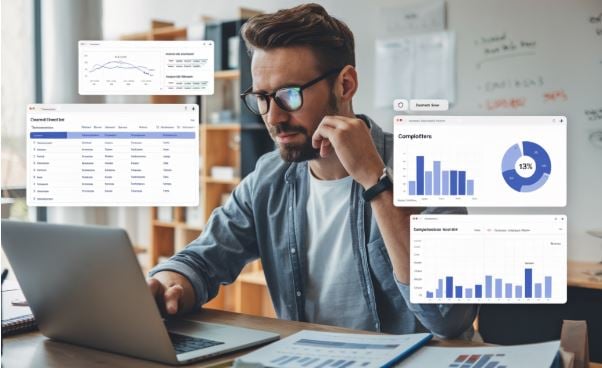
AI competitor analysis utilizes artificial intelligence to gather and analyze data related to your competitors, consumer behaviors, and marketing trends. This technique is based on the fact that businesses can automate data collection from various sources, including market reports, websites, and social media. You can do competitor analysis for social media or website ranking.
AI algorithms have revolutionized data analysis by identifying trends, patterns, and insights that may not be noticeable using traditional methods. With AI-powered competitor analysis, businesses can gain real-time insights to make informed decisions about product development, pricing, and marketing strategies, and achieve a competitive edge in the market.
Some of the key features of AI competitive analysis in social media and SEO are:
- Using big data analysis, APIs, and web scraping for automated data collection.
- Fast and efficient collection of real-time data.
- Leveraging data to drive insights to discover trends and patterns.
- Ability to process large volumes of data from different sources and competitors simultaneously.
- Using machine learning to get higher accuracy and reduce errors.
How AI has Transformed Competitor Analysis
You can leverage AI for performing competitor analysis in different ways, such as:
Shifting to Real-Time Competitive Analysis
Nowadays, competitor strategies change on a weekly or even daily basis. These changes include pricing, market positioning, and product offerings. If you are using manual competitor analysis, it can be hard to keep up.
The good news is that AI can make the whole competitor analysis process easier by helping you track your competitors' websites, scan their prices, and even screenshot those important tweets before they disappear. Therefore, AI can do the heavy lifting for you in different ways, such as:
- Watching for updates across different social media pages.
- Reviewing and structuring data to help you understand what works.
- Turning your raw data into insights that your team can act on.
Automation
Many AI platforms incorporate the tools we use every day, which can help save a significant amount of time. From writing using ChatGPT to analyzing data, there are many areas where AI can be used for competitor analysis. AI automation can involve collecting large amounts of data from various sources, including social media, websites, and market reports. The data is collected quickly and efficiently, allowing businesses to gather important insights in real-time.
Intelligence Gathering
AI tools can facilitate the collection of competitor data in various areas, including pricing strategies, products, customer reviews, marketing campaigns, and more. This makes them a good choice for helping brands understand their competitors' marketing positions, strengths, and weaknesses.
Predicting and Analyzing Trends
AI algorithms can also provide insights into historical data, enabling brands to understand marketing opportunities, patterns, and trends. Through the use of predictive analytics, businesses can understand competitor action and marketing trends to remain ahead of the competition.
Sentiment Analysis
AI tools are a great choice for analyzing customers' social media conversations, reviews, and feedback to understand the public's opinion of a product or service. This enables businesses to adjust customer preferences and continue evaluating their strategy.
Price Optimization
An AI algorithm can predict competitor prices and market demand for an optimal price. Therefore, these tools are great for ensuring maximum profitability and staying competitive.
Market Targeting and Segmentation
AI tools are a great choice for helping define your business identity and segment your target audience. They can achieve this through the analysis of consumer preferences, purchasing patterns, and behaviors. Then, they can use the information to tailor their marketing strategies and products to their customers' needs.
Brand Monitoring
You can use AI to monitor the online reviews, mentions, and conversations around your brand. You can then use the data to gain a better understanding of how your audience perceives your brand, their satisfaction levels, and areas where the brand can improve.
Better Decision-Making
AI tools can simulate the outcomes of various competitive strategies, making them perfect for decision-making and scenario planning. The data can then be used to identify the right course of action, offering a competitive edge.
Mapping the Customers' Buying Journey
AI tools are a great choice for tracking and analyzing the customer's buying journey from the awareness stage to the purchase and even after the purchase decision. You can use the data to gain insights into how customers interact with your brand and your competitors, noting important touchpoints and strategic innovation opportunities.
Customer Behavior Modelling
You can utilize AI tools to analyze historical data and predict future customer behaviors, including potential purchasing patterns and churn rates. Then, you can use the data to improve your product development and marketing needs according to the audience's preferences and needs, remaining ahead of the competition.
SWOT Analysis
This is one of the most popular competitor analysis strategies. It involves analyzing a competitor's strengths, weaknesses, opportunities, and threats by analyzing their activities and the market they serve. Real-time SWOT analysis can help businesses better adapt to changes in the competitive landscape.
Better Product Development
You can use AI to analyze your market demands and customer feedback to suggest new product improvements and features. You can then use the data to ensure that you have a product aligned with the market needs, enabling you to remain ahead of the competition that isn't taking advantage of similar insights.
Better Natural Language Generation
Depending on the data you gather and analyze, you can use AI to generate key presentations and reports. This will make it easier for the decision-maker to analyze complex information and make more informed decisions.
Final Thoughts
AI can help improve the effectiveness of your competitor analysis, offering businesses some deep insights and better decision-making. This enables you to remain ahead of the competition. Therefore, leverage AI competitor analysis to take your brand to the next level.
