Building a personal brand can be a major step in managing your credibility, attracting opportunities, and standing out in a crowded field. A personal brand can be a great social media growth hack, as it will help you build trust and an outstanding career. However, many people think that building a personal brand is about faking who they are. This isn't the case.
A personal brand isn't who you think you are. It is what people say you are when you are not present. When you have a misconception of what a personal brand is and assume it's about faking your identity, you end up making costly mistakes that kill your personal brand rather than build it. In this article, we look at some of the top mistakes that can easily kill your personal brand.
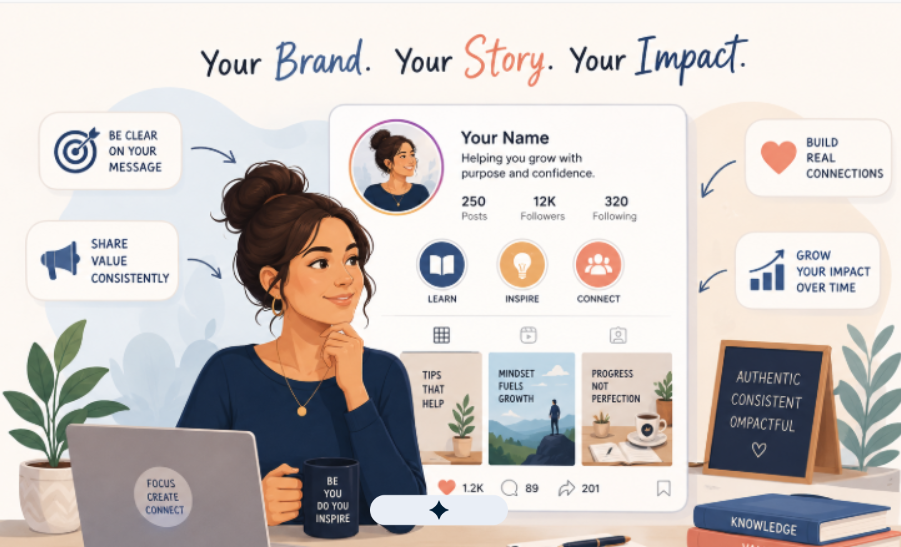
Top Misconceptions About Personal Brands
If you dig deeper, the main reason people make mistakes in personal branding is that they have misconceptions about it. Let us look at some of these top misconceptions.
Personal Branding is for Extroverts
Introverts often prefer to operate behind the scenes and assume that personal branding is for influencers but not for them. However, this isn't the case; personal branding isn't about holding a speech that charms people. It's about sharing your unique strengths and experiences. You share thoughtful insights, deep expertise, and those one-on-one connections, and here you are performing well. When you do that, you can use thought leadership to build trust in saturated social media marketing.
Remember that there is no one-size-fits-all for personal branding. Whether you prefer writing thoughtful pieces on LinkedIn or creating a dance video on TikTok, personal branding can help take your brand to the next level.
It Requires Sharing of Your Deep Secrets
It's true that sharing authentic stories that resonate with your target audience can help take your brand to the next level. While it's important to remain authentic in your personal branding, that doesn't mean you share your deepest secrets. The most important thing in personal branding is to share stories and experiences that resonate with the target audience.
While you can pitch and share stories you are comfortable with, you also need boundaries. Make sure the stories highlight your journey, values, and expertise. Determine what's off-limits and stick to it. It's important to share your lessons, passions, and what drives you. Your goal should be to connect based on values rather than revealing secrets.
When engaging in personal branding, you should find a sweet spot between your professional and personal lives. When you share to connect, also keep certain things to yourself. Remember that authenticity should be about being true to yourself rather than oversharing.
You Must Post Every Day
Another misconception people have is that you should post every day or go viral to leave a mark. However, this isn't the hallmark of a top personal brand, and it's possible to build one even without posting. For instance, you can have a podcast where you share industry news or a newsletter followed by thousands of people. You could also be a networking expert who is well-known in your industry.
However, you should not underestimate the role of social media in building a personal brand. Since most people are already on these platforms, they offer a great opportunity to connect with your target audience. But don't misconstrue it as bombarding followers with content. Instead, focus on having meaningful conversations with them.
It's Time-Consuming and Expensive to Build a Personal Brand
If you need to create a popular personal brand, it's definitely going to cost you time and money. As long as you continue to gain visibility in your area of expertise, you don't need to spend a lot of money building a personal brand. After all, it is a marathon, not a sprint.
The most important thing is to keep taking those small, consistent steps that fit your budget and lifestyle. You can save yourself a lot of money and time by planning content and repurposing it for different social media platforms. For instance, you can turn your blog posts into social media posts. Again, focus on engaging rather than just creating. Brand building is more than churning out content; it's also about building relationships and networking.
Top Personal Branding Mistakes to Avoid
Now that you understand the top personal branding myths, let us look at some common mistakes that creators make and provide tips on how to overcome them.
Being Inconsistent
When you are trying to build a personal brand, you cannot afford to be inconsistent. This is because inconsistency will make you look unreliable. If you have one appearance on Facebook and another on X or Instagram, people won't know what to expect from you. Once you confuse them, they lose their trust.
Similarly, if you post once, then disappear for a month, and then come back to fill the timeline, you will look inconsistent.
There are other elements of inconsistency, such as:
- Having an outdated bio. For instance, why should you continue referring to yourself as "aspiring" 5 years down the line?
- Creating humorous posts today and serious ones tomorrow. Similarly, avoid jumping from one niche to another.
To fix this mistake, choose between 2 and 3 themes you would like to be identified with and then stick with them. Then, make sure your profile is consistent across every area, with the same photo, headline, and tone. You should also refresh your bio every quarter.
Also, have a content calendar to help you stay consistent with your posting schedule. Finally, you can create a tone guide for the kind of tone you want to use on every platform. By using these tips, people will understand what to expect and will keep coming back.

Creating So Many Promotional Posts
If all your posts are about promoting your products or services, you can cause people to stop listening. After all, nobody wants to be pitched 24/7. When all your posts become promotional, you are likely to see a drop in engagement, as your audience feels you are not adding value. You might also be pushing too hard, even during sensitive times. The good news is that there are some tips you can use to fix these mistakes. These are:
- Use the 80/20 rule. Ensure that 80% of your content is helpful and only 20% is promotional.
- Leverage storytelling rather than listing product features.
- Share insights, lessons, and stories between the offers.
- Provide resources for people to use before you promote services to them.
Instead of focusing on selling all the time, focus on building your audience's trust.
Not Engaging with Your Audience
It is important to note that social media is a two-way medium rather than a broadcaster. That means you need to take your time starting conversations, responding to messages, and beginning new ones. If you are constantly ignoring DMs (some of which may offer opportunities), leaving comments unreplied to for weeks, or thanking people when they share your content, you're making a mistake. You are also making a mistake if you are not using other ways of driving engagement, such as asking questions and running polls.
To fix these mistakes, make sure you:
- Spend around 15 minutes every day reengaging with your audience.
- Answer DM messages, respond to comments, and thank people for sharing.
- Create interactive content that drives engagement, such as asking questions, conducting Q&As, and using polls.
- Track your top supporters and nurture their relationships.
When the algorithm notices that you are driving engagement, it will prioritize your accounts, giving them more visibility.
Not Focusing on a Particular Niche
If you are creating fitness content today, finance content tomorrow, and tech content the other day, it will not work. If you try to be in several niches at once, you will end up losing everyone. Without a clear niche, you will easily get forgotten.
Other mistakes include:
- Having vague headlines, such as "I help businesses grow (from what to what?)"
- Using hashtags for different industries in the same post.
These mistakes can leave people confused about what exactly you do. Fortunately, you can use one or two sentences to define your niche. For instance, "I can help influencers reach 100k followers through my guide."
Also, ensure you focus on two or three major topics and commit to them. Add a strong statement to position yourself and use specific keywords and hashtags. Finally, audit your posts to determine whether they are connecting with the niche.
Not Staying Authentic
Often, perfection comes across as fake, and fake doesn't sell. If you are constantly hiding behind jargon, filters, and corporate language, you will miss it. Many creators often focus on sharing their wins while hiding their struggles and avoiding opinions to remain safe. They also use over-edited videos and photos, making their posts look more like templates.
The good news is that you can fix this in different ways, such as:
- Sharing a personal story at least once a month.
- Posting some raw and behind-the-scenes clips.
- Sharing your perspective even when polarizing.
- Sharing the process, not just the final results.
- Showing imperfections as people relate to the real rather than the perfect.
Being authentic can be a great way of increasing your level of trust.
Focusing on Perfectionism
Perfectionism is a form of procrastination in a suit. As you polish, your competitors publish. You can tell you are focusing a lot on perfection when you are having a lot of unpublished drafts, or you are spending hours tweaking fonts, colors, or captions. If you find yourself regularly comparing yourself to not being ready, you are missing opportunities as you wait for that perfect time.
You can fix this issue in a number of ways, such as:
- Use a 48-hour rule. After creating a draft, you can then publish it in the next two days.
- Start with a minimum viable version that you can improve later.
- Make sure that each of your posts acts as an experiment rather than a masterpiece.
- Focus on consistency and not perfection.
Not Leveraging Data
If you are not using data, most of your decisions rely on guesswork. You can hardly tell what works and what doesn't, or what kind of content resonates with your target audience. If you are never checking analytics, repeatedly creating content that doesn't work, ignoring the questions in the comment section, or sticking to the same plan, it means you are not leveraging data.
Fortunately, there are some tips you can use to resolve the problem, such as:
- Reviewing your analytics each month.
- Running an audience survey to get feedback.
- Refining your strategy using data.
- Setting clear goals for leads, engagement, and reach, and tracking them.
- Refining your strategy using data.
Data can be the best way to find out whether your strategy works.
In Conclusion
Building a personal brand isn't a one-day affair; it requires consistency and making the right choices every day. If you're finding that people still don't trust your brand, you may be making some mistakes. If you can manage to separate them, you can separate yourself from most of the noise. Therefore, use the above steps to build your personal brand and set yourself apart from the competition.
