There are millions of posts made on social media platforms every day. That means if you want to stay ahead of the competition, you need to do more than just post that random image or video. You must ensure that your content stands out from the competition. One content format that will enable you to do that is interactive content.
This content format is a good choice for driving social media engagement because it encourages user participation. When the social media algorithm sees that people are actively engaging with your content, it will reward it with greater visibility. In this article, we guide you on creating an interactive content strategy.
What is Interactive Content?
Interactive content is content that requires users to actively engage by typing, swiping, and clicking, rather than passively consuming it. This means it enables brands to have a two-way interaction with their target audience. Statistics indicate that interactive content generated 52.6% higher engagement than static content.
The content format is also effective at improving brand memorability by enhancing long-term brand recognition. When people remember your brand, it becomes easier for them to buy from you in the future. Unlike static content that encourages users to watch or read, interactive content requires viewer participation.
For instance, a blog post is often in the same format for different readers. On the other hand, interactive content offers a unique solution for each user based on the details they enter.
Why is Interactive Content Important?
Interactive content is a good choice for driving engagement because it provides your audience with a more personalized and immersive experience. Since it allows users to actively participate, the interactive elements improve the learning process and make it more memorable.
Interactive content can be a good way to provide essential insights into user preferences and behaviors. Therefore, businesses can tailor their marketing needs and enhance their overall strategy. Here are several reasons to consider using interactive content:
Increasing Engagement
On average, a social media user spends 9 minutes on static content and around 13 minutes on interactive content. That means interactive content is a good way to encourage users to engage rather than passively consume. It can encourage users to remain more interested in the content for a longer period.
For instance, you can add an interactive poll that lets visitors engage directly with the materials and share their insights. Therefore, interactive content can be a good choice for turning passive consumption into more active engagement and increasing the time spent on a page.
A More Personalized User Experience
Interactive content is also a good choice for providing a personalized experience. Since the output depends on the user's input, this increases the relevance of the output and overall customer satisfaction. Tools such as interactive quizzes and virtual try-ons can enhance the user experience, making users feel valued and heard, thereby strengthening the relationship.
Improved Data Insights and Collections
Interactive elements such as quizzes, polls, and surveys can enable businesses to gather real-time insights. This is because they enable them to capture different data points such as customer preferences, behaviors, and demographics, ensuring a better level of audience segmentation. It can, therefore, be a good choice for refining your personalization and targeting to ensure better business outcomes.
Better Lead Generation
Interactive content is a great way to enhance your lead generation goals. Make sure you create gated content that adds value to your audience and, in return, ask them to provide important deals. Once you have the customers' contact details, you can nurture them after the interaction with retargeting ads and emails, thereby enhancing your overall strategy.
Examples of Interactive Content
There is a variety of interactive content you can use to excite your audience. Some of the top examples to consider include:
Interactive Infographics
There are already lots of static infographics on social media platforms. While the content format remains helpful and attractive, users sometimes skip or skim passive content. On the other hand, interactive content is created to engage consumers through simple actions, such as clicking a button, to deliver complete visuals.
As a business, you can integrate interactive infographics to explain complex products or services, breaking down your details into more digestible pieces.
Interactive Videos
Interactive videos are among the most engaging content formats to emerge in the last few years. While the video content is better suited to long-form videos, you can still apply the same principles to shorter video series and ads. For instance, you can use live shopping videos to market your product more entertainingly and engagingly. These videos are a great way to grab the user's attention while maintaining the prospect's interest.
According to a Spiel survey, 88% of respondents reported an increase in online sales after adding interactive videos to their social media strategy. Therefore, this is one of the top forms of interactive content. By adding an interactive video, viewers can engage with content through functionalities such as:
- Hotspot. Users can click on hotspots to get additional information or speak directly to viewers on different web pages.
- Branches. It refers to the video paths that enable viewers to customize the content they see.
- 360-degree views. Another functionality is to allow viewers to drag the different elements on their screens to visualize content in different directions.
With these elements, you can deliver a more dynamic experience to drive user participation. For instance, if you are a sports team, you can create a video that lets users tap players' hotspots to get more information about their stats or access them. That means viewers can curate experiences, thereby generating more excitement.
You can use shoppable videos to embed product information and different purchase options in your content. This can make it easy for users to buy without leaving the app. Livestream shopping has also become very popular, achieving conversion rates of 9 to 30%, compared to the 2% to 3% of a standard e-commerce website. These formats work well because they showcase your products dynamically and enable real-time interaction.
Quotes and Calculators
These can be practical and engaging content formats due to their brevity and bluntness. Here are several ways you can use quotes on social media:
- Share customers' reviews and testimonials: This is a great strategy for showcasing your brand's effectiveness and appreciating customers who leave reviews.
- Share information. You can use quotes to share a key factor, brand statement, or statistics. They can help to grab your audience's attention and provide them with easily digestible content formats.
- Use sound bites. Instagram quotes can help you showcase the new content you are promoting and, in turn, build anticipation. For instance, you can use a strong statement from a podcast episode or an article review to give your audience a sense of what's to come. This can help you increase the number of visitors to your site and result in a higher conversion. This is also a good strategy for content repurposing.
- Allow your audience to fill in the blanks. Brands and businesses often use quotes to spark conversations with followers and increase engagement in their comment sections.
Another effective interactive content is a calculator, as it helps your social media users determine whether your product works for them, meets their price requirement, or fits their situation. They can be a good choice for turning the passive brokers into engaging participants. People can enter their numbers, get personalized results, and therefore see your value proposition. According to one study, calculators can boost conversion rates by 40-60%.
For instance, a home mortgage company can use a calculator to help users estimate the amount they are likely to pay. This form of interactive content can be a good choice for educating, informing, and increasing engagement.
Quizzes and Polls
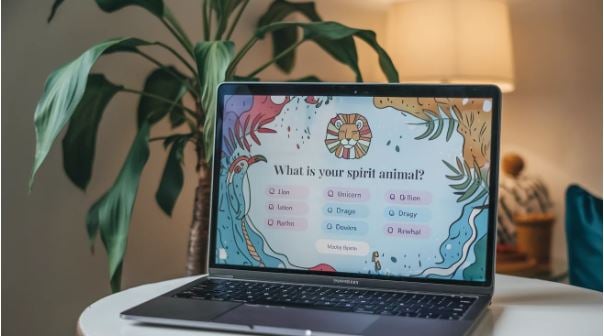
Another effective form of interactive content for engaging your prospects is assessments and quizzes, especially during the awareness stage. These are usually fun, easy to share, and can encourage the participants to refer their family members and friends.
The quizzes are usually excellent, as they offer more personalized, shareable results that motivate viewer engagement. Polls also encourage audience participation and provide first-party data for better marketing efforts. For instance, if your goal is to help customers choose the right product, you can use interactive recommendation quizzes to collect customer data. On the other hand, you can also use the fan polls to get feedback.
An example of a brand that grew by using quizzes is BuzzFeed. Their quizzes on simple questions, such as trivia tests, generate millions of views every month. This is because they don't only use them for entertainment but also for personalization. If people feel that the content is tailored to their needs, they are likely to receive it well.
Quizzes in the retail sector result in some serious conversions. A question about the user's perfect apparel is more than just playing games; it helps them collect data, recommend products, and convert them into customers. Therefore, in addition to driving engagement, quizzes can offer valuable data-driven insights.
Interactive Landing Pages
Interactive landing pages also feature dynamic content and calls to action (CTAs). Just like with other interactive content formats, it's a good choice for increasing conversions, as it helps capture user attention and boost engagement.
When creating interactive landing pages, you can include features such as exclusive deals and limited-time offers to make them more appealing. Here are some best practices in using interactive elements in your landing pages:
- Ensure faster load times for a seamless user experience.
- Ensure that all your interactive elements are easily accessible and prominently displayed.
- Add a clear CTA that guides users through the interaction's stages.
- Use a responsive design to make users' mobile experiences seamless.
- A/B-test the different interactive elements to determine which kind of content resonates best with your target audience.
- To continue enhancing the user experience, keep collecting and analyzing the user's data.
- Ensure the interactive elements align with your brand messaging and overall aesthetic.
- To improve lead capture, provide insights and results that drive value.
- Increase engagement and user satisfaction using different gamification methods.
- Add interactive elements to your marketing or CRM automation tool to make follow-up easier.
QR Code
QR codes help bridge the physical and digital worlds. They are usually interactive by nature, since audiences need to use their mobile devices to scan codes to reach the digital destination. QR codes can be a good choice for various purposes, such as offering customers exclusive deals, directing buyers to interactive online content, or helping audiences reach landing pages with unique content experiences.
As a form of interactive content, QR codes offer various benefits such as:
- Convenient, contactless details. Both sellers and customers can benefit from the fast, secure system, reducing the need for cash and POS terminals.
- Trackable data and analytics. Businesses can scan the location, user behavior, and times to determine the effectiveness of their campaigns.
- Instant access to information. QR codes enable users to get instant access to product details, promotional content, and websites, enhancing user experience and engagement.
- Cost-effective. With QR codes, the cost of printing paper, menus, or brochures is eliminated.
- Enhance efficiency. QR codes can help streamline tasks such as ticketing, check-ins, and inventory management, eliminating the need for manual input.
How to Get Started with Interactive Content
While interactive content is beneficial, you need a good strategy for the best results. Here are the steps to follow when creating a strategy:
Identify Your Goals and Needs
Ensure the content you create aligns with your audience's interests, preferences, and challenges. To better understand these, you can conduct surveys and interviews. This will provide insights into their motivation and enable you to create content that addresses these challenges. If you don't have data on your audience, you can try publishing different types of content and using various analytics tools to determine which content drives the highest engagement.
Select the Right Content Budget
Content marketing often takes 25 to 30% of most marketing budgets. While the investment is substantial, it may not be sufficient to create ample interactive content. Therefore, you need to carefully select your content. When doing that, select the goal of your campaign. Here are a few ideas:
- For lead generation, consider quizzes.
- To collect feedback, use polls.
- To increase conversion, leverage virtual try-ons.
Also, take time to consider the customer's buying journey when creating content. If you are creating content for the brand awareness stage, use interactive infographics. For the consideration stage, use the calculator, and quizzes will help with product recommendations. Segment your audience by their buying journey stage and create the right content for each stage.
Add an Accessible and Mobile-Friendly Design
Many customers use their smartphones to interact with content; therefore, you need to ensure your content is well optimized for mobile devices. To do that, consider the following tips:
- Select a responsive design that adapts to different screen sizes.
- Compress infographics and videos to ensure optimal page load time.
- Use some concise text.
- Test your content across a wide range of mobile devices (Android and iOS) before you release it.
Tracking the Success of Your Interactive Content
A successful interactive content strategy should consider more than just vanity metrics and instead demonstrate a real impact on your bottom line. Compared with traditional marketing methods, interactive content offers brands a unique opportunity to share their stories.
While many people focus on vanity metrics like page views, these don't paint the true picture. Instead, tracking the time spent on a page can be a better indicator. Some of the important metrics to consider are:
- Bounce rate. A low bounce rate indicates greater interest in your content.
- Completion rates. A good metric for tracking the actual percentage of users who complete the interactive experience.
- Interaction per user. This tracks the number of elements that visitors engage with in a session.
These metrics can illustrate how well your content connects with audiences.
Select the Right Attribution Models
The role of an attribution model is to determine which touchpoints receive credit at each stage of the sales journey. Therefore, a good attribution model can make a difference for interactive content marketing. A good idea would be to use data-driven attribution, which uses AI tools to analyze account data and calculate the actual attribution of each interaction along the path to conversion.
You can use position-based attribution for interactive content, where 40% of your credit goes to the different touchpoints, and another 40% to the attribution just before conversion. This method can be especially effective when using interactive content for both brand awareness and conversion.
You can compare the various attribution models to determine the interactive processes that are mostly undervalued in the conversion process. If there is no proper attribution, you will be literally flying blind as you optimize using conversion data.
Tips for Creating the Perfect Interactive Content
It is important to note that creating great interactive content takes more than just posting a poll or a quiz and waiting for answers. You need to understand what makes people tick. You can then use interactive content tools combined with content gamification strategies to create irresistible offers. If the content you are creating doesn't make your audience pause, participate, and stay, you will be wasting your conversion.
Use Gamification to Make People Addicted
Gamification doesn't only happen in gaming. It's a form of behavioral science strategy. You can add progress bars that show users their progress toward completing a quiz and include rewards for completing challenges. You can also leverage streaks to enable them to keep coming back. Using such psychological nudges will exploit our internal desire to accomplish.
An example of a brand that uses this strategy well is Duolingo. The brand has gamified language learning, complete with rewards and streaks, therefore turning chores into daily habits for over 74 million active users. You can also apply the same principle to create more effective interactive marketing that keeps your viewers hooked.
Feedback Loops
If your interactive content provides users with instant rewards, it is guaranteed to be a winner. For instance, sharing polls that update your results in real time, or a calculator that offers personalized quizzes and outputs, delivering shareable results to provide instant gratification. A feedback loop is an effective strategy because it enables the release of dopamine. When people see that their actions have an impact, they are more likely to remain engaged.
Leverage Social Proof
Humans tend to trust what other people say or do. There are several ways to add social proof to interactive content. These are:
- Adding aggregated poll results.
- Showing the number of users tracking a quiz.
- Adding testimonials to your interactive content
Make it Simple
Overly complicated interactive content may not bring the desired results. Instead, ensure your interactive content addresses a specific user's need, complete with a tailored solution. For instance, a calculator can help to simplify tough decisions such as ROI estimates and budgets.
How Big Brands are Leveraging Interactive Content
If you think that only small brands and creators need to use interactive content, you need to think again. This is because many big brands are already using it. Here are a few examples of such brands:
Nike
Nike marketing often focuses on creating personalized experiences for its target audience rather than selling products. An example of when it did this well was its "Choose Your Winter" campaign, which invited users to create customized weather gear that met certain criteria. This campaign resulted in a 20% increase in sales. This is because interactive storytelling prompts passive users to take action, making them feel like co-creators and buyers simultaneously.
Netflix
Through its Black Mirror: Bandersnatch, Netflix blurred the line between watching and anticipation. By allowing users to choose their own adventure, this served as a masterful case study. Users didn't just consume the show; they also helped share it, making choices that changed the outcome. This is another good example of how interactive brand storytelling can help build loyalty and excitement.
In Conclusion
Interactive content is a great strategy for brands in 2026 to transition from a one-way dialogue to two-way engagement. By requiring user participation, interactive content can increase user engagement by 52.6% and convert over 70% of buyers, more than double the conversion rate of static content. Therefore, go ahead and use the steps above to create interactive content.
