If you are using social media marketing, you need to ensure that your strategy is bringing tangible results. If your posts are racking up a lot of likes, comments, and shares without a corresponding increase in your ROI, your efforts may be in vain. A good social media strategy is one that contributes to your overall business goals, such as profitability.
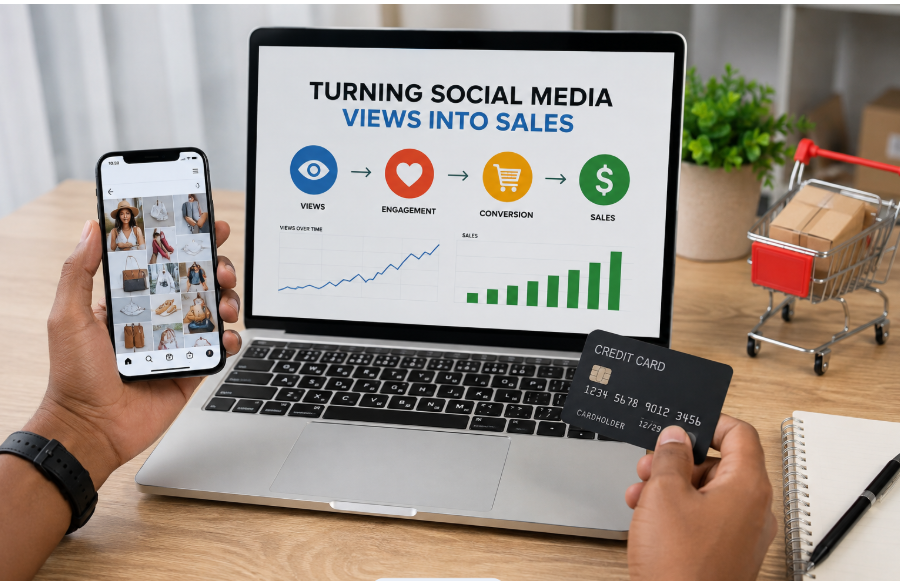
One way to use social media to convert leads is by building a social media sales funnel. This can be a good strategy for converting followers into paying customers. In this article, we guide you on turning views into leads with a social media sales funnel.
What is a Social Media Sales Funnel?
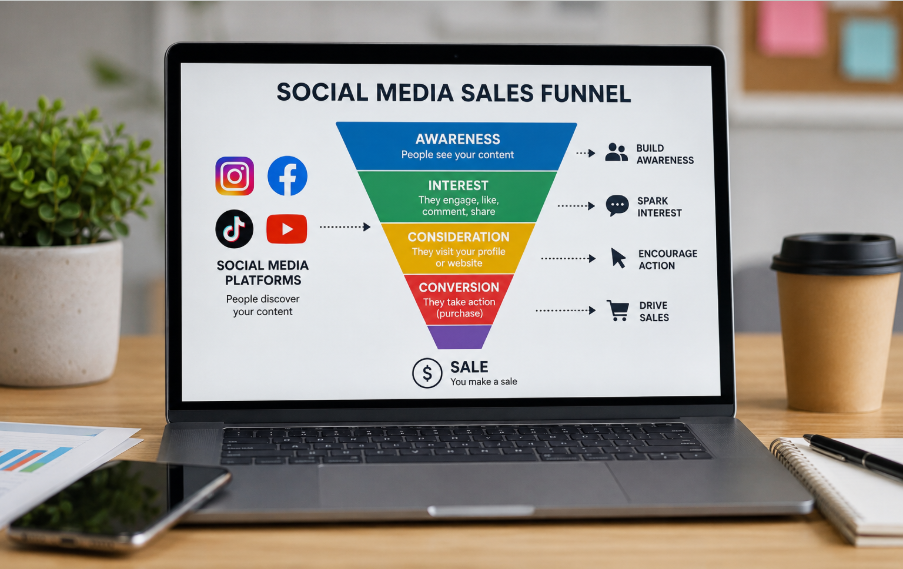
A social media sales funnel is a step-by-step guide that takes customers through a journey from discovering your product on social media to becoming loyal customers. The concept of the sales funnel is borrowed from a physical funnel that is usually wider at the top and narrower at the bottom.
Similarly, in the sales funnel, also known as a marketing funnel, you have a broad audience at the top who don't even know about your brand. As they go down the funnel, they become informed of your brand, start engaging, and are converted into paying customers. A typical funnel usually begins when you get leads or prospective customers and continues moving with them after they have made a purchase. The goal should be to have a great relationship with prospects and make them prospective customers.
The funnel divides the customer journey into different stages, which are:
- Awareness. This is usually the top of the funnel, where you have a broad audience. At this stage, your goal is usually to draw your audience's attention.
- Engagement. This is key to drawing your audience's attention.
- Conversion. Aimed at increasing action.
- Loyalty & advocacy. Aims at ensuring good long-term relationships.
When optimizing for the different stages of the sales funnel, you need to create content tailored for that stage. We will discuss how to do that later on in this article.
Why You Need A Social Media Sales Funnel
A good social media marketing funnel will help you to:
Increase Conversion
Social media marketing should be organized in a way that uses tools and networks to guide your prospects through the different stages of a funnel and to have them take the desired action, such as buying your product, turning into fans, sharing email addresses, or more. Whether you're marketing to your social media audience through Facebook, TikTok, or email marketing, the goal should be to guide them through the sales funnel.
It can, therefore, be a great tool for increasing sales and conversion, as it guides prospects to take the desired action. According to one study, an easy buying process can increase sales by 62% because customers are willing to pay a premium.
Higher Level of Customer Retention
The goal of the bottom-of-the-funnel strategy is that they are designed in a way that turns your prospects into paying customers and drives customer retention. This is important since customer retention is an important factor in digital marketing, as you don't need a lot of effort to convince your current customer to buy again.
Marketing Budget Optimization
When running a social media marketing campaign, you need to ensure that every dollar goes where it matters most. A sales funnel will help you focus on putting resources where they matter most. It will also provide clear insights into what is driving the results, helping you determine where to find more. You can also use the data to show your managers the impact of your social media marketing.
Better Campaign Planning
With a sales funnel, you can make some more realistic predictions instead of relying on wishful thinking. You can use your conversion history to set more realistic goals for your social media campaigns. This can offer better timeliness regarding when your results will be available.
Increase Your Long-Term Revenue
A marketing funnel can help turn that one-time buyer into a long-term customer who keeps coming back. When customers are happy, they are also likely to recommend your brand to their family and friends. It will help you build a predictable income instead of relying on guesswork.
More Targeted Marketing
A sales funnel makes it easier to create a campaign that is highly personalized for customers at the different stages of the buying journey. According to one report, 71% of customers expect a brand to offer them personalized interactions. With a marketing funnel, it becomes easier to personalize messages and provide offers based on the interests and needs of your audience, resulting in a more successful campaign.
How to Map Out a Social Media Sales Funnel
Before you start creating content for the sales funnel, you need to find out which stage your target customers are in. Without this information, you will be relying on guesswork instead of actual data. Therefore, start by understanding your customer's movement from the first time they come across your brand to the time they turn into a loyal fan.
Here are ways of doing that:
Understand the Audience's Behavior
When you define the social media persona, it becomes easier to understand the patterns different clients are following. This is important as social media users have different habits. While some use it to carry out extensive research on different platforms, others can convert by simply coming across an unboxing video on YouTube.
To understand your audience's behaviors, create two or three profiles based on your best customer, such as:
- The social media platforms they are mostly active on.
- The content format they mostly engage with, such as text, images, and videos.
- Their most active times online.
- The questions they ask more before they buy.
Set the Tracking Parameters
If you are not tracking, the social media funnel is just a theory. You can use different strategies for gathering the actual data, such as:
- Adding a UTRM parameter structure that is specific to your social media campaign. You will have to add special tags to links to help the analytics understand the traffic source.
- Including a tracking pixel. There is a small code that will record user behaviors after they have clicked on your site on social media platforms. It will show you whether visitors from a certain platform are browsing more than from another, or whether traffic from Instagram is converting more than traffic from TikTok.
- Add a custom URL. In addition to the standard UTM, you can add certain parameters to track actions that are unique to each platform. This can include tracking if someone was from a reel, feed post, story, or even the comment section.
With this kind of setup, you can determine the platform, post, or campaign driving the highest results.
Add a Visual Map for the Different Customer Touchpoints
Take note of the typical journey the customer takes before conversion and draw it down. Having such a visual map will show you the channels involved in the different stages of the sales funnel.
For instance, you can note that:
- TikTok is a good choice for driving initial brand awareness.
- Instagram can help move people toward the consideration stage.
- You can use LinkedIn as a source of qualified leads.
When you understand these connections, you can have a cohesive experience on different platforms instead of treating the different channels separately.
Understand Each Channel's Metrics
For your sales funnel to be effective, you need to understand the metrics that matter at each stage. This is important as the different social media metrics will show different parts of the sales journey.
Here are the metrics to track at different stages:
Top of the Funnel: Awareness Stage
At this stage, customers are learning about your brand, so you need to focus on how many of them you are reaching. Some of the metrics to track are:
- Social media reach. How many social media users see your content?
- Follower growth. How fast is your social media account gaining followers?
Consideration Stage or Mid-Funnel Stage
People at this stage are already considering your products or services, but are wondering if it is the right option for them. Therefore, you need to track metrics that show deeper engagement.
These include:
- Meaningful interactions, such as comments, saves, and shares.
- Click-through rate. Clicking on your external link.
- Lead. Taking a desired action, such as downloading an ebook or signing up for your email list.
Conversion Stage/Bottom of the Funnel
At this stage, you need to track metrics that drive revenue generation, such as:
- Each platform's conversion rate. This is the percentage of visitors who complete a purchase from every platform.
- Revenue attribution. What revenue is every social media platform generating?
- Cost per acquisition. The amount you are spending on every platform to acquire a customer.
For effective tracking of these metrics, ensure that your social media data is integrated with the sales data and website analytics.
Loyalty Stage
Even after a customer has purchased from your brand, it doesn't mean your relationship with them has ended. You should focus on increasing the customer lifetime value and reducing your marketing cost.
To understand how you are performing at this stage, you can track different metrics, such as:
- Rate of repeat purchase. What percentage of customers are buying again within a certain period?
- Retention metric. How long will the customers remain active with the product?
- Customer lifetime value. How much revenue does the brand earn from a relationship with a customer?
Advocacy Stage
On top of buying from you, the most loyal customer also recommends your brand to others. You can use different steps to measure advocacy, such as:
- User-generated content.
- Recommendations and shares.
- Referral rate.
Creating Content for Different Stages of the Social Media Sales Funnel
As noted earlier, in every stage of the sales funnel, you need to create content that meets the needs of your target audience. Here is a guide on the content that will move your audience from the first stage of discovering your brand to turning into loyal advocates:
Top of the Funnel or Awareness Stage Content
This content should focus on capturing your target audience's attention and making them stop scrolling. The content should also make it easier for new audiences to discover your product. If you try to sell at this stage, you will fail miserably; therefore, you want to avoid adding CTA and links. Instead, focus on relatability and adding value.
There are different content formats that will work at this stage, such as:
- Educational infographics. These should highlight the pain point your audience is facing. You can use visual data to show your understanding of the problem.
- Short-form videos. You can create brief 60- to 90-second videos illustrating the frustration of your audience.
- Behind-the-scenes content. This can help humanize your brand by providing an authentic glimpse into your company culture, helping build an emotional connection.
- Thought leadership content. This should address the industry trends from a fresh perspective and position your brand as an industry thought leader.
- Trending videos/audios related to your industry. These popular formats can provide an algorithm boost, enabling you to remain relevant to the target audience.
- Interactive quizzes and polls. You can encourage your audience to share their insights using interactive polls.
Make sure you tailor the content to the needs of your target audience and strategically add a hashtag to help with discoverability and reach a bigger audience.
Consideration Stage Content
After making people aware of your brand, you need to create content that convinces them that your brand is the go-to solution. At this stage, the focus should be on creating middle-funnel content that eliminates any objections.
Some of the content formats that will help you do that are:
- Case studies showing specific results. Use stories with numbers and outcomes.
- Comparison guides between approaches and solutions. Use a transparent analysis to enable your prospect to evaluate the available options without any bias.
- Education series and mini-courses. This content format will help position you as an authority.
- How-to tutorials. Use a step-by-step guide to show your expertise and gain the confidence of your audience.
- Live Q&A sessions. You can use them to address the questions of your prospects and enable them to get instant answers.
- Product demos. This requires you to explain the features to your target audience while showing them how they will benefit from your product instead of the technical specs.
At this stage, incorporating social proof can help to remove your audience's objections. Therefore, make sure you add reviews, testimonials, and UGC to validate your claims.
Conversion Stage Content
At this stage, you need to create content that stirs your target audience to take action. Since you already convinced them to trust your brand in the previous stages, this stage shouldn't be difficult with the right content. The kind of content you create at this stage will differ depending on the platform.
For instance, you can use shopping tags and swipe-up stories on Instagram. On TikTok, you can use creator partnerships while giving out a discount code. On LinkedIn, you can use thought leadership content.
Some of the content formats to work with at this stage of the buying journey are:
- Customer testimonial videos. You can share a short customer story that shows some brief outcomes your product helped achieve.
- Product walkthrough videos. You can show your audience what it will feel like to use the product.
- Social proof. You can combine the feedback you get from customers to build trust. When they see how others benefited from the product or service, it is easy to convince the previously undecided customer.
- FAQ content. You can answer the questions your audience frequently asks.
- Direct comparison. You can compare with competitors to get some honest reviews highlighting the benefits your product offers.
You can experiment with different placements of CTAs, as some brands may experience success with placing the CTAs in the middle of the video. Since this is one of the most important stages of the buyer's journey, you need to use the following best practices.
- Respond fast and professionally. Remember that social media isn't a one-way street. Therefore, respond to your audience's comments and address their concerns promptly and professionally.
- Provide an exclusive offer. Provide your previous customers with discounts and promotions to incentivize them to follow your brand and leave them feeling valued.
- Ensure an easy and seamless conversion. If you have a vague conversion goal, your audience will leave before converting. Therefore, use clear CTAs in your posts explaining the action you want your visitors to take, such as a free website sign-up, visiting your site, or buying directly from your site.
- Make the checkout frictionless. A major factor that impacts conversion is the checkout process. Therefore, if you are referring your audience to your website, ensure it is easy, friendly, and well optimized for mobile devices. Provide users with different payment options.
Customer Retention Content
The buying journey doesn't end with purchase. You need to extend the journey beyond that first purchase. Keep nurturing your relationships with customers even after their first purchase. At this stage, you should focus on creating content that makes your audience feel valued and provided with the right support. You can do that by adding exclusive content, private groups, and personal check-ins. Provide a loyalty program that rewards them for repeat business and appreciates them for continuously supporting your business,
Through community building, you can ensure repeat business, adding a sense of belonging that makes it harder for your audience to switch to a competitor. You can create a stronger bond by regularly interacting with your audience, running a customer spotlight, and providing them with an inside look to strengthen the bond.
You can create various content at this stage of the sales funnel, such as:
- Product update announcement/showcasing new features. This can be important information for ensuring you have fresh content.
- Customer testimonials and success stories. Showcase the good results your previous customers are experiencing with your product. This will not only offer them public recognition but will also showcase that it is possible.
- Product usage content. You can also provide your customers with resources to enable them to get higher value from your product.
- Exclusive content. You can turn your most loyal fans into loyal followers by providing them with early access to new products, exclusive content, or an invitation to your special events. This can help them feel like they are part of your community and keep them engaged with your brand.
You also need to turn the fans into brand ambassadors by encouraging positive reviews and recommendations through word of mouth. As part of the advocacy, you can encourage previous users of your product to create content, such as:
- Branded hashtag campaigns. You can run a challenge to encourage your social media audience to share your brand.
- UGC. When you have a structure that encourages the creation of UGC, it becomes easier for customers to create content for your brand.
- Success stories. You can also have a template that makes it easy for previous customers to share and articulate their previous experience with your brand.
- Brand advocacy. You can run collaborative programs with brand advocates to showcase their experience with your product.
- Referral program. You can announce an incentive for previous customers who refer others or promote your products.
- Community highlights. When customers advocate for your brand, you can recognize their effort and, at the same time, show that your community does, too.
A good customer advocacy strategy should make it easier for your customers to feel like they are part of your success in your brand's story and success, not just your product buyers. Therefore, offer exclusive deals, offers, and other benefits to support the people who like your brand.
In Conclusion
To succeed in turning views into sales, you need to focus on creating content that matches the needs of the different stages of the sales process, as outlined in our detailed guide. After that, you need to keep testing the results and optimizing as necessary. Therefore, follow the above steps to increase your conversion. We recommend you also read our guide on creating content for the different stages of the buying journey.
