#1 Social Media Marketplace
Accelerate Your Social Media Growth with SocialWick. Quickly gain real followers, viewers, likes & more with our blend of marketing tactics. SocialWick is known for its fast delivery, premium quality, and low prices. With over a million satisfied customers since 2017, trust SocialWick to take your social media game to the next level.
1.4 M
Customers
13 M
Orders
362 M
Followers sold
1.8 B
Likes sold
Understanding Traffic Source in YouTube Analytics
Published on 15.08.2026 by Tracey Chizoba Fletcher
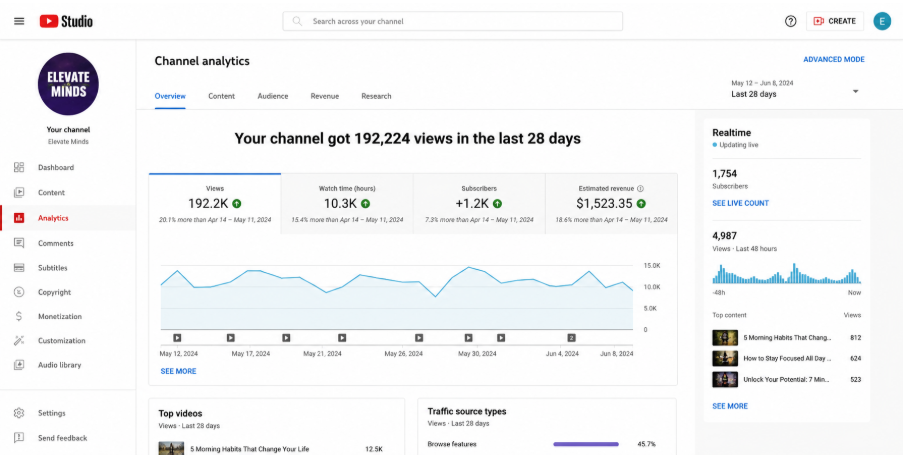
When interpreting YouTube analytics, one of the most ignored pieces of data is the traffic source. YouTubers focus on a lot of other analytical data, such as views and subscriber growth, which often results in a situation where many can tell their view count or subscribers gained, but few can tell the source of that traffic.
What many don't know is that the traffic source on YouTube is an important metric that can help creators know if their channel is getting discovered by new viewers or if it's only being seen by the current subscribers. In this article, we help you understand the YouTube traffic source and show you how you can leverage this metric when interpreting YouTube analytics to grow your channel.

Understanding the YouTube Discovery Engine
The YouTube algorithm uses the discovery engine to recommend videos to the YouTube audience. Understanding this discovery engine is important because your videos are shown to people who don't subscribe to your channel and haven't searched for your video.
That means it plays an important role in the discovery of your videos to new audiences, something that can help you grow your subscriber base. The discovery engine can further be categorized into:
Browse Feature
This refers to the traffic source that comes from viewers discovering your video in the subscription feed, YouTube home page, or other browsing features. This is the most important discovery method because it shows YouTube is recommending content to people depending on their interests, predicted preferences, and viewing history.
Suggested Videos
The suggested videos on YouTube often appear on the sidebar alongside the video that the viewer is watching or in the Up Next recommendation at the end of the video.
There are two key mechanisms that drive this traffic source:
- Topical closeness. If your video matches or is closely related to what the viewer watched, YouTube is likely to recommend the video to them.
- Collaborative filtering. If the algorithm discovers that users who watch video A also go ahead and watch video B, it is likely to recommend video B.
The suggested video can be a good metric to grow on YouTube, as it ensures that your videos are being shown to viewers in your industry free of charge. However, its downside is that at times, YouTube may suggest your videos to the wrong audience.
To increase the chances of your videos appearing in the suggested videos, you can:
- Create high-quality videos. Such kinds of videos are likely to have a high watch time and shareability. When creating videos, always provide your audience with a reason to watch for one more second.
- Optimize the titles, descriptions, and thumbnails. This will help YouTube understand what your video is about to recommend it to the right audience.
- Create YouTube playlists. This can turn your viewers into viewers of several different videos.
- Use eye-catching thumbnails. This can entice your viewers to click.
Understanding the Intent Search (External Sources)
The opposite of the discovery engine is intent search, which happens because a viewer watched content closely related to yours. This can further be categorized into:
YouTube Search
It's important to note that YouTube is the second-largest search engine after Google, processing over 3 billion searches per month as of 2026. That means this traffic source is from people searching for videos in the search bar and can be a good way of getting high-intent traffic.
For instance, when someone searches for a Samsung S26 Ultra review, they are already considering buying that gadget and only need validation of their decision. This means they are further down the sales funnel compared to someone else who randomly stumbled on your video in the home feed. You need to leverage YouTube SEO to receive traffic from YouTube Search.
How Does YouTube's Search Recommend Videos?
If you want your videos to rank on YouTube, you need to understand the YouTube algorithm and the ranking factors used by YouTube. Like other search engines, YouTube recommends content that answers the user’s search query. For instance, when a user searches how to bake a cake, YouTube will not show them videos on how to cook a pizza. Instead, it will serve the videos that use the exact or closely related keyword.
How to Optimize Your Videos for YouTube Search
When doing YouTube SEO, you need to start by researching the keywords your target audience is using to search for content in your niche. You also need to pay attention to YouTube engagement and analytics. When ranking videos, YouTube considers watch time, or rather, the period they have stayed watching the video.
When YouTubers discover that people are watching your content longer, it is interpreted as a sign that you are creating quality content. Therefore, when optimizing your videos, you need to optimize for longer watch time.
Additionally, you need to understand that they have moved from the use of pure metadata to the semantic understanding of videos. That means the YouTube crawlers analyze the actual words spoken in the video, and not just the keywords used in the title tag and description. You need to speak your keywords clearly and early enough in your video.
Other tips to optimize your videos for YouTube search are:
- Use the target keyword for the file name.
- Add the keyword naturally in the video title, tags, and description.
- Set the right category for your video.
- Add a custom thumbnail image for the video result link.
- Leverage YouTube analytics.
- Add closed captions and subtitles using an SRT file.
- Add YouTube end screens and cards.
- Increase your reach using relevant hashtags.
- Add a playlist with different video topics.
- Add timestamps.
External Traffic
This is traffic that comes completely from outside YouTube. Unlike the YouTube algorithm that relies heavily on internal metrics such as engagement and watch time, external traffic is a complementary signal that indicates your video is relevant and popular.
It is an important metric for several reasons, such as:
- Drives initial engagement. After the upload of a YouTube video, YouTube begins to observe how viewers are interacting with it. If your video is getting high engagement in the first 24 to 48 hours, YouTube takes that as a sign that you are creating a valuable video. The external traffic source offers this initial boost that can increase your video views.
- Diversify your sources of traffic. If your channel is adding a diverse audience, it will be rewarded by the YouTube algorithm with a higher reach. If you're only relying on the internal source of traffic on YouTube, you are limiting your growth potential. On the other hand, the external traffic source shows the algorithm that you are bringing an audience to the platform, making it prioritize your content.
- Broader reach. When you get traffic from external sources, you can reach audiences outside YouTube. This will not only increase your views but can also bring new subscribers to the channel.
- More credibility and authority. If your video is embedded on a reputable website, it can help show your content as authoritative, resulting in a higher YouTube ranking.
- Generate a quality audience. When you get traffic from reputable traffic sources such as industry newsletters, LinkedIn, or Slack communities, it can be a good signal of the quality of your audience.
Key Sources of External Traffic
The main sources of external traffic are:
- Social media platforms. You have probably seen people sharing links to their YouTube channels on popular social media platforms like Facebook, TikTok, and Instagram. Basically, what they are doing is driving external traffic to their site.
- Website. Another way to promote your YouTube video is by embedding your video on your website or blog. When doing that, you need to ensure that the content of the website is related to that of the video.
- Email newsletter. This is another common way to promote a YouTube video, even though it is often ignored. If you already have subscribers who have opted into your email list, you can promote the video to them.
- Cross-promotion and collaboration. In 2026, you cannot afford to wait for YouTube to bring traffic to your video. You need to be proactive in promoting it through methods such as collaborating with other brands and creators, enabling you to reach a completely new audience. You can read our guide on the top cross-promotion strategies that work.
- Search engine. YouTube is owned by Google, and YouTube videos appear in the search results of Google and other search engines. This is especially true when you have optimized your videos for search engines.
- Online forums and communities. Whether you are promoting your videos on platforms like Quora, Reddit, or niche forums, these can be great platforms for driving highly targeted audiences. However, you need to be careful when promoting your videos through this method, as you risk being seen as spam.
The Short Feeds as a Traffic Source
YouTube Shorts were introduced in the U.S. in 2021, making them a relatively new feature. As a competitor to Reels and TikTok, Shorts are highly promoted by the algorithm and have a broader audience, making them a perfect choice for driving views to long-form videos. YouTube Shorts have a different engagement signal, as they consider the swipe-away rate instead of the CTR. Instead of the average view duration, they consider the looped replays.
Therefore, Shorts are great for discovery and not just conversion. While the number of short videos viewed has exploded in recent years, their engagement rate is lower than that of long-form videos. If you use Shorts strategically, they can be a good format to introduce a topic and take viewers to long-form content that has higher real-time engagement and conversion.
In Conclusion
While the YouTube traffic source may not be a popular metric like views, subscribers, or even engagement, it can still be an important metric to help you optimize your videos. Once you have identified the sources with the highest traffic, you can focus on optimizing for those sources.

Sign up for SocialWick
Login
InstagramYouTubeTikTokFacebookTwitchSpotifyTwitter (X)SoundCloudIGTVLinkedInThreadsWebsitePinterestVKApple MusicSEO
Checkout
OK

Information
Order processing usually starts within a few minutes, but some services may take a few hours or even a few days. We offer free refills for up to 90 days if needed. Our services are 100% secure and discreet, with a focus on gradual and safe delivery for your peace of mind.
Order processing usually starts within a few minutes, but some services may take a few hours or even a few days. We offer free refills for up to 90 days if needed. Our services are 100% secure and discreet, with a focus on gradual and safe delivery for your peace of mind.
Where should we send your order confirmation?
No account needed! We send your confirmation and tracking link here.
Secure checkout. We never share your email.
Have an account?•
Log in
Use your account to pay faster with your saved details.
Create account
Create an account to track all your orders in one place.
Service
+0,00
Voucher
-0.00
Total
+0.00
OK
Affiliate & Reseller Program
Customer Support
How may we help you?
General Support
Order Support
Frequently Asked Questions
1) What services do you offer?
We are a social media marketing company, and we offer a wide variety of services across several platforms that our clients can choose from. Once selected, we create a plan that fits your needs. We offer several types of services, such as followers, subscribers, likes, views, song plays, etc.
2) Is your service safe?
Yes, as we only sell real followers, likes, views, etc., and we hold every service to strict authenticity and quality standards. In order to protect your account, we deliver every order carefully and gradually. We closely monitor all our services. For more information, we strongly recommend reading our Terms of Service before you order.
3) Will I need to give you the passwords for my accounts?
No, you can keep your passwords to yourself because our services don’t need a password to influence your accounts. And if an email ever shows up claiming to be from us and asking for a password, it’s definitely not us, so please let us know right away.
4) Are the likes, followers, and subscribers real, or are they bots?
Unlike many other services, all our likes, followers, and views come from real accounts operated by real people. You won’t find bots, fake profiles, or hijacked accounts anywhere in what we deliver. Every order has to pass our strict authenticity standards, and we keep checking our quality to make sure it stays that way.
5) How fast can you deliver my order?
We will show you the estimated delivery time when choosing the service. However, this is only a rough estimate. In most cases, the services are delivered much faster. In some cases, it may take longer. We always aim for a natural and safe delivery!
6) What are your best-selling social media marketing services?
Although we have many services across most social media companies, our services for Instagram, TikTok, and YouTube are our best-selling options.
7) How do I know my account will not be flagged or banned?
We take safety very seriously. We never ask for your password, all followers, likes, and views come from real accounts, and orders are usually delivered gradually and naturally. What we can promise is careful delivery and strict quality standards. Plus a support team that’s there whenever you need us. We are not aware of a single case since 2017 where a customer got his profile banned.
8) What is the best method to communicate with you?
Do you have a question or run into a problem? Our customer support is available 24/7 for you. Just click Contact and you’ll land right on the support form. When you buy one of our services, we will email you to see if there were any problems. Your satisfaction is our main priority.
9) Are there discounts for large orders?
Yes! If you would like to request a large order that isn’t on our ordering layout, we will have no problems accommodating you. Just reach out through the support form and we’ll put together a buying plan that fits what you need.
10) What methods of payment do you accept?
We accept all forms of credit and debit cards, as well as Klarna, eps, PayPal, and Crypto.
11) If I am unsatisfied with your services, am I able to receive a refund?
Yes! Every purchase comes with a 30 day money-back guarantee. Not satisfied? Just contact our support within 30 days of your purchase and send us your order details and a short note on what went wrong, and we’ll take a look at your case. The full conditions are in our Refund Policy.
12) I haven’t received my order
Please make sure the following criteria are met before placing an order to make sure we can deliver it successfully.
- Your account is set to public
- You have typed in the correct username or link
- You have not changed your username before the order’s completion
- The post or account still exists and has not been deleted
- The post or account has not been restricted or removed in some countries
- Allow the estimated delivery time for completion of your order
For further assistance, please message our support team through the contact form.
13) How can I request a refill?
Just send us a refill request through the contact form. Please note that we can only provide you with a free refill within the first 90 days of your purchase.
Learn More
What is SocialWick?
We are the leading marketplace for social media promotion. You can buy followers, likes, views, subscribers, and a lot more for almost all social media networks. We offer affordable prices without making any compromises in terms of the service quality. We have a strict policy to only sell social media signals from real people. Part of our engagement, for example, comes from ad-based promotion where real users discover the content through ads. Bots, fake profiles, and hijacked accounts have no place in our services. Every delivery has to meet our authenticity standards, and we run regular quality checks, and anything that does not meet them is removed from our catalog. Our services are available for personal use, whether you want more Instagram likes, TikTok followers, YouTube views, or something else for your own profile.
With over a million satisfied customers, SocialWick is the go-to platform for all your social media needs. Our services are discreet and secure, with gradual and careful delivery to keep your social media accounts safe.
About SocialWick — The Market Leader since 2017
With more than 10 million orders, SocialWick is one of the world’s biggest social media stores. You can find everything on our website to improve your presence on major social media platforms like Instagram, TikTok, YouTube, Twitter (X), Facebook, etc. We offer different types of services for several social media platforms. Your wish is our command, and whatever your goal might be, SocialWick will help you achieve it. Whether you need more likes on your Instagram photos or want to make your LinkedIn profile more popular by getting additional followers, SocialWick is there to turn your goal into reality.
Thanks to our effective services and our customer-oriented work, SocialWick has become a top player. You will not find a better service anywhere else, especially not at such affordable prices. SocialWick is operating since 2017.
365 Days Per Year Customer Service
Your satisfaction is our motivation! We’re not here just for the money; we do our work to help people find their road to social media success. And that’s why our team will do all to make sure everything goes according to plan. If there’s something wrong with your social media campaign, or worry that there might be some problems with your account, or want to learn more about how our services work, feel free to reach out. Our service staff is there for you seven days a week, ready to answer any of your questions. You can get in touch with us using the contact form on our website.
Buying Followers and Likes is Essential
Unless you’re Kylie Jenner, you definitely need some help with social media. The more followers you have on Instagram, TikTok, Twitter (X), or YouTube, the more people will automatically notice you. Having all those eyes on your content isn’t just impressive, it’s genuinely fun. The bad news is that everyone wants to be famous these days, but only a few can succeed. The good news is that you can be the chosen one who will get social media fame and everything that comes with it. But, for that, you need a little help from your friends at SocialWick.
With our help, you will increase the number of followers on social media, which can have a domino effect and bring you even more new followers. Once people see that you got a big followership, they will decide to give you a follow. "If a profile has so many followers, it means that it’s interesting" – you can be sure this is going to be their reasoning. Furthermore, more followers mean more visibility for everything you post. Finally, a large number of followers also do great for your credibility. Our social media services will help you to create a better overall picture of your profile.
Let’s be honest; a profile with 30,000 followers looks much better than one with 74 followers. And that’s exactly what new visitors will pay attention to. A weak social media profile can be a real deal-breaker. At the same time, a fantastic social media profile can do wonders for you. And SocialWick can make your social media profile amazing!