#1 Social Media Marketplace
Accelerate Your Social Media Growth with SocialWick. Quickly gain real followers, viewers, likes & more with our blend of marketing tactics. SocialWick is known for its fast delivery, premium quality, and low prices. With over a million satisfied customers since 2017, trust SocialWick to take your social media game to the next level.
1.4 M
Customers
13 M
Orders
362 M
Followers sold
1.8 B
Likes sold
How Advanced Audience Segmentation Transforms Multi Platform Campaigns
Published on 21.05.2026 by Tracey Chizoba Fletcher
Most multi-platform campaigns look coordinated on the surface. The same product launch appears on Instagram, YouTube, LinkedIn, TikTok, email, and paid social. The visuals line up. The brand voice sounds consistent. The reporting dashboard shows reach climbing. From the outside, it feels like a strong modern campaign. But underneath, a quieter problem often shapes the result.
The audience is being treated like one large group moving in perfect sync across every channel. That assumption breaks a lot of campaigns because people do not behave the same way on every platform. They do not arrive with the same intent. They do not respond to the same angle, the same offer, or even the same emotional trigger when they are scrolling after work versus researching during business hours.
And this is where things get interesting.
Advanced audience segmentation changes multi-platform marketing from broad distribution into strategic adaptation. It helps brands stop asking, “Where should we post this?” and start asking, “Who is this for on this platform, at this moment?”
That shift sounds subtle. It is not.
It changes campaign structure, creative direction, channel planning, budget allocation, and performance measurement. It also explains why some brands seem to get more out of the same channels, the same tools, and sometimes, even the same media spend, because they are not just publishing everywhere. They are mapping relevance.
The Real Problem With Most Multi-Platform Campaigns
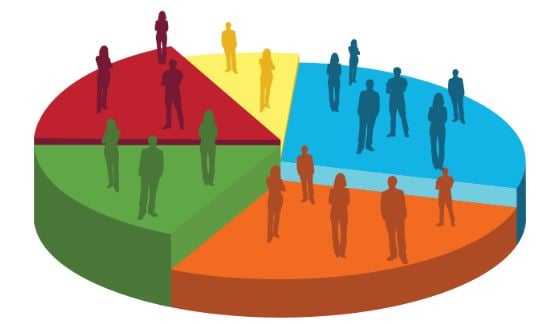
A lot of campaigns fail for a surprisingly simple reason: they actually confuse channel expansion with audience understanding. Being active across multiple platforms is not the same thing as running a multi-platform strategy. Those are two different things. One is presence. The other is orchestration.
When marketers expand onto more channels without deeper segmentation, they often create a copy-and-paste system. The same campaign idea gets resized and redistributed everywhere. A shorter version goes to X. A polished version goes to LinkedIn. A visual version goes to Instagram. A video version goes to TikTok.
It looks efficient. But efficiency is not always effective.
What most people don’t realize is that platform behavior is deeply uneven. Audience overlap exists, but usage patterns are different. Pew Research Center found that major social platforms attract different age groups and usage patterns, with younger adults especially likely to spread their attention across multiple apps rather than rely on just one. About 74% of adults under 30 use at least five of the platforms included in Pew’s survey. That means your audience is not one fixed identity moving through different apps. It is often the same person expressing different motivations depending on context. That distinction matters more than most dashboards reveal.
A person who watches your YouTube explainer is not behaving like the same person who taps your TikTok hook in bed at midnight. They may belong to the same customer profile, but they are not in the same mental state. And campaigns perform better when marketers plan for that difference instead of flattening it.
A Quick Comparison
Basic Multi-Platform Approach Advanced Segmented Approach
Same message everywhere Message changes by audience state
Platform chosen by popularity Platform chosen by audience intent
One creative concept adapted Multiple creative angles, mapped to segments
Success measured by total reach Success measured by segment movement
Audience defined broadly Audience defined by behavior, context, and readiness
That is the shift. Not “more channels,” but smarter alignment between people, platform, and purpose.
Advanced Segmentation is Not Just Demographics Anymore
For years, segmentation was treated like a targeting checklist. Age. Gender. Location. Income. Job title. Useful? Yes. Enough? Not even close.
Those variables still matter, but they rarely explain campaign performance on their own. Two people in the same age bracket, living in the same city, earning similar incomes, can respond to completely different messages for completely different reasons. That is why advanced segmentation has actually evolved into something much more dynamic.
It looks at signals like:
- Browsing behavior
- Purchase timing
- Content depth consumed
- Platform-specific engagement patterns
- Recency of interaction
- Funnel stage
- Topic affinity
- Message fatigue
- Creator trust or brand familiarity
Here’s the interesting part: These signals do more than help you target ads. They help you understand what kind of communication a person is ready for. That is a much more powerful question than “Who are they?”
A useful modern segmentation model often combines four layers:
- Identity - who they are?
- Behavior - what do they do?
- Intent - what do they seem to want right now?
- Context - where and when that behavior is happening?
Once you combine those layers, the campaign becomes more precise without becoming robotic. For example, a software brand could segment one audience as “mid-market operations leaders.” That sounds reasonable, but still too broad. An advanced model might split them into:
- Operations leaders researching automation solutions on LinkedIn.
- Existing site visitors comparing pricing pages from retargeting traffic.
- Webinar viewers who consumed 75%+ of a product demo.
- Trial users who have not activated a key feature.
Those are not just “different users.” They are different campaign moments. And each one deserves a different message.
The Hidden System: Segmentation is Really About Intent Mapping
This is the part many marketers skip. They build audience segments, but they do not connect those segments to decision-making behavior, so the data sits there. Clean. Organized. Underused.
Advanced segmentation becomes transformative only when it is tied to intent mapping. That means identifying what each audience segment is likely trying to do and matching your campaign mechanics to that intent.
Because not every campaign audience is trying to buy. Some are trying to understand. Some are comparing. Some are validating. Some are just noticing you for the first time. That matters across platforms because different channels often capture different levels of intent.
A simplified version looks like this:
Platform / Channel Common Audience State Best Content Role
TikTok / Reels Discovery, curiosity Pattern interrupts, emotional hooks
YouTube Evaluation, deeper learning Explainers, comparisons, walkthroughs
LinkedIn Professional relevance Insight-led authority, industry framing
Email Nurture, reactivation Sequenced trust and conversion nudges
Search / Paid Search High intent, active demand Specific answers, offer clarity
Retargeting Ads Reconsideration Objection handling, proof, urgency
This is where many “underperforming” campaigns are misdiagnosed. The issue is not always weak creativity. Sometimes, the creative is being shown to the right person in the wrong psychological state.
That is a segmentation problem, not a design problem. And once teams start seeing campaigns this way, strategy improves fast.
Why the Same Person Should Often See Different Messages on Different Platforms
This idea makes some brands uncomfortable at first. They worry it will make the campaign feel inconsistent. In reality, the opposite is true. Consistency does not mean repetition. It means coherence.
A segmented multi-platform campaign keeps the same strategic truth while changing the expression. That is the difference between brand discipline and message duplication. Let’s say a direct-to-consumer wellness brand is launching a new product.
A basic campaign might push the same promise everywhere: “Feel more focused and energized.”
An advanced segmented campaign could still keep that core promise, but express it differently:
- TikTok: “The 3 p.m. crash isn’t normal.”
- Instagram Stories: Quick user routines and before/after lifestyle framing.
- YouTube: Ingredient breakdown and longer trust-building education.
- Email: “Here’s what to expect in your first 7 days.”
- Retargeting ads: Reviews, testimonials, and shipping reassurance.
Same product. Same core value. Different audience states.
That is not an inconsistency. That is relevance. And relevance usually beats repetition.
A Research paper from ResearchGate supports this broader pattern. A 2025 academic working paper on e-commerce social strategy found that brands using more diversified multi-platform social media strategies outperformed narrower approaches, with total web sales increasing by 2% to 5%. The researchers suggest this happens partly because repeated exposure across platforms can create complementary effects, reinforcing brand recall instead of merely duplicating reach.
That finding is important because it suggests multi-platform performance is not only about being seen more often. It is about being seen meaningfully in more than one environment.
Better Segmentation Changes Creative Strategy More Than Most Teams Expect
A lot of marketers think segmentation belongs to media buyers, CRM teams, or analysts. But the strongest impact often shows up in creatives. That is where the lift happens.
Once audience segmentation becomes more advanced, creative teams stop building “the campaign asset” and start building a message system. That changes everything.
Instead of one master ad with a few resized versions, teams begin to create:
- Different hooks for cold vs. warm audiences.
- Different proof points for skeptical vs. ready-to-buy segments.
- Different pacing for entertainment-led vs. information-led channels.
- Different CTAs for passive vs. active intent groups.
That is a more mature creative workflow. And it usually performs better because it reflects audience reality instead of internal convenience.
Here’s a practical example: A B2B brand selling workflow software could segment a campaign into these message tracks:
Segment A: Problem-aware but solution-unaware
Creative angle: “Your team is losing time in invisible ways.”
Segment B: Comparing vendors
Creative angle: “What to look for before switching platforms.”
Segment C: Existing leads stuck in evaluation
Creative angle: “See what onboarding looks like in week one.”
Notice what changes. Not just the ad copy. The proof changes. The friction changes. The CTA changes.
That is the real value of segmentation. It gives creative teams something more useful than “make this more engaging.” It gives them a strategic reason for each variation.
Measurement Gets Smarter When Segmentation Gets Smarter
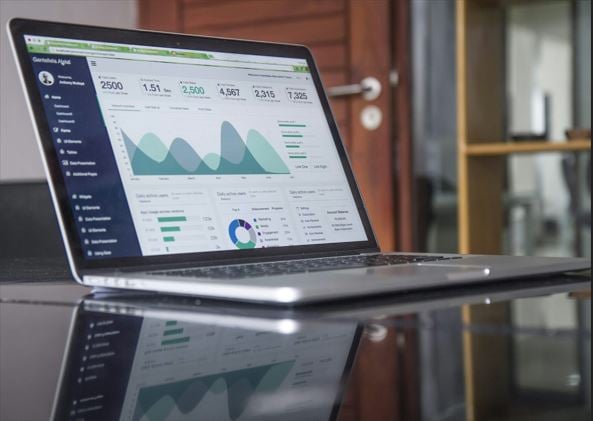
One of the biggest benefits of advanced segmentation is that it improves campaign analysis. Not just campaign execution, because once you segment audiences more precisely, you stop relying on surface-level performance summaries. That is a huge step forward.
Many multi-platform campaigns get judged by blended metrics:
- Total impressions
- Overall CTR
- Average CPA
- Total conversions
Those metrics are useful, but incomplete. They tell you what happened. They do not always tell you for whom it happened, where it happened, or why one audience moved while another stalled. And this is where things get interesting again.
When you measure by segment, patterns appear that are invisible in top-line reporting.
For example:
- One segment may convert poorly on paid social but perform strongly after email nurture.
- Another may engage heavily on short-form video but only buy after YouTube education.
- A high-intent retargeting audience may need fewer impressions but stronger proof.
- A cold audience may need more content variety, not more budget.
Those are not small optimizations. They are strategic reallocations. Advanced segmentation helps marketers ask better questions:
- Which audience moved fastest?
- Which segment needed the most touchpoints?
- Which platform introduced demand versus closed it?
- Which message angle accelerated conversion for a specific group?
That kind of reporting makes budget planning sharper and creative testing more useful. It also helps teams stop over-crediting the last click because multi-platform campaigns are rarely linear. They are layered.
What Most Brands Get Wrong When Trying to “Personalize at Scale”
Personalization sounds great in theory. In practice, many teams overcomplicate it. They think advanced segmentation means building dozens of micro audiences, endless ad variants, and a content calendar so fragmented that no one can manage it.
That approach usually collapses under its own weight. Because more segments do not automatically create more relevance. Better segments do. That is an important distinction.
A strong segmentation system is not built on maximum detail. It is built on useful differences. In other words, does this audience need a meaningfully different message, format, or sequence?
If the answer is no, it probably does not need to be its own segment. That is where mature campaign teams stay disciplined.
They focus on segmentation that changes action. Not segmentation that just looks sophisticated in a dashboard.
A practical rule works well here:
If a Segment Does not Change One of These, it May Not be Useful:
- The message
- The offer
- The format
- The timing
- The channel
- The CTA
That rule keeps strategy clean. It also prevents teams from drowning in complexity while calling it precision.
The Future of Multi-Platform Campaigns Belongs to Adaptive Systems
The most effective campaigns are becoming less like one-time launches and more like responsive systems. That is the larger shift behind advanced segmentation.
Campaigns are no longer static sequences pushed out on a timeline. They are adaptive structures that respond to behavior, engagement, and readiness across channels.
But that only works when segmentation is treated as a living input, not a one-time setup step. And this is the deeper takeaway. Segmentation is not just about dividing audiences. It is about designing campaign logic.
It tells you:
- Who needs what.
- When they need it.
- Where they are most receptive.
- What kind of proof will move them forward?
That is what transforms multi-platform marketing from distribution into strategy. And in a fragmented digital environment, that transformation matters more than ever. Platform behavior continues to diversify, and audience attention is increasingly split across ecosystems rather than concentrated in one or two dominant spaces. That makes broad message campaign planning less reliable over time.
The brands that win are often not the loudest. They are the most aligned.
Conclusion
Advanced audience segmentation does not just improve targeting. It changes the entire architecture of a campaign. It helps marketers understand that a multi-platform strategy is not about posting in more places. It is about recognizing that audiences arrive with different intentions, different expectations, and different levels of readiness depending on where they are and what they are doing. That insight changes everything downstream.
Creative becomes sharper. Messaging becomes more relevant. Measurement becomes more honest. The budget becomes more efficient.
And perhaps most importantly, campaigns start to feel less like coordinated noise and more like guided relevance. That is the real transformation because when segmentation gets smarter, campaigns stop speaking at audiences and start meeting them where meaning is most likely to land.

Sign up for SocialWick
Login
InstagramYouTubeTikTokFacebookTwitchSpotifyTwitter (X)SoundCloudIGTVLinkedInThreadsWebsitePinterestVKApple MusicSEO
Checkout
OK

Information
Order processing usually starts within a few minutes, but some services may take a few hours or even a few days. We offer free refills for up to 90 days if needed. Our services are 100% secure and discreet, with a focus on gradual and safe delivery for your peace of mind.
Order processing usually starts within a few minutes, but some services may take a few hours or even a few days. We offer free refills for up to 90 days if needed. Our services are 100% secure and discreet, with a focus on gradual and safe delivery for your peace of mind.
Where should we send your order confirmation?
No account needed! We send your confirmation and tracking link here.
Secure checkout. We never share your email.
Have an account?•
Log in
Use your account to pay faster with your saved details.
Create account
Create an account to track all your orders in one place.
Service
+0,00
Voucher
-0.00
Total
+0.00
OK
Affiliate & Reseller Program
Customer Support
How may we help you?
General Support
Order Support
Frequently Asked Questions
1) What services do you offer?
We are a social media marketing company, and we offer a wide variety of services across several platforms that our clients can choose from. Once selected, we create a plan that fits your needs. We offer several types of services, such as followers, subscribers, likes, views, song plays, etc.
2) Is your service safe?
Yes, as we only sell real followers, likes, views, etc., and we hold every service to strict authenticity and quality standards. In order to protect your account, we deliver every order carefully and gradually. We closely monitor all our services. For more information, we strongly recommend reading our Terms of Service before you order.
3) Will I need to give you the passwords for my accounts?
No, you can keep your passwords to yourself because our services don’t need a password to influence your accounts. And if an email ever shows up claiming to be from us and asking for a password, it’s definitely not us, so please let us know right away.
4) Are the likes, followers, and subscribers real, or are they bots?
Unlike many other services, all our likes, followers, and views come from real accounts operated by real people. You won’t find bots, fake profiles, or hijacked accounts anywhere in what we deliver. Every order has to pass our strict authenticity standards, and we keep checking our quality to make sure it stays that way.
5) How fast can you deliver my order?
We will show you the estimated delivery time when choosing the service. However, this is only a rough estimate. In most cases, the services are delivered much faster. In some cases, it may take longer. We always aim for a natural and safe delivery!
6) What are your best-selling social media marketing services?
Although we have many services across most social media companies, our services for Instagram, TikTok, and YouTube are our best-selling options.
7) How do I know my account will not be flagged or banned?
We take safety very seriously. We never ask for your password, all followers, likes, and views come from real accounts, and orders are usually delivered gradually and naturally. What we can promise is careful delivery and strict quality standards. Plus a support team that’s there whenever you need us. We are not aware of a single case since 2017 where a customer got his profile banned.
8) What is the best method to communicate with you?
Do you have a question or run into a problem? Our customer support is available 24/7 for you. Just click Contact and you’ll land right on the support form. When you buy one of our services, we will email you to see if there were any problems. Your satisfaction is our main priority.
9) Are there discounts for large orders?
Yes! If you would like to request a large order that isn’t on our ordering layout, we will have no problems accommodating you. Just reach out through the support form and we’ll put together a buying plan that fits what you need.
10) What methods of payment do you accept?
We accept all forms of credit and debit cards, as well as Klarna, eps, PayPal, and Crypto.
11) If I am unsatisfied with your services, am I able to receive a refund?
Yes! Every purchase comes with a 30 day money-back guarantee. Not satisfied? Just contact our support within 30 days of your purchase and send us your order details and a short note on what went wrong, and we’ll take a look at your case. The full conditions are in our Refund Policy.
12) I haven’t received my order
Please make sure the following criteria are met before placing an order to make sure we can deliver it successfully.
- Your account is set to public
- You have typed in the correct username or link
- You have not changed your username before the order’s completion
- The post or account still exists and has not been deleted
- The post or account has not been restricted or removed in some countries
- Allow the estimated delivery time for completion of your order
For further assistance, please message our support team through the contact form.
13) How can I request a refill?
Just send us a refill request through the contact form. Please note that we can only provide you with a free refill within the first 90 days of your purchase.
Learn More
What is SocialWick?
We are the leading marketplace for social media promotion. You can buy followers, likes, views, subscribers, and a lot more for almost all social media networks. We offer affordable prices without making any compromises in terms of the service quality. We have a strict policy to only sell social media signals from real people. Part of our engagement, for example, comes from ad-based promotion where real users discover the content through ads. Bots, fake profiles, and hijacked accounts have no place in our services. Every delivery has to meet our authenticity standards, and we run regular quality checks, and anything that does not meet them is removed from our catalog. Our services are available for personal use, whether you want more Instagram likes, TikTok followers, YouTube views, or something else for your own profile.
With over a million satisfied customers, SocialWick is the go-to platform for all your social media needs. Our services are discreet and secure, with gradual and careful delivery to keep your social media accounts safe.
About SocialWick — The Market Leader since 2017
With more than 10 million orders, SocialWick is one of the world’s biggest social media stores. You can find everything on our website to improve your presence on major social media platforms like Instagram, TikTok, YouTube, Twitter (X), Facebook, etc. We offer different types of services for several social media platforms. Your wish is our command, and whatever your goal might be, SocialWick will help you achieve it. Whether you need more likes on your Instagram photos or want to make your LinkedIn profile more popular by getting additional followers, SocialWick is there to turn your goal into reality.
Thanks to our effective services and our customer-oriented work, SocialWick has become a top player. You will not find a better service anywhere else, especially not at such affordable prices. SocialWick is operating since 2017.
365 Days Per Year Customer Service
Your satisfaction is our motivation! We’re not here just for the money; we do our work to help people find their road to social media success. And that’s why our team will do all to make sure everything goes according to plan. If there’s something wrong with your social media campaign, or worry that there might be some problems with your account, or want to learn more about how our services work, feel free to reach out. Our service staff is there for you seven days a week, ready to answer any of your questions. You can get in touch with us using the contact form on our website.
Buying Followers and Likes is Essential
Unless you’re Kylie Jenner, you definitely need some help with social media. The more followers you have on Instagram, TikTok, Twitter (X), or YouTube, the more people will automatically notice you. Having all those eyes on your content isn’t just impressive, it’s genuinely fun. The bad news is that everyone wants to be famous these days, but only a few can succeed. The good news is that you can be the chosen one who will get social media fame and everything that comes with it. But, for that, you need a little help from your friends at SocialWick.
With our help, you will increase the number of followers on social media, which can have a domino effect and bring you even more new followers. Once people see that you got a big followership, they will decide to give you a follow. "If a profile has so many followers, it means that it’s interesting" – you can be sure this is going to be their reasoning. Furthermore, more followers mean more visibility for everything you post. Finally, a large number of followers also do great for your credibility. Our social media services will help you to create a better overall picture of your profile.
Let’s be honest; a profile with 30,000 followers looks much better than one with 74 followers. And that’s exactly what new visitors will pay attention to. A weak social media profile can be a real deal-breaker. At the same time, a fantastic social media profile can do wonders for you. And SocialWick can make your social media profile amazing!