#1 Social Media Marketplace
Accelerate Your Social Media Growth with SocialWick. Quickly gain real followers, viewers, likes & more with our blend of marketing tactics. SocialWick is known for its fast delivery, premium quality, and low prices. With over a million satisfied customers since 2017, trust SocialWick to take your social media game to the next level.
1.4 M
Customers
13 M
Orders
362 M
Followers sold
1.8 B
Likes sold
A Detailed Guide to Social Media Performance Analysis
Published on 30.03.2026 by Tracey Chizoba Fletcher
Unlike the past, when social media was a platform for sharing random images and memes with family and friends, today, it has become a comprehensive creator and business tool for conducting business, building brands, and achieving more.
Social media platforms also keep changing, with new features being added, new social media trends emerging, and consumer behaviors changing. Additionally, the social media algorithm is regularly updated. All this means that what worked a few years ago may not work today. No matter how you plan to use social media, if you are not analyzing its performance, you may be missing a lot. In this article, we will take you through the steps of social media performance analysis.
What is Social Media Performance Analysis?
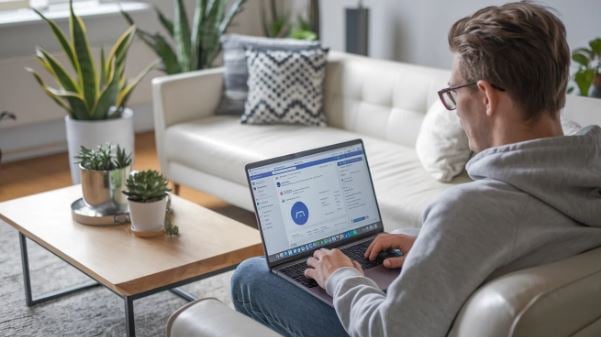
Social media performance analysis involves collecting, interpreting, and evaluating data from social media platforms to optimize your marketing strategy and achieve the highest ROI. By analyzing your performance, you can get a better understanding of what works. You will identify the content formats, platforms, and strategies bringing the best results.
Performance analysis will also help you identify inefficiencies, so you can determine where you are wasting your time and resources. You can also use the data to optimize for growth and make better decisions, based on reach, engagement, and conversion. If you are serious about growing your tracking, your performance isn't optional, but a key step.
Benefits of Conducting Social Media Performance Analysis
A good social media analysis will help provide an all-rounded overview of the performance of your channel, providing actionable insights to:
- Understand which channels to prioritize. You can discover the high-performing channels so you can pay more attention to them. This is important as not all social media platforms will be a good fit for your business.
- Understand the key industry benchmark. When conducting a social media content analysis, you will need to benchmark yourself with the competitor to get a clearer picture of where you stand against the competitor and industry benchmarks.
- Better understanding of your audience. Conducting a thorough review of your social media performance will give insight into your audience. Explore brand sentiment to better understand your audience’s feelings toward your brand.
- Understand the best type of content. Given the variety of content they share on social media, you need data to better understand which content performs best. You can use these insights in your social media analysis to find the content that resonates best with your target audience.
- Spot new industry trends. Conducting a social media performance analysis will provide you with important insights to identify upcoming trends, enabling you to increase engagement and visibility.
- Prove your ROI. No matter the social media strategy you are using, whether organic or paid, you will still need to take time to strategize and publish content. All this requires money, time, and energy. A social media performance analysis can help you determine your ROI and if you are already on track.
Steps in Conducting a Social Media Assessment
Now that you understand the benefits of conducting a social media assessment, here are the steps to follow when conducting one:
Determine Your Goals
Start by determining what you want to achieve with the social media performance analysis. A good idea would be to set SMART goals. Avoid vague goals such as growing my following. Instead, be specific and use a goal such as:
- Increase my Instagram comments by 30% in the next three months.
- Generate 1000 website clicks from LinkedIn in the next 60 days.
- Gain 500 TikTok followers in the next month.
The clearer your goals are, the easier it will be to aim for them and understand what metrics to track. Otherwise, without some clear goals, you will struggle to track your results. When you set specific, measurable goals, it is easier to track progress and prove how social media is adding value to your business. Make sure these goals align with your broader business objectives so your social media strategy complements them.
One of the major goals that many businesses have on social media is to increase brand awareness. This aims to ensure your brand reaches a larger audience and increases brand awareness.
Understand the Social Media Metrics That Matter
A common mistake brands make is assuming that if their posts attract a lot of likes and comments, they are succeeding. However, some metrics are vanity metrics and may not bring much results. Therefore, you need to understand the key metrics that really drive your organization's goals. While this will depend on your type of business, some of the top ones to consider are:
Clicks
It's important to track the number of clicks you get on social media. This will provide important insights into the effectiveness of social media content in prompting users to take action.
Reach
This metric shows the number of social media users who see your content, providing insights into its reach. It can be an important metric for providing additional insight into your strategy's performance, as it shows how many people your content reaches.
Your social media content reach can provide insights into how many people have learnt about your brand. If your posts are achieving high reach, it shows you are generating greater brand awareness even beyond your current following. It's worth noting that the reach can be categorized as either organic or paid. Organic reach tracks the number of users who see your content on your brand's social media channel through unpaid channels.
Engagement
To determine engagement, you should define total engagement as reach. Doing that will provide insight into whether your social media strategy resonates with your target audience. While this varies by platform, engagement typically includes actions such as likes, comments, shares, and clicks.
If you find that a post had 2000 people but only received one click and two likes, it shows the engagement level is low. However, engagement can be categorized into different categories, such as:
- Page interactions. Clicks on your profiles, buttons, and other tabs.
- Post interactions. Likes, comments, and shares.
- DM interactions. Messages sent to your page or responding to a particular message.
- Other page interactions. This refers to the mentions on other pages or posts that mention your brand.
Followers
Social media followers are also quite important, especially if they engage with your page. If your brand has 5,000 followers and they engage with your account, they will be more useful than a trove of passive followers from another brand with 50,000 followers. The reason is that a high engagement rate can signal strong brand trust and loyalty. Social media algorithms also prioritize content that receives a high engagement rate.
Therefore, instead of focusing on gaining a large following, you can focus on creating a community of highly dedicated followers. One way to grow your social media following is by focusing on connecting with highly relevant and engaging people. This will show that your brand focuses on developing loyalty and quality followers. You can also use several other tips for gaining high-value followers, such as:
- Creating high-quality content.
- Interacting with your followers.
- Encouraging the creation of UGC.
- Leveraging SEO.
- Influencer collaboration. According to a Sprout Social Study, 90% of marketers reported that influencer content received higher engagement than organic posts.
- Targeted campaigns and giveaways.
- A/B testing and adjusting accordingly.
Impressions
Impressions and reach are almost the same, but there are a few differences. Impressions refer to the number of times the content is displayed, i.e., how many times someone saw it. But reach means the number of new people who see the content. Impressions can be a good indicator of brand recall, as greater exposure leads to higher brand awareness.
According to a Forbes report, seeing high-quality content from your brand several times can increase brand awareness and the likelihood of buying from your brand. There are several tips you can use to encourage brand recall, such as:
- Consistent posting.
- Leveraging reels and stories
- Encouraging shares, saves, and active engagement.
It's good to grow your impression to increase the number of people who come across your brand organically and stay for several years.
Return on Investment (ROI)
Because companies have unique goals, ROI looks different across organizations. When you track the success of your social media effort, you can ensure that what you are doing contributes to your overall goals. To track ROI, you can measure different metrics such as sales, leads, and conversions. Here are tips on measuring your social media ROI:
- Have some clear social media goals, such as direct sales or lead generation.
- Add a tracking link to track conversions and traffic from your social media posts.
- Track engagement and the impact of the social media interaction on sign-ups, purchases, website traffic, and more.
- Consider the role of social media in your overall sales funnel.
Shares
Social shares refer to the number of times that your website content is shared across different social media platforms. It can involve sharing content directly, as well as liking, commenting, and engaging with it. The number of shares is an important factor because they show how valuable your content is. If people are trusting your content, it's a sign of more endorsement and trust. It can result in higher reach, higher authority, and SEO.
Social sharing works the same way as word-of-mouth marketing, which is powerful because people trust recommendations from others. You can make your content more shareable by:
- Ensuring that it resonates emotionally with your audience.
- Creating content that offers value, either by helping people solve a problem or by educating them.
- Making your visuals eye-catching.
- Creating content that is timely and relatable.
- Arguing with your followers to share.
- Encouraging UGC
- Optimizing content for the different platforms.
Cost Per Click (CPC)
The Cost per click is a good metric that shows how much you pay for each ad click. This is a good metric for showing the effectiveness of your ad campaign in driving traffic. If you have a high CPC, it can be a sign that your ad isn't reaching the right audience or that you're targeting a highly competitive keyword.
There are several tips you can use to optimize your CPC, such as:
- Refine targeting. Make sure you are targeting the most relevant group.
- Enhance the quality score. Platforms such as Google Ads can show the relevancy of your posts.
- Optimize the social media copy. Ensure that the copy matches the user intent and is quite clear and compelling.
- Use the negative keywords. Regularly review your keywords and remove the negative ones so you don't pay for irrelevant clicks that don't drive conversions.
- Adjust your strategy automatically. Leverage automated bidding methods, such as cost per acquisition, to enable social media platforms to optimize their bids and improve cost efficiency.
Conducting the Social Media Performance Analysis
Social media analytics involves collecting and analyzing data at different data points to help you track the performance of your social media account. It involves tracking data and KPIs to refine your overall micro- and macro-level social media strategy.
You can leverage social media analytics tools to collect and analyze data from social media platforms on the performance of your account. This can provide insights into the metrics we discussed earlier, such as audience engagement, customer sentiment analysis, and conversion rate. They can, therefore, be great tools for guiding your audience targeting and content strategy.
You can use different tools and integrations to centralize your decision-making and insights across different platforms. You can then track your brand’s performance and compare it with the competition to see how it stacks up against industry standards. Also, make sure you pay attention to brand mentions to understand what people are saying about your brand. You can go ahead and automate the reporting workflows and alerts to remain ahead of trends.
Through social media analytics, you will get important insights that will help you create better content, adjust your budget where necessary, and better understand your audience. This can also demonstrate the value of your social accounts to different stakeholders and highlight your ROI.
Remember that social media analytics isn’t only about tracking your account performance. Instead, it's a broader umbrella that encompasses different data points for social media accounts. This can involve:
- Tracking the performance of your account. This is the most popular type of social media analytics and involves reading your own channels' analytics to determine the performance of your content, whether organic or paid.
- Competitive analysis. This involves comparing your analytics with those of the competitors in your niche. While tracking your KPIs, such as engagement, reach, and impression is important, you can never tell how you are performing unless you compare your data with that of the competition.
- This can offer you a clear picture of the industry performance, enabling you to better understand your results.
- Social listening. This involves monitoring discussions and results relevant to your brand, its hashtags, and trending topics in your niche. When tracking these analytics, it's important to check the spikes and trends to see if there are any sudden spikes you may need to address.
- Industry benchmarking. Instead of focusing on a single competitor, you can compare your performance against the entire industry. This figure can offer important insights, especially on overall trends.
- Sentiment analysis. Instead of just looking at the numbers, you need to dig deeper to understand the sentiments behind those numbers.
There are several tools you can use to track your account's performance. These include:
- Native analytics tool. Tools such as Facebook Analytics, Instagram Insights, and Twitter Analytics can provide data for each platform.
- Third-party tools. You can also leverage tools such as Sprout Social, Buffer, and HootSuite to offer cross-platform tracking and advanced analytics.
- Google Analytics. This is a great tool for tracking social media traffic and website conversions.
- Deeper insight tools. For sentiment analysis, consider tools such as Brandwatch, while Social Blade can help you track your social media growth.
Content Performance Analysis
Some content tends to perform better than others, and you should strive to find out the reasons. You can do that by:
- Identify the best-performing posts. Check which of your posts has the highest reach, engagement, and conversion rate.
- Check patterns. Find out what is common in all your posts. Is it the topic, posting time, or content format (image or video)?
- Test & iterate. Once you find out what works, experiment with captions, hashtags, and formats to determine which resonate better with your target audience.
Remember that your goal shouldn't be to copy others. You already have a unique audience, so focus on what works for you.
Monitor Competition and Trends
Remember that social media platforms are constantly evolving. Just a few years back, features such as Instagram Shop and Reels didn't exist. That also means that what worked a year ago isn't necessarily what will work today. You can stay ahead of social media trends in different ways, such as:
- Tracking trends. You can use tools like Google Trends to find hashtags gaining traction.
- Competitor analysis. Pay attention to what is working or isn't working for your competitor. You can leverage third-party tools such as Rival IQ and BuzzSumo to do that.
- Adapt fast. When you get new insights and trends, adapt to the theme quickly.
Again, don't just copy your competitors; learn from them and strategize.
Create an Actionable Report
The social media competitors analysis data will only be useful if you work on it. Therefore, start by determining the most important metrics for you, such as reach, conversion, and engagement rate. Explain the meaning of the data. For instance, you might realize that a video post gets an engagement rate of 30% compared to image posts. Consider the next course of action. Then, you could create more video content and post it at 8 p.m. to increase engagement.
Now that you have understood and tracked the important metrics, you need to interpret the data. Here are a few tips on doing that:
- When you find that your content is receiving very high engagement on a particular platform, that is where most of your core audience is. You can learn more on the platform to further improve your results.
- When you invest more in Facebook engagement but still find it lower than on TikTok, Instagram, or X, you may need to reconsider which platform to prioritize.
- Keep adjusting your budget and strategy to get a good balance of investment and results in your social media analysis.
- Certain types of posts perform better than others. Consider what you are doing well. Is there a particular message, image, or posting format that seems to work better? Once you figure it out, you can then create content that matches that finding.
- Pay attention to emerging patterns between the content with the highest engagement and the lowest.
- If you are receiving lower engagement levels than your competitor, check what they are doing differently. Define clear, actionable insights for social media content performance analysis.
- Check your competitors' top pages and gain insights to improve your underperforming posts.
Create a Regular Review Schedule
Regularly reviewing your social media content can help you make a more informed decision. It can be a good way to improve your future digital content through a data-supported strategy. When reviewing your social media content performance, make sure you group it. For instance, you can compare the performance of your TikTok account this year to last year rather than to a LinkedIn account. If there are any chances, make note of them, whether internal or external.
Also, set a schedule for reviewing your social media content. Here are ideas on doing that:
- Weekly. Pay attention to the content performance, reach, and engagement.
- Monthly. Pay attention to the overall growth and how you are progressing toward the goal.
- Quarterly. Pay attention to the social media trends, set new goals, and adjust your strategies.
Remain consistent, as regularly reviewing will help you to stay on track and keep adapting.
Final Thoughts
If you are creating social media content without a performance analysis, you are like someone running a marathon without understanding the distance, time, or pace. But when you analyze your performance, you can better understand what works and determine which strategies and platforms deliver the best results. Therefore, if you are serious about growing your brand on social media, performance analysis is a must-do. By following the steps above, it should be easy.

Sign up for SocialWick
Login
InstagramYouTubeTikTokFacebookTwitchSpotifyTwitter (X)SoundCloudIGTVLinkedInThreadsWebsitePinterestVKApple MusicSEO
Checkout
OK

Information
Order processing usually starts within a few minutes, but some services may take a few hours or even a few days. We offer free refills for up to 90 days if needed. Our services are 100% secure and discreet, with a focus on gradual and safe delivery for your peace of mind.
Order processing usually starts within a few minutes, but some services may take a few hours or even a few days. We offer free refills for up to 90 days if needed. Our services are 100% secure and discreet, with a focus on gradual and safe delivery for your peace of mind.
Where should we send your order confirmation?
No account needed! We send your confirmation and tracking link here.
Secure checkout. We never share your email.
Have an account?•
Log in
Use your account to pay faster with your saved details.
Create account
Create an account to track all your orders in one place.
Service
+0,00
Voucher
-0.00
Total
+0.00
OK
Affiliate & Reseller Program
Customer Support
How may we help you?
General Support
Order Support
Frequently Asked Questions
1) What services do you offer?
We are a social media marketing company, and we offer a wide variety of services across several platforms that our clients can choose from. Once selected, we create a plan that fits your needs. We offer several types of services, such as followers, subscribers, likes, views, song plays, etc.
2) Is your service safe?
Yes, as we only sell real followers, likes, views, etc., and we hold every service to strict authenticity and quality standards. In order to protect your account, we deliver every order carefully and gradually. We closely monitor all our services. For more information, we strongly recommend reading our Terms of Service before you order.
3) Will I need to give you the passwords for my accounts?
No, you can keep your passwords to yourself because our services don’t need a password to influence your accounts. And if an email ever shows up claiming to be from us and asking for a password, it’s definitely not us, so please let us know right away.
4) Are the likes, followers, and subscribers real, or are they bots?
Unlike many other services, all our likes, followers, and views come from real accounts operated by real people. You won’t find bots, fake profiles, or hijacked accounts anywhere in what we deliver. Every order has to pass our strict authenticity standards, and we keep checking our quality to make sure it stays that way.
5) How fast can you deliver my order?
We will show you the estimated delivery time when choosing the service. However, this is only a rough estimate. In most cases, the services are delivered much faster. In some cases, it may take longer. We always aim for a natural and safe delivery!
6) What are your best-selling social media marketing services?
Although we have many services across most social media companies, our services for Instagram, TikTok, and YouTube are our best-selling options.
7) How do I know my account will not be flagged or banned?
We take safety very seriously. We never ask for your password, all followers, likes, and views come from real accounts, and orders are usually delivered gradually and naturally. What we can promise is careful delivery and strict quality standards. Plus a support team that’s there whenever you need us. We are not aware of a single case since 2017 where a customer got his profile banned.
8) What is the best method to communicate with you?
Do you have a question or run into a problem? Our customer support is available 24/7 for you. Just click Contact and you’ll land right on the support form. When you buy one of our services, we will email you to see if there were any problems. Your satisfaction is our main priority.
9) Are there discounts for large orders?
Yes! If you would like to request a large order that isn’t on our ordering layout, we will have no problems accommodating you. Just reach out through the support form and we’ll put together a buying plan that fits what you need.
10) What methods of payment do you accept?
We accept all forms of credit and debit cards, as well as Klarna, eps, PayPal, and Crypto.
11) If I am unsatisfied with your services, am I able to receive a refund?
Yes! Every purchase comes with a 30 day money-back guarantee. Not satisfied? Just contact our support within 30 days of your purchase and send us your order details and a short note on what went wrong, and we’ll take a look at your case. The full conditions are in our Refund Policy.
12) I haven’t received my order
Please make sure the following criteria are met before placing an order to make sure we can deliver it successfully.
- Your account is set to public
- You have typed in the correct username or link
- You have not changed your username before the order’s completion
- The post or account still exists and has not been deleted
- The post or account has not been restricted or removed in some countries
- Allow the estimated delivery time for completion of your order
For further assistance, please message our support team through the contact form.
13) How can I request a refill?
Just send us a refill request through the contact form. Please note that we can only provide you with a free refill within the first 90 days of your purchase.
Learn More
What is SocialWick?
We are the leading marketplace for social media promotion. You can buy followers, likes, views, subscribers, and a lot more for almost all social media networks. We offer affordable prices without making any compromises in terms of the service quality. We have a strict policy to only sell social media signals from real people. Part of our engagement, for example, comes from ad-based promotion where real users discover the content through ads. Bots, fake profiles, and hijacked accounts have no place in our services. Every delivery has to meet our authenticity standards, and we run regular quality checks, and anything that does not meet them is removed from our catalog. Our services are available for personal use, whether you want more Instagram likes, TikTok followers, YouTube views, or something else for your own profile.
With over a million satisfied customers, SocialWick is the go-to platform for all your social media needs. Our services are discreet and secure, with gradual and careful delivery to keep your social media accounts safe.
About SocialWick — The Market Leader since 2017
With more than 10 million orders, SocialWick is one of the world’s biggest social media stores. You can find everything on our website to improve your presence on major social media platforms like Instagram, TikTok, YouTube, Twitter (X), Facebook, etc. We offer different types of services for several social media platforms. Your wish is our command, and whatever your goal might be, SocialWick will help you achieve it. Whether you need more likes on your Instagram photos or want to make your LinkedIn profile more popular by getting additional followers, SocialWick is there to turn your goal into reality.
Thanks to our effective services and our customer-oriented work, SocialWick has become a top player. You will not find a better service anywhere else, especially not at such affordable prices. SocialWick is operating since 2017.
365 Days Per Year Customer Service
Your satisfaction is our motivation! We’re not here just for the money; we do our work to help people find their road to social media success. And that’s why our team will do all to make sure everything goes according to plan. If there’s something wrong with your social media campaign, or worry that there might be some problems with your account, or want to learn more about how our services work, feel free to reach out. Our service staff is there for you seven days a week, ready to answer any of your questions. You can get in touch with us using the contact form on our website.
Buying Followers and Likes is Essential
Unless you’re Kylie Jenner, you definitely need some help with social media. The more followers you have on Instagram, TikTok, Twitter (X), or YouTube, the more people will automatically notice you. Having all those eyes on your content isn’t just impressive, it’s genuinely fun. The bad news is that everyone wants to be famous these days, but only a few can succeed. The good news is that you can be the chosen one who will get social media fame and everything that comes with it. But, for that, you need a little help from your friends at SocialWick.
With our help, you will increase the number of followers on social media, which can have a domino effect and bring you even more new followers. Once people see that you got a big followership, they will decide to give you a follow. "If a profile has so many followers, it means that it’s interesting" – you can be sure this is going to be their reasoning. Furthermore, more followers mean more visibility for everything you post. Finally, a large number of followers also do great for your credibility. Our social media services will help you to create a better overall picture of your profile.
Let’s be honest; a profile with 30,000 followers looks much better than one with 74 followers. And that’s exactly what new visitors will pay attention to. A weak social media profile can be a real deal-breaker. At the same time, a fantastic social media profile can do wonders for you. And SocialWick can make your social media profile amazing!