You have probably been in a situation where one of your best social media posts was approved with a typo, incorrect information, or something that didn't align with your brand voice. When these kinds of situations are allowed to continue, they can affect your brand image. The good news is that with a good social media approval workflow plan, you can avoid them. In this article, we will look at setting up a social media content approval workflow tailored to your brand.

What is a Social Media Approval Workflow?
A social media content approval workflow is a step-by-step guide for reviewing, editing, and authorizing social media content to ensure it passes required quality checks and aligns with your brand voice. It can also entail checking if the content aligns with the platform guidelines and legal checks.
The process involves various parties, including content creators, social media managers, and other stakeholders. A good social media approval workflow ensures that all your content sounds like it is from the same brand. It helps minimize the risk of publishing inaccurate or harmful information or information that contains mistakes.
Steps in Creating a Social Media Approval
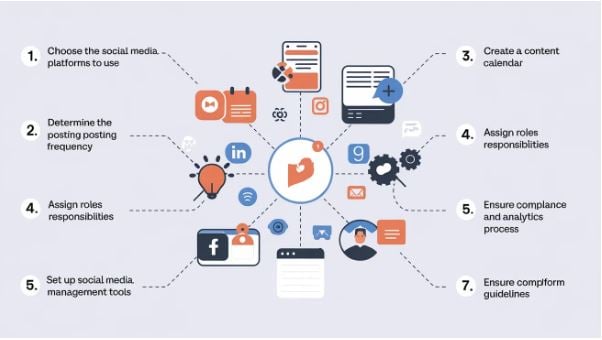
To create an outstanding approval workflow, follow these steps:
Assemble Your Social Media Team
You need to start by assembling the key players in your social media workflow and their roles. Team members can have different roles, from improving your social media messaging to editing posts. Some of the key professionals that are part of a social media team are:
- Content creators, copywriters, and designers
- Social media managers
- Other department team members
- C-level executives
Ensure each team member's responsibilities are clearly outlined. For instance, choose who uploads the content, makes changes, and gives final approval. I recommend limiting the number of people involved in the social media approval process to remove bottlenecks and ensure content moves quickly between parties.
Determine the Content Creation Guidelines
Having clear guidelines can be essential for preventing a lengthy review process and many revisions, as the checklist will assess whether the content meets the required standards. The guidelines should specify the content goal, visual style, brand voice, legal disclaimers, and more. These guidelines will minimize vague feedback and ensure alignment with brand standards.
Put the Deliverables and Assets in a Central Place
Maintaining your resources in one place can help you speed up the approval process. Otherwise, if your graphic designers need to find an approved bean color or logo, or content creators need to brainstorm appropriate hashtags and track their analytics, the whole process will be slow. That is why you should have an asset repository that provides your team members with instant access to pre-approved tools.
Create Content Creation Guidelines
When the content creation is done haphazardly, it will not work, as your team will spend a lot of time figuring out what content to create. That is why you need a clear roadmap on how the content creation should be done and within what guidelines.
A good content creation process consists of several steps, such as:
- Ideation. This involves brainstorming different concepts to ensure they align with your content strategy.
- Creation. This involves creating the copy and the recording, and designing visuals.
- First review. Getting feedback from stakeholders.
- Revisions. Adding the final touches to a post.
- Final approval. A senior member approves the post.
- Publishing. Schedule the post to determine when it should go live.
After outlining the process, you can add reasonable timeframes for each content type. For instance, creating a TikTok video is likely to take longer than a single-image Facebook post.
A good approval process also enables you to stick to your schedule. Make sure you have a particular timeline when the post should go live, whether it's weekly or daily. Also consider the time required for content approval, especially if your social media campaign is time-sensitive.
Ensure a Consistent Brand Voice and Style
When several team members work on the content workflow, it's easy to miss your brand voice. As the message moves from one party to the other, different people in the workflow can add creative stamps. However, you want to retain your brand tone. This is where having a social media style guide helps.
To keep team members abreast with your organization's best practices, you need to highlight the brand voice and values. This ensures it's easy to onboard new members of the social media teams and third parties who are unfamiliar with the business.
Consider Post Optimization
When creating an approval workflow, you might be concerned about the content's reach. Remember that different platforms have different audience demographics, network cultures, and character limits, and you want to ensure you are following each platform's best practices. Make sure each post is optimized for a specific social media platform, including relevant hashtags.
Determining the Preview Stage
There is nothing like the perfect timing for approval, and this varies depending on what you are posting and for whom. A good idea would be to consider factors such as post-approval patterns, content complexity, and the comfort levels of the relevant stakeholders. If you are running a high-stakes campaign or are in a highly regulated industry, you need more approval touchpoints. We recommend you read our guide on using AI for tweet scheduling.
Maintain the Approval and Publishing Schedule
Publication is also an important element of the approval workflow, and you need to determine where the content will be published. As with the approval timeline, have a scheduling and publishing schedule. This can be a win-win for your followers and team alike, as it is consistently rewarded by social media platforms and followers.
Provide timelines for the different review stages and ensure reviewers have deadlines that hold them accountable. Also, account for the time for unexpected revisions or when the main reviewer may not be at work.
In Conclusion
Setting up a social media approval workflow can enable you to avoid errors when posting content. It can also help you maintain a strong brand voice. If you are getting started with social media approval workflows, the steps above will be helpful.
