#1 Social Media Marketplace
Accelerate Your Social Media Growth with SocialWick. Quickly gain real followers, viewers, likes & more with our blend of marketing tactics. SocialWick is known for its fast delivery, premium quality, and low prices. With over a million satisfied customers since 2017, trust SocialWick to take your social media game to the next level.
1.4 M
Customers
13 M
Orders
362 M
Followers sold
1.8 B
Likes sold
Web3 and Content Marketing and What is Relevant Now
Published on 03.11.2025 by Tracey Chizoba Fletcher
The digital marketing world never stays the same for long, and before companies adjust to one wave, another one starts! Web3 is that one—a massive revolution that brings blockchain technology, decentralization, and digital ownership together with the creation, dissemination, and consumption of content.
As big as the headlines have already been with the words “NFT” and “metaverse,” the one thing still lingering on the 2025 marketer’s mind is: Just how does Web3 transform content marketing, and what exactly does today matter?
Unlike the days when the web was young and businesses would produce content hoping somebody would click on it, Web3 is about establishing trust, authenticity, and value in ownership and community-driven engagement!
And audiences these days aren’t passive consumers anymore; they’re active players demanding transparency, control, even equity within the content systems they’re participating in. That forces marketers to rethink the content creation process, distribution, measurement, reward—the entire ecosystem.
Web3 might be intimidating on a superficial level, but it represents an enormous opportunity on the part of those businesses that decide to transform through the building of closer relationships with their audiences that were previously impossible.
From tokenized loyalty programs to decentralized platforms, the content ecosystem is being scripted on the fly. Let’s take stock of the action on the ground and why it is relevant to creators and businesses today!
Decentralization and What it Means for Content
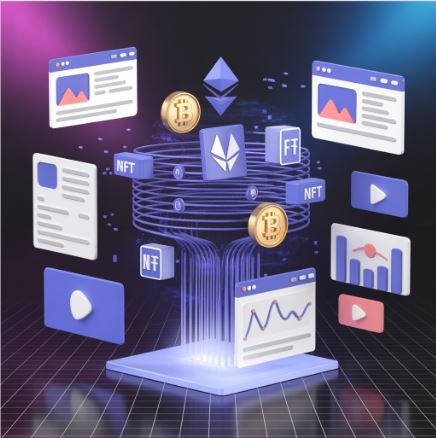
Decentralization is the Web3 concept that there is no corporation, government, or platform controlling the flow of information. On traditional Web2 websites like YouTube or Facebook, content is hosted on servers operated by a corporation, and the corporation controls where it’s broadcast.
Web3 does away with that by building decentralized networks where content is replicated across numerous nodes, making it more resistant to censorship and single points of failure. For content folk, it’s a game-changer. It means audiences will no longer be beholden to algorithms that might down-rank or rank content based on reasons related to profit.
Rather, communities will have more control over what remains. And it also means that content strategy will have to come less from the place of “pleasing the algorithm” and more toward engaging audiences on a more natural plane. Your success will be less about that system-gaming and more about the provision of actual value.
Decentralization places creators in an even more powerful position of control. Content ownership can be owned by creators on an individual basis, not platforms, minimizing the potential risk of surprise demonetization or shadow banning.
This then makes cross-creator and brand collaboration more secure and transparent, where both parties have mutual visibility of value movement through a decentralized system. In short, content marketing on Web3 isn’t about controlling—it’s about collaboration.
The Emergence of Tokenized Content and Reward Programs
The most thrilling thing about Web3 is the emergence of tokenization, or the conversion of digital assets, e.g., content, into tokens on a blockchain. This introduces completely new mechanisms for creating loyalty and compensating audiences in content marketing. Rather than likes and follows, audiences now accumulate, share, or collect tokens toward their engagement or support of a brand.
Picture creating a branded content item with a special NFT. The NFT does more than represent the right to ownership; it can provide exclusivity to premium content, invitation-only events, or even discounts on services and products.
Simply looking at or sharing content would be profitable. For the viewers, it turns passive advertisement into an interactive experience in which the viewers have a chance to be rewarded.
Web3 loyalty programs are not points accumulation on a centralized database anymore—they’re token ownership that can appreciate, announce status in the community, or provide tiered rewards.
This creates deeper affinity because the connection isn’t transactional anymore but co-creative. Brands tokenized are basically saying to their users: “You’re not just a consumer—you’re part of the story.”
NFTs As Marketing Storytelling Tools
To most people, NFTs (non-fungible tokens) are reminiscent of extravagant computer graphics or expensive collectibles. In Web3 content creation, though, they are becoming rich storytelling tools. Since passive blogs or banner ads don’t do much for activation, NFTs enable companies to craft experiential interactive stories that users may literally hold a piece of. That sense of ownership adds richness and emotional stake to stories that regular media won’t.
For instance, a brand launching a brand new product can launch a series of NFTs that capture the various stages of its life, from initial sketches to the last iterations. Each is a collectible in the metaverse, a part of brand history that fans collect.
This is not gamifying the experience—it’s giving the customer co-ownership of the experience. Instead of just sitting there and watching our story unfold—they’re living it.
The adaptability of NFTs is also manifested as having the ability to evolve alongside the brand. Interactive NFTs that change as time progresses allow ongoing storytelling within a collectible.
A purchaser will possess an NFT whose appearance evolves when the firm achieves development goals or introduces fresh campaigns. This enables ongoing interaction, making NFTs ongoing platforms rather than a one-time novelty.
Decentralized Campaigning and Community-Based Marketing
Perhaps the most noticeable Web3 shifts in content marketing are from top-down campaigns to community-driven campaigns. Legacy marketing brands come up with the message, roll it out, and wait.
Web3 communities co-create, roll out, and even regulate content campaigns. Individuals used to merely react—they actually co-create the story.
Decentralized autonomous organizations (DAOs) do spring to mind. DAOs within communities bring together decisions that range from seed money to new projects to creating brand relationships.
This carries over on the marketing side to campaigns that are not dreamed up by any single group and not approved by those most concerned with the brand’s long-term future. Such a collaboration fosters trust and strengthens the viewer-brand bond.
When communities are in power, content gets amplified organically. Real user-generated content is the norm, grassroots storytelling is accelerated, and the viewer becomes a stakeholder instead of a spectator.
Marketers pay attention—Web3 isn’t about conveying a message—it’s about creating platforms where communities will share the story with you.
Rethinking Data Ownership and Marketing Privacy
With Web2, businesses benefited from collecting and interpreting consumer data typically presented in formats that aren’t even understood by the intended audiences. Web3 reverses that.
Instead of platforms owning and making money from users’ information, users regain control over the manner, timing, and location at which that data is transferred. That paradigm signifies a different list of demands for marketers to take into consideration the aspects of personalization, targeting, and gaining trust.
It’s a challenge and an opportunity for the advertiser. Advertisers can work less to develop large stores of information on the user by tracking users behind the curtain. Or audiences that can provide data will provide it gladly and willingly.
When users are comfortable with controlling that level of privacy, they’re willing to engage on an intelligent level, producing sets that may be smaller but more precise. This evolution adds value-based interaction. Rather than brands collecting information silently, Web3 campaigns can incorporate compensation to users to share information.
Permission-based access to a customized experience may be given through the use of a token or an NFT in return for the sharing of insights. Transparency and opting-in are no longer merely an ethical option but a market differentiation in this new world.
Content Distribution in a Decentralized World
Distribution is the core of marketing, and Web3 fundamentally rewrites the rules by which content moves through the web universe. Web2 success tends to be founded on centralized gatekeepers such as social networks, search engines, and advertisement networks.
Web3 distribution shifts toward decentralized communities, peer networks, and often blockchain-based platforms that honor origin and ownership. This entails fewer algorithm dependencies on the marketer’s behalf and greater reliance on the development of one-on-one fan relationships.
Content remains on decentralized applications (dApps), blockchain-based social networks, or token-based communities where the user accesses them exclusively through NFT or token ownership. This flips the type of thinking involved on the marketer’s behalf from classic virality to the building of content ecosystems that users choose to join.
Decentralizing distribution entails greater resilience on the part of creators and brands, too. When there isn’t one monolithic platform to fall back on, there is diversification on the part of marketers, both in where they distribute their content and through which channels they distribute their content, mitigating the dangers of abrupt algorithm shifts or update policies. It isn’t being everywhere—it’s being where your users are in the proper decentralized spots.
The Metaverse and Its Content Marketing Role
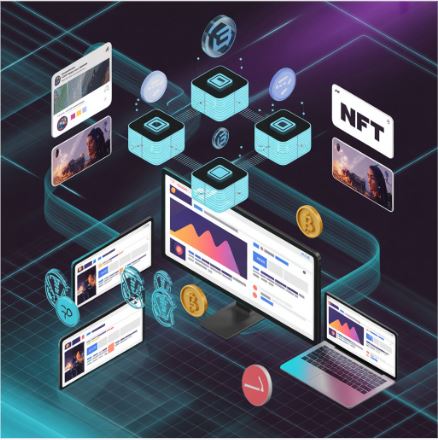
The metaverse has been called a virtual world where we work, play, and socialize. But to marketers, it’s not merely a buzzword—it is a successful platform where storytelling and brand experience become immersive.
With Web3 technologies like blockchain and NFT co-converging with the metaverse, content marketing has stopped being an activity that is consumed by users and now one that is experienced by users.
Envision a branded product release other than a livestream, but rather an interactive 3D event where the attendees move through immersive worlds, accumulate virtual collectibles, and interact with employee or brand ambassador avatars.
It is this type of depth that creates deeper connections than standard digital programs because it provides audiences the chance to activate the story on a visceral and memorable level.
The metaverse brings new interaction models too. A brand would release NFTs as “event tickets” to try special things in an online world.
Content is not promotional anymore, but experiential, where the user goes through something different to bring back virtually. Content marketing in the metaverse is not about impressions anymore—it’s about getting immersed.
Authenticity and Transparency as Marketing Currency
If any cross-cutting theme for Web3 exists, it is the establishment of trust. Decentralization, blockchain verification, and tokenization all contribute to a grander cultural presumption: that companies are honest and open.
In such circumstances, content marketing strategies based on half-truths, clickbait, or overly manufactured narratives will collapse instantly. Web3 users expect and applaud openness and honesty.
The transparency is built into the technology. Blockchains are public ledgers where anyone can ask about transactions or claims to creation. That is, if there is a token drop done by a brand, an NFT launch, or any claim on behalf of its impact, the evidence is clear to the public. That comes as a relief to brand marketers, closing the gap on exaggeration but allowing room for credibility.
Authenticity is the key for brands to stand out in the hype culture. People reward brands that return frequently, speak openly, and build on actual values instead of following fads. Web3 storytelling is less about making an ideal image—it is about keeping an actual story people believe in, support, and even participate in.
Skills Required by Web3 Marketers to be Successful
It isn’t about adopting new tools to adapt to Web3; it’s about building new mindsets and skills. Marketers need to become comfortable with terms like blockchain, tokenomics, and decentralized governance to be able to come up with initiatives that mean something to the people existing within this world.
This sounds really technical-sounding, but the best marketers will be the ones who take difficult concepts and simplify them into compelling everyday narratives. The concept of creativity slices deeper into Web3 as advertisers will no longer just have to be able to create beautiful ads or engaging updates. They will have to account for interactive narrative, game mechanics, and token-based incentives that bring the audience into the narrative.
Distinctions between marketing, community management, and product development will blur, making the practitioner even more of a jack-of-all-trades than they have already become. Most importantly, however, Web3 requires a community-first approach.
Marketers who can rally engaged communities, incentivize contribution, and respond rapidly to criticism will thrive. The most important skill for Web3 isn’t an awareness of the underlying technology so much as an understanding of how to establish trust and a feeling of belonging among independent decentralized networks.
Tokenized Reward Programs and Loyalty Schemes
The most exciting use of Web3 in content marketing is the potential for tokenized loyalty programs. Rather than the conventional points-based programs trapped in a brand silo, blockchain tokens would be potentially tradable, transferable, and verifiable. That would enable a consumer to accumulate tokens by watching branded content, attending virtual events, or purchasing something and trading the tokens in a larger ecosystem.
For marketers, loyalty programs make engagement into something valuable. While rewards tend to be discounts or advantages that depreciate on redemption, tokens may increase in value over the long term or provide access to special experiences.
Take a fan accumulating branded tokens on social media, after which they redeem them for an exclusive behind-the-scenes webinar or even a second NFT. That type of asset-based, gamified experience is enormously better than rewards in their traditional format.
Besides the novelty aspect, tokens offer marketers additional channels of storytelling. Tokens are as much a part of the brand story as the virtual milestones that the users attain on the story path. By associating ownership with loyalty, the brand fosters deeper connections in which consumers are co-owners, not passive spectators.
Influencers and Web3 Content Strategies
The Web2 content approaches were most prevalent in influencer marketing, although on Web3, influencers operate differently. Rather than being mere pushers of a service or a product, influencers become leaders of the communities, creators of the content, and even owners of the campaign. This is an indication of the participatory nature of Web3, where the audiences demand authenticity and co-ownership over top-down promotions.
Tokens and NFTs enable influencers to integrate their followers in new ways into campaigns. An influencer can release a set of digital collectibles as part of a collaboration with a brand so that fans effectively own a fragment of content instead of truly being immersed in content.
Tokens can function as gate passes to gain access to the experience created by the communities that bridge the influencer-driven narrative storytelling and the brand-centric marketing. The dynamic of trust shifts, too. Web3 audiences do not respond to overt hype but instead incentivize influencers whose values jive with projects on which they genuinely care.
Brands should choose influencers on the basis of reach, naturally, but on the basis of their capacity to elicit an effective response among their communities. Web3 influencer partnerships executed properly are partnerships rather than advertorial sponsorship.
Problematics of the Transition Toward Web3 Marketing
Although the Web3 vision is intriguing, there are challenges when it comes to navigating the new era. Marketers may trip over a learning curve.
There is a time commitment required to learn about blockchain mechanisms, token standards, and governance decentralization. Brands that do not prioritize the learning process risk becoming overwhelmed or stuck on previous strategies.
There is also the question of infrastructure. As Web3 technologies continue to develop rapidly, they cannot match the smoothness that marketers are accustomed to within Web2.
Wallet connections, transfer fees, and differences among blockchain platforms all combine to complicate campaigns running on a large scale. Early movers tend to experience friction, which may take a toll on campaign efficacy as well as on engaging the intended population.
Finally, there is reputation risk. Web3 and the NFT ecosystem have experienced volatility, scams, and environmental criticism. A failed Web3 campaign may one day come back to haunt an establishment as hype-driven instead of value-driven.
Any marketer joining Web3 must be cautious and prioritize user-centric, transparent, and authentic strategies that would earn long-term trust rather than short-term hype.
What’s Next for Web3 Content Marketing
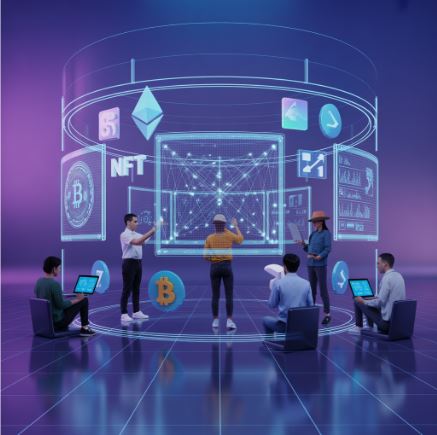
As technology continues to advance, Web3 will transition from novelty to usefulness. Unconnected NFT launches and hype-based speculation will be replaced by brands shifting toward cohesive long-term plans that blend community, content, and commerce. Content marketing will increasingly become ecosystem-based, where the audiences co-create, co-own, and co-experience the stories alongside the brands.
The second emerging trend is interoperability. Tokens, avatars, and collectibles won’t be locked into a specific platform anymore but transferred easily across metaverses, social platforms, and decentralized applications. That would mean that the content a brand creates on Web3 won’t just be an asset for a campaign anymore, but a permanent digital collectible that can move across numerous ecosystems.
The most effective marketers will be the ones doubling down on research for sustainability and inclusion. Those who consider Web3 to be the thoughtful extreme-creative on the responsible end will get eyeballs but create even more lasting communities beyond the campaign.
Conclusion
Web3 is more than a technology revolution—a cultural shift in the way people engage with communities, content, information, and brands online. Highlighting decentralization, ownership, and transparency, it dismantles old assumptions around marketing based on centralized systems and passive watching. Audiences in the new context no longer remain passive viewers—but players, stakeholders, and co-creationists.
The possibilities for content marketers are endless—tokenized reward programs, experiential metaverse activations, decentralized distribution, and influencer opportunities that come across as genuine as possible.
And the problems are just as concrete, ranging from technological sophistication to reputational risk. And it must all be achieved by the blending of creativity, flexibility, and the will to forge genuine trust-based relationships.
More crucial today in Web3 content marketing isn’t the adoption of frontier technology, but the redefinition of the values embedded in marketing. Brands committed to transparency, authenticity, and empowerment on behalf of the communities whose interests they represent will spearhead this advance into this digital frontier.
And those who see Web3 as something bigger than a fad—one that holds the potential to redefine the future of content—will be the long-term winners!

Sign up for SocialWick
Login
InstagramYouTubeTikTokFacebookTwitchSpotifyTwitter (X)SoundCloudIGTVLinkedInThreadsWebsitePinterestVKApple MusicSEO
Checkout
OK

Information
Order processing usually starts within a few minutes, but some services may take a few hours or even a few days. We offer free refills for up to 90 days if needed. Our services are 100% secure and discreet, with a focus on gradual and safe delivery for your peace of mind.
Order processing usually starts within a few minutes, but some services may take a few hours or even a few days. We offer free refills for up to 90 days if needed. Our services are 100% secure and discreet, with a focus on gradual and safe delivery for your peace of mind.
Where should we send your order confirmation?
No account needed! We send your confirmation and tracking link here.
Secure checkout. We never share your email.
Have an account?•
Log in
Use your account to pay faster with your saved details.
Create account
Create an account to track all your orders in one place.
Service
+0,00
Voucher
-0.00
Total
+0.00
OK
Affiliate & Reseller Program
Customer Support
How may we help you?
General Support
Order Support
Frequently Asked Questions
1) What services do you offer?
We are a social media marketing company, and we offer a wide variety of services across several platforms that our clients can choose from. Once selected, we create a plan that fits your needs. We offer several types of services, such as followers, subscribers, likes, views, song plays, etc.
2) Is your service safe?
Yes, as we only sell real followers, likes, views, etc., and we hold every service to strict authenticity and quality standards. In order to protect your account, we deliver every order carefully and gradually. We closely monitor all our services. For more information, we strongly recommend reading our Terms of Service before you order.
3) Will I need to give you the passwords for my accounts?
No, you can keep your passwords to yourself because our services don’t need a password to influence your accounts. And if an email ever shows up claiming to be from us and asking for a password, it’s definitely not us, so please let us know right away.
4) Are the likes, followers, and subscribers real, or are they bots?
Unlike many other services, all our likes, followers, and views come from real accounts operated by real people. You won’t find bots, fake profiles, or hijacked accounts anywhere in what we deliver. Every order has to pass our strict authenticity standards, and we keep checking our quality to make sure it stays that way.
5) How fast can you deliver my order?
We will show you the estimated delivery time when choosing the service. However, this is only a rough estimate. In most cases, the services are delivered much faster. In some cases, it may take longer. We always aim for a natural and safe delivery!
6) What are your best-selling social media marketing services?
Although we have many services across most social media companies, our services for Instagram, TikTok, and YouTube are our best-selling options.
7) How do I know my account will not be flagged or banned?
We take safety very seriously. We never ask for your password, all followers, likes, and views come from real accounts, and orders are usually delivered gradually and naturally. What we can promise is careful delivery and strict quality standards. Plus a support team that’s there whenever you need us. We are not aware of a single case since 2017 where a customer got his profile banned.
8) What is the best method to communicate with you?
Do you have a question or run into a problem? Our customer support is available 24/7 for you. Just click Contact and you’ll land right on the support form. When you buy one of our services, we will email you to see if there were any problems. Your satisfaction is our main priority.
9) Are there discounts for large orders?
Yes! If you would like to request a large order that isn’t on our ordering layout, we will have no problems accommodating you. Just reach out through the support form and we’ll put together a buying plan that fits what you need.
10) What methods of payment do you accept?
We accept all forms of credit and debit cards, as well as Klarna, eps, PayPal, and Crypto.
11) If I am unsatisfied with your services, am I able to receive a refund?
Yes! Every purchase comes with a 30 day money-back guarantee. Not satisfied? Just contact our support within 30 days of your purchase and send us your order details and a short note on what went wrong, and we’ll take a look at your case. The full conditions are in our Refund Policy.
12) I haven’t received my order
Please make sure the following criteria are met before placing an order to make sure we can deliver it successfully.
- Your account is set to public
- You have typed in the correct username or link
- You have not changed your username before the order’s completion
- The post or account still exists and has not been deleted
- The post or account has not been restricted or removed in some countries
- Allow the estimated delivery time for completion of your order
For further assistance, please message our support team through the contact form.
13) How can I request a refill?
Just send us a refill request through the contact form. Please note that we can only provide you with a free refill within the first 90 days of your purchase.
Learn More
What is SocialWick?
We are the leading marketplace for social media promotion. You can buy followers, likes, views, subscribers, and a lot more for almost all social media networks. We offer affordable prices without making any compromises in terms of the service quality. We have a strict policy to only sell social media signals from real people. Part of our engagement, for example, comes from ad-based promotion where real users discover the content through ads. Bots, fake profiles, and hijacked accounts have no place in our services. Every delivery has to meet our authenticity standards, and we run regular quality checks, and anything that does not meet them is removed from our catalog. Our services are available for personal use, whether you want more Instagram likes, TikTok followers, YouTube views, or something else for your own profile.
With over a million satisfied customers, SocialWick is the go-to platform for all your social media needs. Our services are discreet and secure, with gradual and careful delivery to keep your social media accounts safe.
About SocialWick — The Market Leader since 2017
With more than 10 million orders, SocialWick is one of the world’s biggest social media stores. You can find everything on our website to improve your presence on major social media platforms like Instagram, TikTok, YouTube, Twitter (X), Facebook, etc. We offer different types of services for several social media platforms. Your wish is our command, and whatever your goal might be, SocialWick will help you achieve it. Whether you need more likes on your Instagram photos or want to make your LinkedIn profile more popular by getting additional followers, SocialWick is there to turn your goal into reality.
Thanks to our effective services and our customer-oriented work, SocialWick has become a top player. You will not find a better service anywhere else, especially not at such affordable prices. SocialWick is operating since 2017.
365 Days Per Year Customer Service
Your satisfaction is our motivation! We’re not here just for the money; we do our work to help people find their road to social media success. And that’s why our team will do all to make sure everything goes according to plan. If there’s something wrong with your social media campaign, or worry that there might be some problems with your account, or want to learn more about how our services work, feel free to reach out. Our service staff is there for you seven days a week, ready to answer any of your questions. You can get in touch with us using the contact form on our website.
Buying Followers and Likes is Essential
Unless you’re Kylie Jenner, you definitely need some help with social media. The more followers you have on Instagram, TikTok, Twitter (X), or YouTube, the more people will automatically notice you. Having all those eyes on your content isn’t just impressive, it’s genuinely fun. The bad news is that everyone wants to be famous these days, but only a few can succeed. The good news is that you can be the chosen one who will get social media fame and everything that comes with it. But, for that, you need a little help from your friends at SocialWick.
With our help, you will increase the number of followers on social media, which can have a domino effect and bring you even more new followers. Once people see that you got a big followership, they will decide to give you a follow. "If a profile has so many followers, it means that it’s interesting" – you can be sure this is going to be their reasoning. Furthermore, more followers mean more visibility for everything you post. Finally, a large number of followers also do great for your credibility. Our social media services will help you to create a better overall picture of your profile.
Let’s be honest; a profile with 30,000 followers looks much better than one with 74 followers. And that’s exactly what new visitors will pay attention to. A weak social media profile can be a real deal-breaker. At the same time, a fantastic social media profile can do wonders for you. And SocialWick can make your social media profile amazing!