#1 Social Media Marketplace
Accelerate Your Social Media Growth with SocialWick. Quickly gain real followers, viewers, likes & more with our blend of marketing tactics. SocialWick is known for its fast delivery, premium quality, and low prices. With over a million satisfied customers since 2017, trust SocialWick to take your social media game to the next level.
1.4 M
Customers
13 M
Orders
362 M
Followers sold
1.8 B
Likes sold
What are the Best Email Segmentation Strategies for Ecommerce
Published on 26.07.2025 by Tracey Chizoba Fletcher
In 2025, the inbox is a battleground! Your customers are being hammered with promotional emails, promo codes, and “limited-time” deals—each fighting for their attention. But for e-commerce businesses, email remains one of the most profitable and personal marketing channels.
The solution isn’t sending more—it’s sending smarter. That’s where email segmentation comes in as a game-changer.
One-size-fits-all campaigns are a thing of the past and today’s consumers crave personalization. They want to receive emails that respond to their particular tastes, actions, and needs.
When you segment your email list correctly, you are no longer a brand—you are a thoughtful, relevant, and even trusted guide to their shopping journey.
Email segmentation is separating your audience into profitable segments based on data such as purchase history, past browsing behavior, location, level of engagement, and even how long they’ve been with you. It’s not just a marketing tactic, it’s a long-term retention tactic.
Segmentation enables you to decrease unsubscribe rates, increase open rates, enhance conversions, and most importantly, create better experiences for your customers. So, what does strategic segmentation look like these days in e-commerce?
Let’s dive into the best, most effective practices that are making brands known, generating revenue, and building stronger relationships one email at a time.
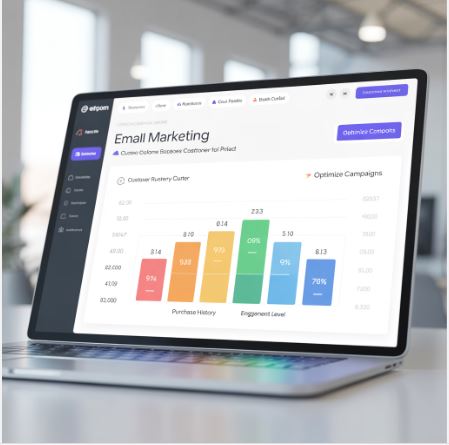
Behavior-Based Segmentation – Segmentation by Actions, Not Assumptions
The best segmentation strategies are grounded in real behavior, not demographics at the surface. Behavior segmentation involves emailing based on what a person does—what they click, browse, buy, or ignore. It brings you closer to customers because it’s driven by intent and interest, not by generalities.
For example, a customer who’s added something to cart but not checked out is clearly interested. They don’t require a run-of-the-mill newsletter but a personalized reminder with product follow-up and rewards.
A customer who’s bought a specific product category multiple times might appreciate a specially designed look book or seasonal guide to that category. You can also use behavior to win back dormant customers who have not opened an email for 90 days or have not bought in six months. Instead of writing them off, you can try a win-back campaign with promotions or ask if they would like to modify their email preferences.
The beauty of behavior-based segmentation is that it shows you your customer’s mind right then. You catch them where they are on the purchasing journey, with subtle suggestions rather than shouting sales pitches. Not only does this create further conversions, but it’s also building trust, showing that you’re listening to your customers in the right places.
Lifecycle Stage Segmentation – Messaging Where They Are Now
Not every one of your customers is in the same phase of their relationship with your company. Someone who heard about your store yesterday shouldn’t be getting the same message as a customer who has made five purchases in the past year. That’s where lifecycle segmentation comes in.
Here, you segment your list depending on where each of your subscribers is in the customer journey. New leads can receive onboarding sequences that introduce them to your story, values, and best-sellers.
First-time buyers can receive a post-purchase email series that reminds them of the buy and suggests complementary products. Long-time loyalists can receive early access to new launches or special perks as a VIP.
This type of segmentation is all about momentum. Every email you send needs to nudge the customer one step further along the journey to loyalty—whether that’s a first buy, repeat purchase, or long-term subscription. Lifecycle segmentation also avoids mismatched messaging, like sending a “We Miss You” message to someone who bought something yesterday.
As time passes, you can even customize lifecycle messaging to the customer’s channel or product preferences. The result? A smooth, thoughtful email experience that mirrors the customer’s evolving relationship with your business and keeps them coming back for more.
Purchase History Segmentation – Selling Smarter, Not Harder
Want to send emails that resonate right away? Start with what customers have already bought. Purchase history segmentation lets you send hyper-relevant campaigns that reflect the individualized shopping patterns of each customer and drive them to shop again.
For example, if someone purchased skincare products, that’s a good signal to send them new arrival, usage tips, or replenishment reminders for those products. Someone who purchased a fitness watch previously can be interested in accessories, workout gear, or meal plans based on their lifestyle now.
You can also leverage this data to cross-sell and upsell with accuracy. Pair best-selling items that tend to be bought together, and use the purchase history to offer an upgrade, or complementary products.
If the customer tends to buy in sets or during promotional periods, you can even plan your offer to coincide with the buying pattern. Segmentation by purchase doesn’t merely get you selling more products—it shows your customers that you remember what they like.
That’s a feeling that, in their minds, isn’t transactional, but personal. In a crowded e-commerce marketplace, being the business that remembers their tastes is a huge plus.
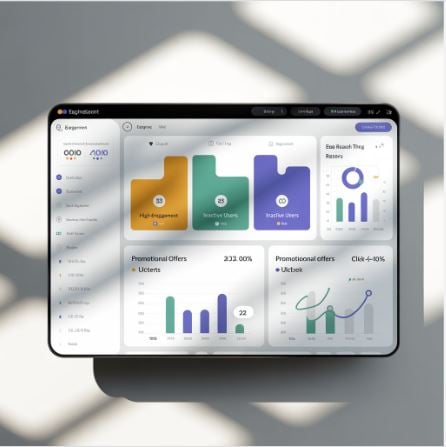
Engagement-Based Segmentation – Paying Attention, Igniting Interest
Not all of your subscribers are as engaged as the next. That’s okay! The key is to identify and segment them according to how they’re interacting with your emails.
Segmentation by engagement lets you deploy targeted messaging to highly engaged readers, warm clickers, and those who’ve gone totally silent. For your most engaged subscribers—the ones who click, open, and shop regularly—you can share sneak peeks, loyalty programs, and more in-depth storytelling. They’re your brand ambassadors, and your emails should return that passion with high-value content and exclusivity that has them wanting more.
Meanwhile, inactive subscribers are in need of something else. If someone hasn’t opened an email in months, they’re not going to be interested in your latest sale. Instead, send them a soft “We Miss You” message, query if they’d like to switch email frequency, or create a reactivation program that feels human and not spammy.
Medium-engaged customers are a testing goldmine. These subscribers remain partially engaged, and may simply need an adjustment of subject line, better timing, or more targeted content to get them clicking again.
Watching what they do teaches you what types of content engage them, so that you can get them paying attention again. Engagement segmenting enables you to take control of deliverability, drive down unsubscribes, and increase ROI by sending the right amount of value to the right people—no more, no less.
Geographic and Time Zone Segmentation – Relevance at the Right Location and Time
Location is still important online, especially in terms of timing, language, shipping, and cultural nuance. Time zone and geographic segmentation not only makes your emails relevant in content, but in delivery as well.
It would be pretty easy to send a person a “Flash Sale Ending in 4 Hours!” email when they are in a different time zone and confuse or frustrate them. With time zone segmentation, you are able to send these emails when they will be most useful—and have the highest possible chance of being opened.
Other than timing, you can also tailor messaging to seasonality appeal or local taste. A message about a winter jacket sale to Los Angeles customers who are sunny all the time would be a failure, but the same message would be a winner in cold northern cities. Offering a summer sale in Australia while your U.S. customers are gearing up for autumn would be tone-deaf unless segmented.
Location-based messaging also makes it easy to promote region-specific shipping deals, in-store deals, or regional product availability. Even little things—like listing city names or regional weather—can create that personal touch that makes your brand seem more human and attuned to the customer’s world.
Demographic and Psychographic Segmentation – Finding the Individual Behind the Purchase
As useful as purchase history and behavior are, demographics and psychographics give you the why behind your customer’s actions.
Segmenting by age, gender, income, or lifestyle can enable you to customize tone, product suggestions, and even design of presentation. But segmenting further—into values, interests, or motivations, for example—can take your segmentation to an entirely new level of utility.
For instance, if your information suggests that some of your consumers are environmentally-aware millennials, you can lead with communications regarding sustainable materials, ethical practices, and impact stories.
Another might be more driven by luxury status or performance ability. Knowing what inspires your customers, not necessarily what they buy, can help you craft email programs that speak to identity, rather than need.
You can get psychographic data from questionnaires, tests, or from browsing behavior online. Combine that with demographic data, and you can start building multi-dimensional, real segments like “young professionals interested in wellness” or “tech-savvy dads buying family products.” Those segments enable you to build emails that sound like a friend’s personal endorsement, rather than another sales email.
Customer Satisfaction and Feedback-Based Segmentation – Let the Audience Guide the Message
Your customer feedback is also one of your most under-leveraged e-commerce segmentation tools. Segmentation by satisfaction levels—however you get them through reviews, surveys, or post-purchase follow-ups—lets you craft follow-ups that are natural, timely, and empathetic.
For example, someone who left you a 5-star review is more likely to participate in a referral program, become a user-generated content author, or even be a product tester. On the other hand, someone who left a 2-star review might appreciate a message asking how you can improve their experience, maybe with a discount or a direct response from your team.
You can segment by satisfaction surveys or Net Promoter Scores (NPS) as well and build campaigns off that. You can nurture the Detractors through customer service-driven sequences to win them back, and the Promoters can receive insider information and community-building content.
When you embed your customer’s voice in your strategy, what you’re left with is a two-way relationship. You’re no longer selling to them—it’s about listening to them.
In 2025, this kind of responsive, empathetic communication isn’t a nice-to-have—it’s what your customers will expect.
Conclusion – Smarter Segmentation is Stronger Connections and Bigger Results
Email marketing for e-commerce is no longer about casting your entire list into the void and praying something sticks. It’s now about precision, personalization, and performance. At the heart of that change is segmentation.
When you divide your audience into intelligent, dynamic segments—by behavior, purchase history, lifecycle stage, engagement, geography, or values—you stop being “noise” in the inbox. You become a welcome, trusted presence.
The most powerful segmentation approaches are multi-layered, dynamic, and empathetic. They’re question-driven: What does my customer actually want? What’s happening in his or her life currently? How can I serve them better based on what I already know?
And the payoff is huge! Segmented campaigns reliably outperform non-segmented campaigns for opens, clicks, and revenue. But that’s not even the best. They build connections. They make your customers feel understood, heard, and valued—not merely sold.
As you create or refresh your 2025 email strategy, make segmentation a priority in your process. The right message, to the right person, at the right time is no marketing cliché, though it’s the key to long-term loyalty in a crowded market.
So, edit on purpose. Speak on purpose. And watch your e-commerce business expand from not just any store, but a worthy pit stop on your customer’s path!

Sign up for SocialWick
Login
InstagramYouTubeTikTokFacebookTwitchSpotifyTwitter (X)SoundCloudIGTVLinkedInThreadsWebsitePinterestVKApple MusicSEO
Checkout
OK

Information
Order processing usually starts within a few minutes, but some services may take a few hours or even a few days. We offer free refills for up to 90 days if needed. Our services are 100% secure and discreet, with a focus on gradual and safe delivery for your peace of mind.
Order processing usually starts within a few minutes, but some services may take a few hours or even a few days. We offer free refills for up to 90 days if needed. Our services are 100% secure and discreet, with a focus on gradual and safe delivery for your peace of mind.
Where should we send your order confirmation?
No account needed! We send your confirmation and tracking link here.
Secure checkout. We never share your email.
Have an account?•
Log in
Use your account to pay faster with your saved details.
Create account
Create an account to track all your orders in one place.
Service
+0,00
Voucher
-0.00
Total
+0.00
OK
Affiliate & Reseller Program
Customer Support
How may we help you?
General Support
Order Support
Frequently Asked Questions
1) What services do you offer?
We are a social media marketing company, and we offer a wide variety of services across several platforms that our clients can choose from. Once selected, we create a plan that fits your needs. We offer several types of services, such as followers, subscribers, likes, views, song plays, etc.
2) Is your service safe?
Yes, as we only sell real followers, likes, views, etc., and we hold every service to strict authenticity and quality standards. In order to protect your account, we deliver every order carefully and gradually. We closely monitor all our services. For more information, we strongly recommend reading our Terms of Service before you order.
3) Will I need to give you the passwords for my accounts?
No, you can keep your passwords to yourself because our services don’t need a password to influence your accounts. And if an email ever shows up claiming to be from us and asking for a password, it’s definitely not us, so please let us know right away.
4) Are the likes, followers, and subscribers real, or are they bots?
Unlike many other services, all our likes, followers, and views come from real accounts operated by real people. You won’t find bots, fake profiles, or hijacked accounts anywhere in what we deliver. Every order has to pass our strict authenticity standards, and we keep checking our quality to make sure it stays that way.
5) How fast can you deliver my order?
We will show you the estimated delivery time when choosing the service. However, this is only a rough estimate. In most cases, the services are delivered much faster. In some cases, it may take longer. We always aim for a natural and safe delivery!
6) What are your best-selling social media marketing services?
Although we have many services across most social media companies, our services for Instagram, TikTok, and YouTube are our best-selling options.
7) How do I know my account will not be flagged or banned?
We take safety very seriously. We never ask for your password, all followers, likes, and views come from real accounts, and orders are usually delivered gradually and naturally. What we can promise is careful delivery and strict quality standards. Plus a support team that’s there whenever you need us. We are not aware of a single case since 2017 where a customer got his profile banned.
8) What is the best method to communicate with you?
Do you have a question or run into a problem? Our customer support is available 24/7 for you. Just click Contact and you’ll land right on the support form. When you buy one of our services, we will email you to see if there were any problems. Your satisfaction is our main priority.
9) Are there discounts for large orders?
Yes! If you would like to request a large order that isn’t on our ordering layout, we will have no problems accommodating you. Just reach out through the support form and we’ll put together a buying plan that fits what you need.
10) What methods of payment do you accept?
We accept all forms of credit and debit cards, as well as Klarna, eps, PayPal, and Crypto.
11) If I am unsatisfied with your services, am I able to receive a refund?
Yes! Every purchase comes with a 30 day money-back guarantee. Not satisfied? Just contact our support within 30 days of your purchase and send us your order details and a short note on what went wrong, and we’ll take a look at your case. The full conditions are in our Refund Policy.
12) I haven’t received my order
Please make sure the following criteria are met before placing an order to make sure we can deliver it successfully.
- Your account is set to public
- You have typed in the correct username or link
- You have not changed your username before the order’s completion
- The post or account still exists and has not been deleted
- The post or account has not been restricted or removed in some countries
- Allow the estimated delivery time for completion of your order
For further assistance, please message our support team through the contact form.
13) How can I request a refill?
Just send us a refill request through the contact form. Please note that we can only provide you with a free refill within the first 90 days of your purchase.
Learn More
What is SocialWick?
We are the leading marketplace for social media promotion. You can buy followers, likes, views, subscribers, and a lot more for almost all social media networks. We offer affordable prices without making any compromises in terms of the service quality. We have a strict policy to only sell social media signals from real people. Part of our engagement, for example, comes from ad-based promotion where real users discover the content through ads. Bots, fake profiles, and hijacked accounts have no place in our services. Every delivery has to meet our authenticity standards, and we run regular quality checks, and anything that does not meet them is removed from our catalog. Our services are available for personal use, whether you want more Instagram likes, TikTok followers, YouTube views, or something else for your own profile.
With over a million satisfied customers, SocialWick is the go-to platform for all your social media needs. Our services are discreet and secure, with gradual and careful delivery to keep your social media accounts safe.
About SocialWick — The Market Leader since 2017
With more than 10 million orders, SocialWick is one of the world’s biggest social media stores. You can find everything on our website to improve your presence on major social media platforms like Instagram, TikTok, YouTube, Twitter (X), Facebook, etc. We offer different types of services for several social media platforms. Your wish is our command, and whatever your goal might be, SocialWick will help you achieve it. Whether you need more likes on your Instagram photos or want to make your LinkedIn profile more popular by getting additional followers, SocialWick is there to turn your goal into reality.
Thanks to our effective services and our customer-oriented work, SocialWick has become a top player. You will not find a better service anywhere else, especially not at such affordable prices. SocialWick is operating since 2017.
365 Days Per Year Customer Service
Your satisfaction is our motivation! We’re not here just for the money; we do our work to help people find their road to social media success. And that’s why our team will do all to make sure everything goes according to plan. If there’s something wrong with your social media campaign, or worry that there might be some problems with your account, or want to learn more about how our services work, feel free to reach out. Our service staff is there for you seven days a week, ready to answer any of your questions. You can get in touch with us using the contact form on our website.
Buying Followers and Likes is Essential
Unless you’re Kylie Jenner, you definitely need some help with social media. The more followers you have on Instagram, TikTok, Twitter (X), or YouTube, the more people will automatically notice you. Having all those eyes on your content isn’t just impressive, it’s genuinely fun. The bad news is that everyone wants to be famous these days, but only a few can succeed. The good news is that you can be the chosen one who will get social media fame and everything that comes with it. But, for that, you need a little help from your friends at SocialWick.
With our help, you will increase the number of followers on social media, which can have a domino effect and bring you even more new followers. Once people see that you got a big followership, they will decide to give you a follow. "If a profile has so many followers, it means that it’s interesting" – you can be sure this is going to be their reasoning. Furthermore, more followers mean more visibility for everything you post. Finally, a large number of followers also do great for your credibility. Our social media services will help you to create a better overall picture of your profile.
Let’s be honest; a profile with 30,000 followers looks much better than one with 74 followers. And that’s exactly what new visitors will pay attention to. A weak social media profile can be a real deal-breaker. At the same time, a fantastic social media profile can do wonders for you. And SocialWick can make your social media profile amazing!